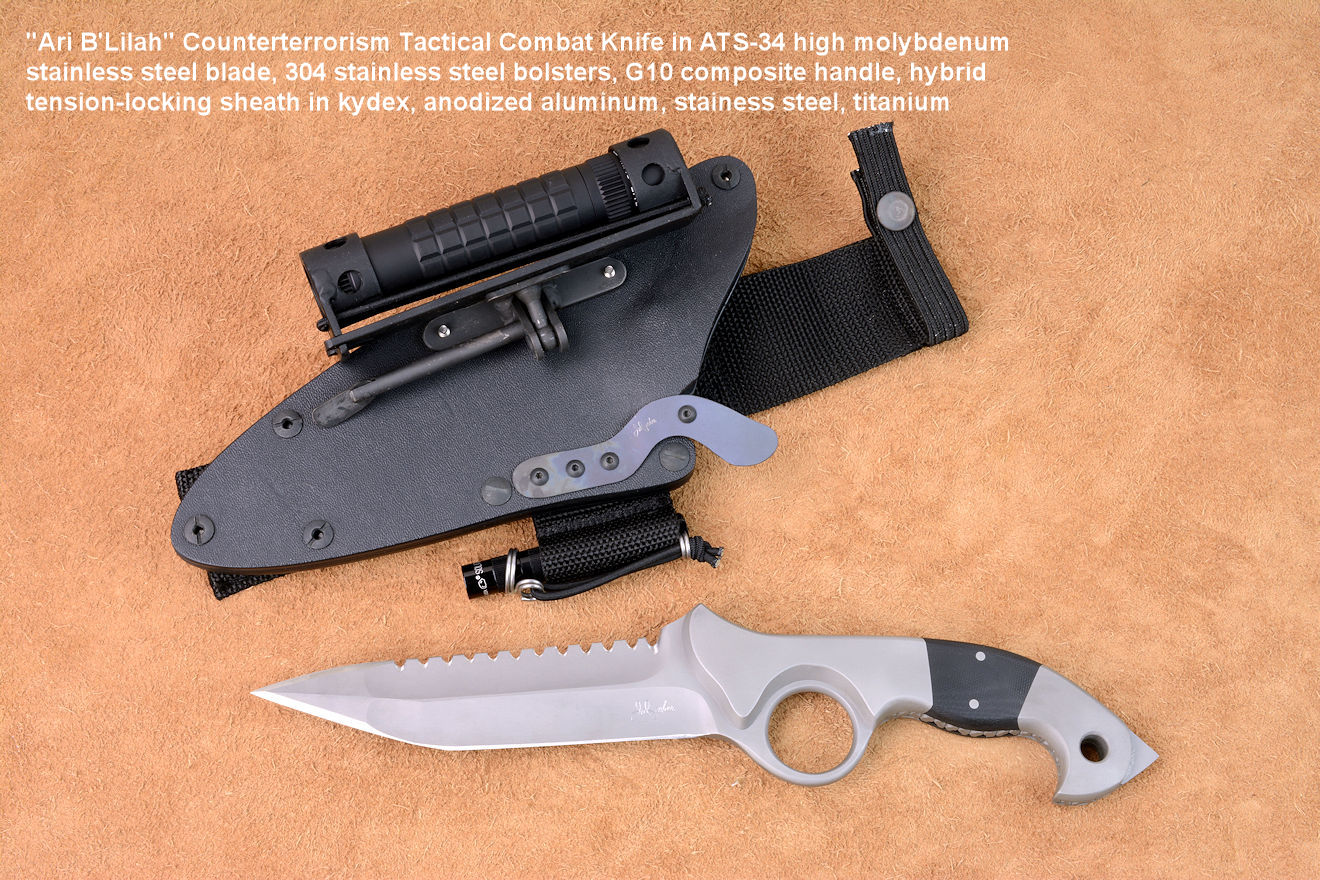
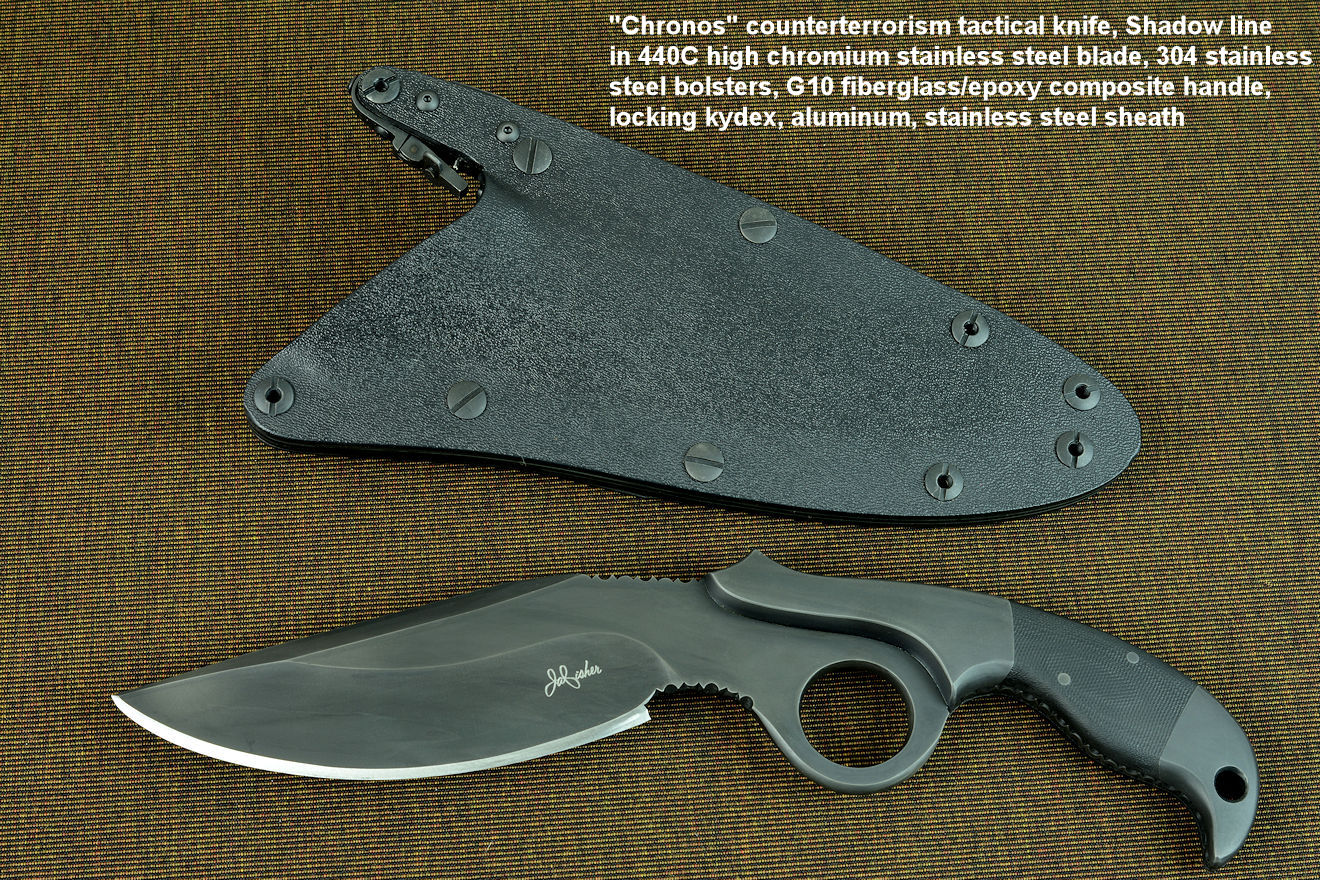
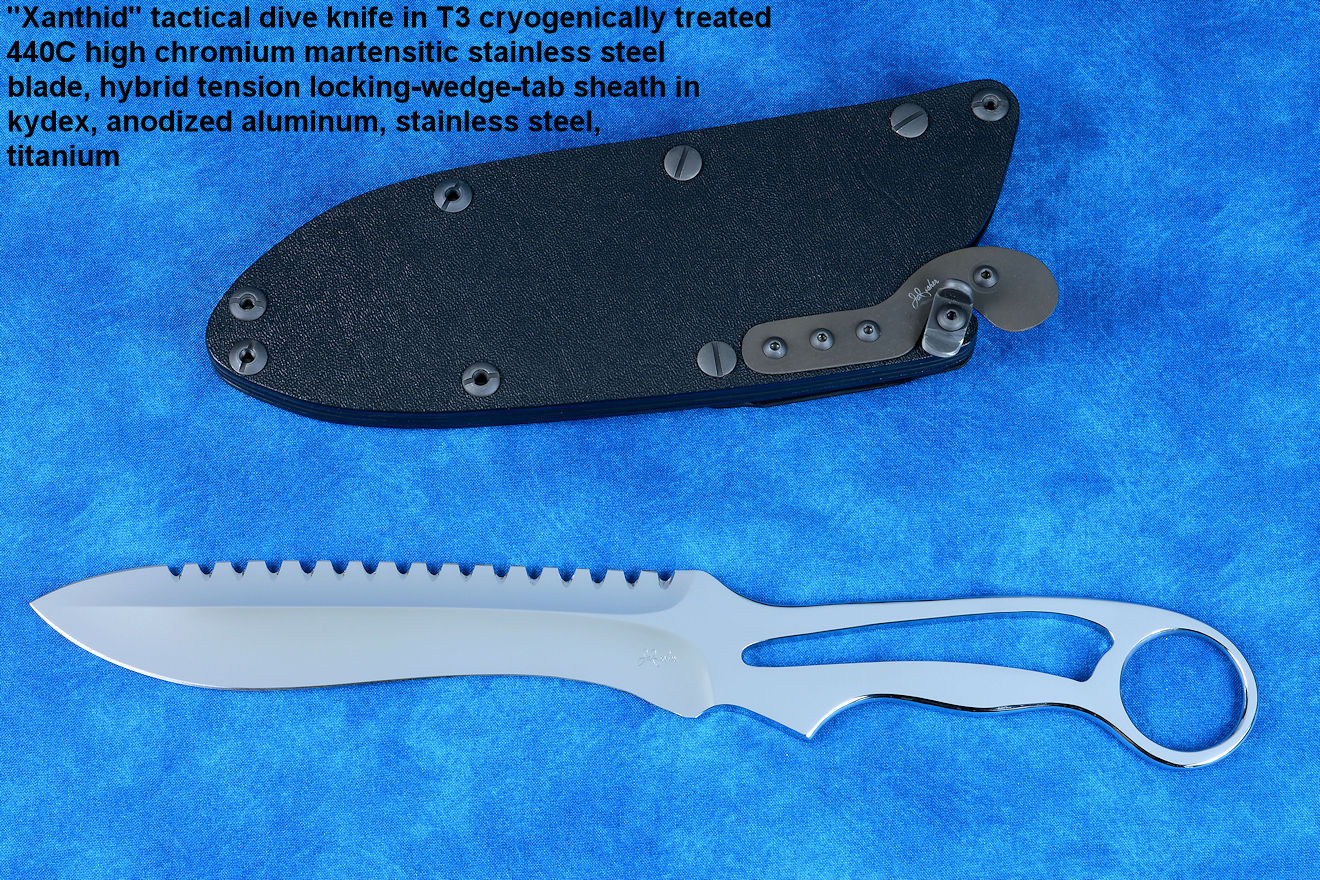
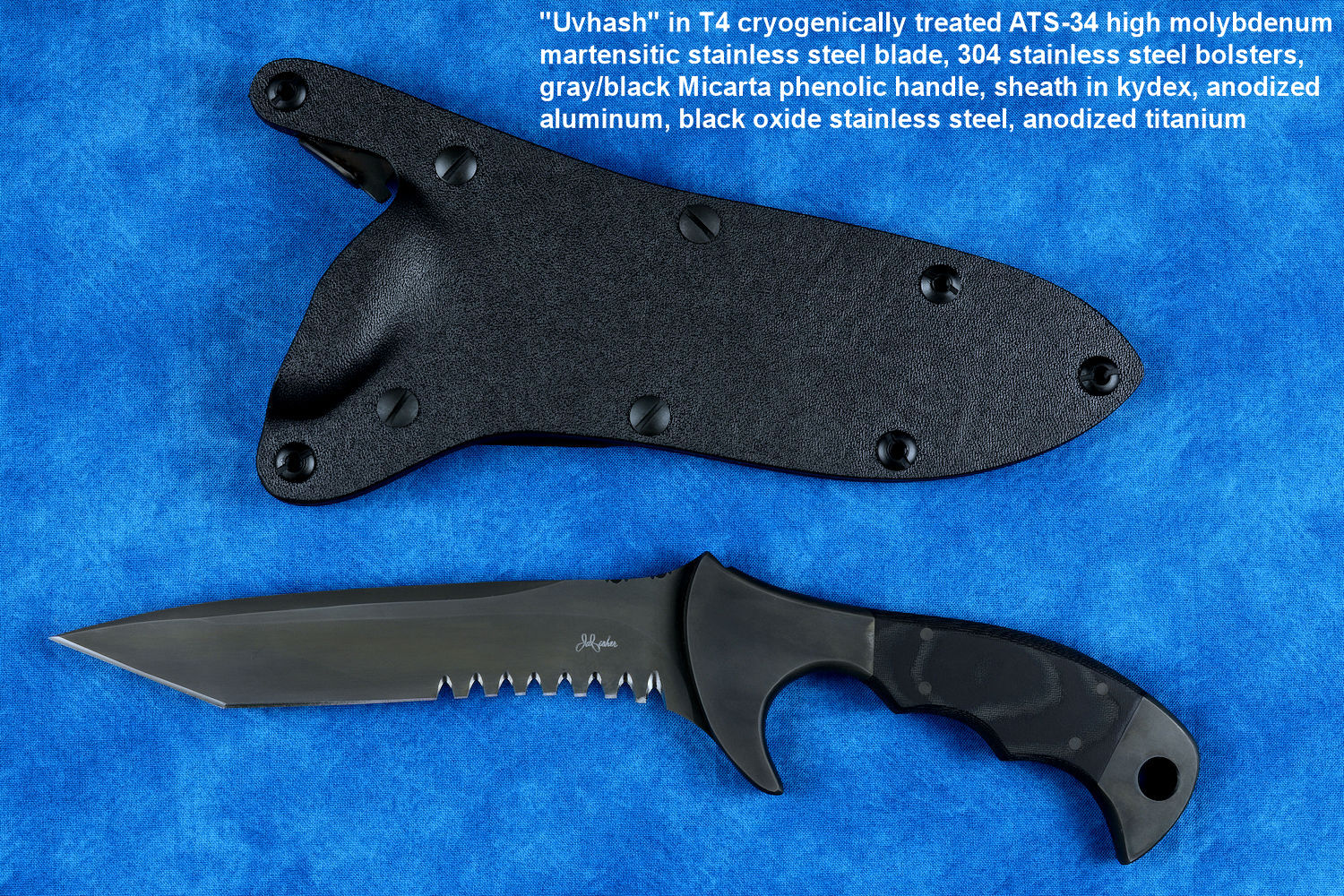
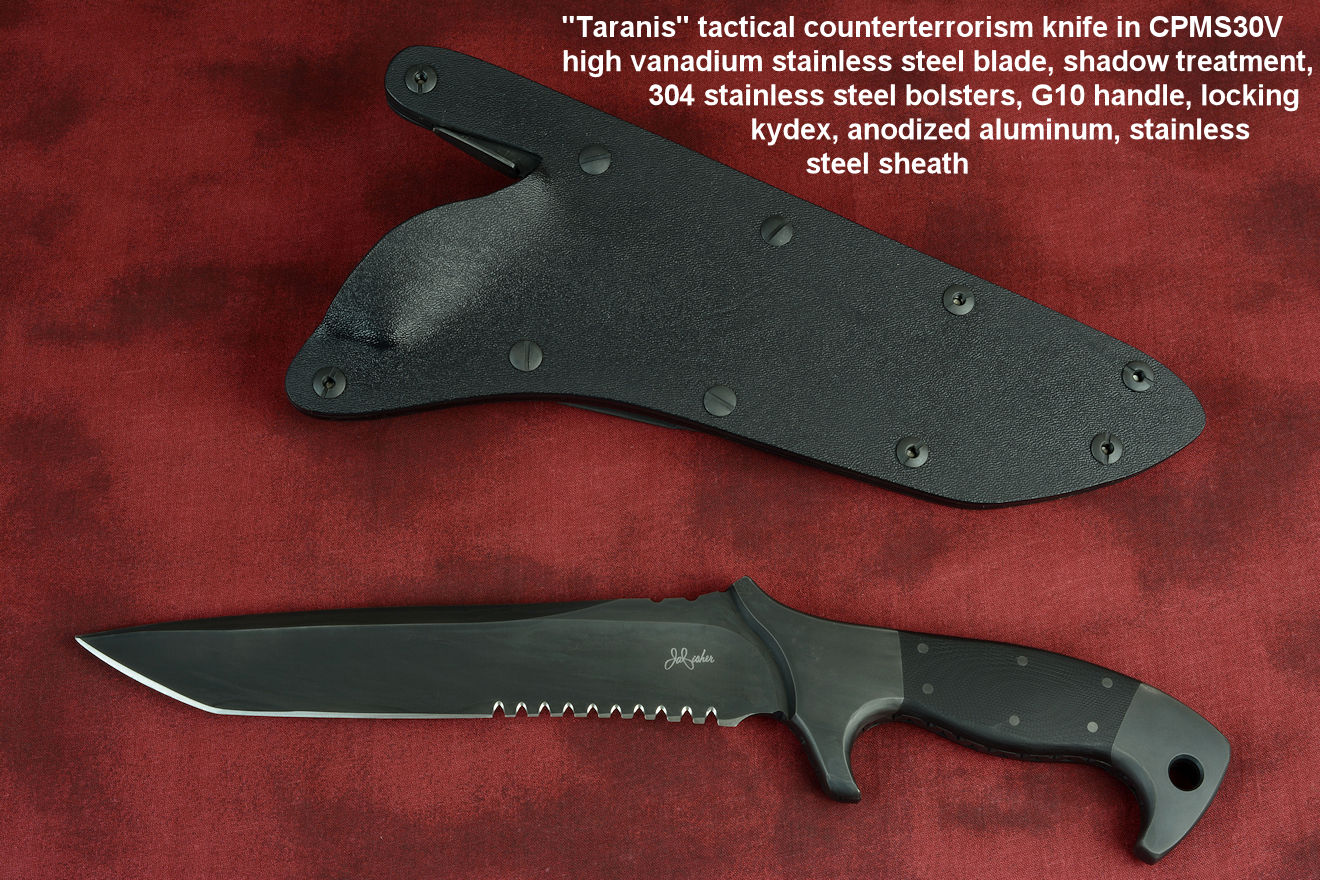
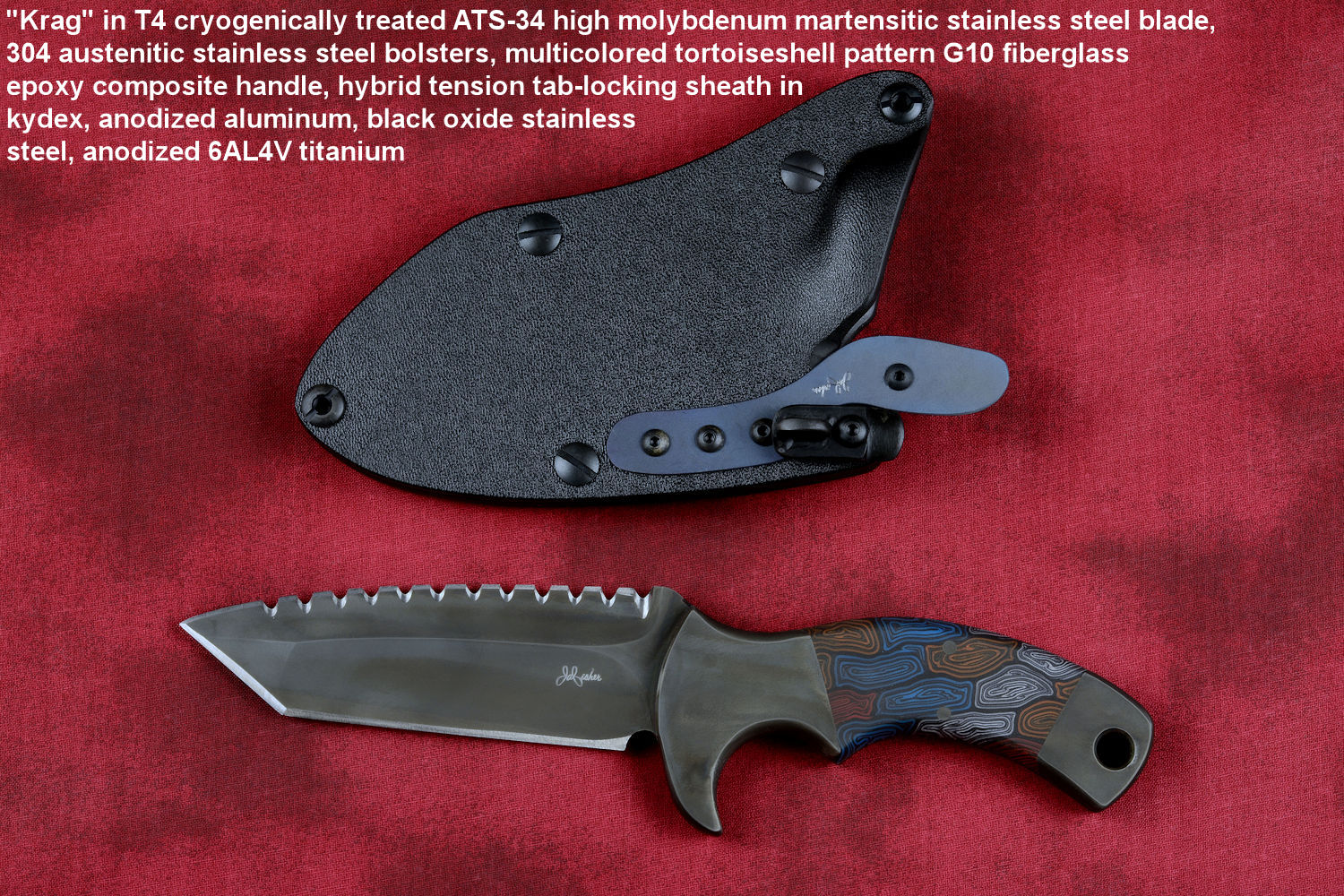
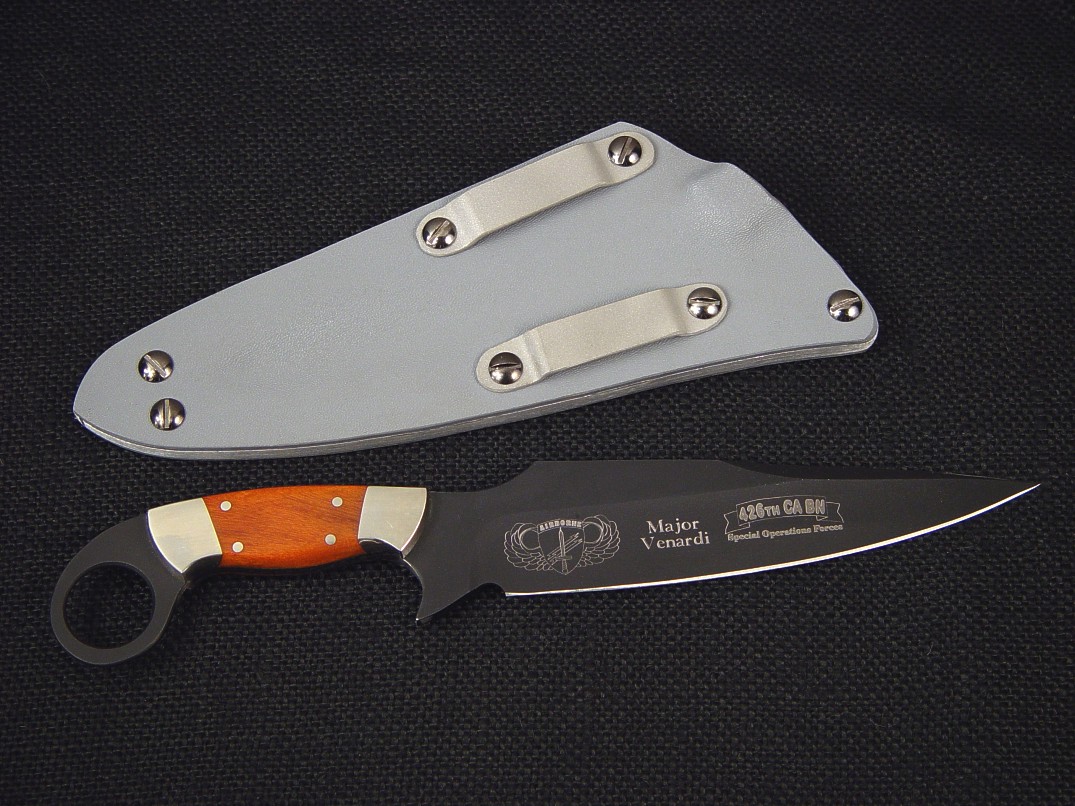
Jay Fisher - Fine Custom Knives
New to the website? Start Here

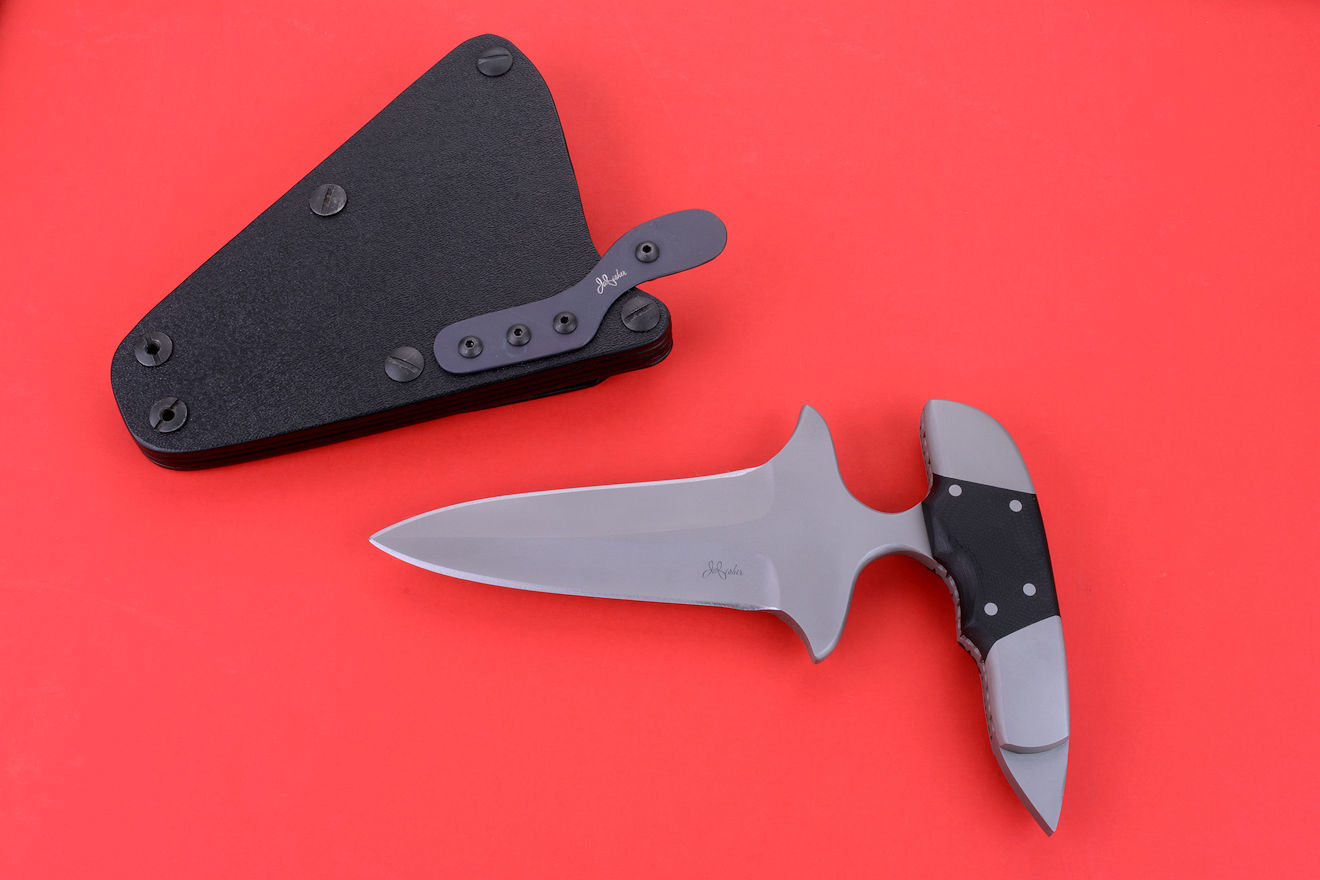
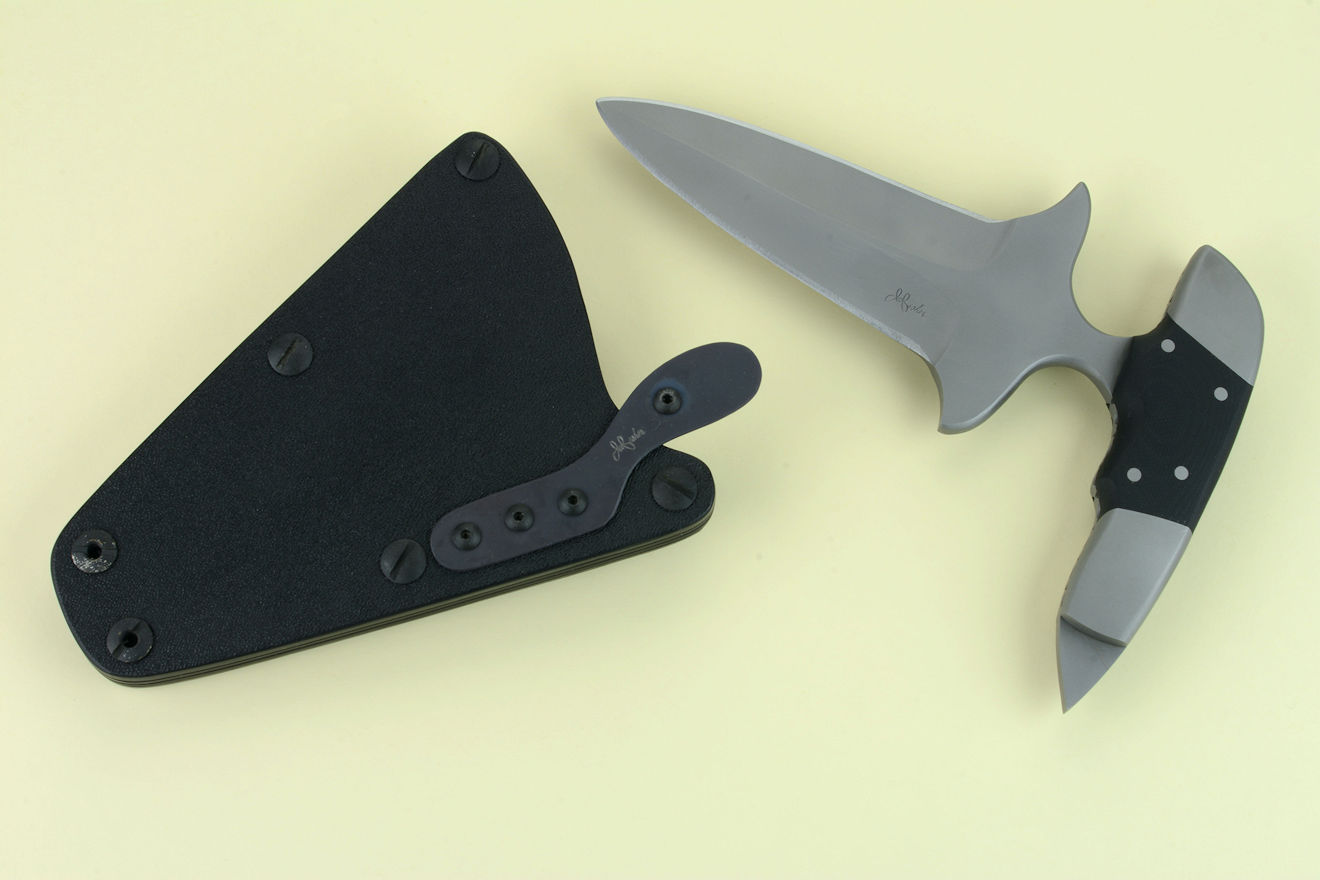
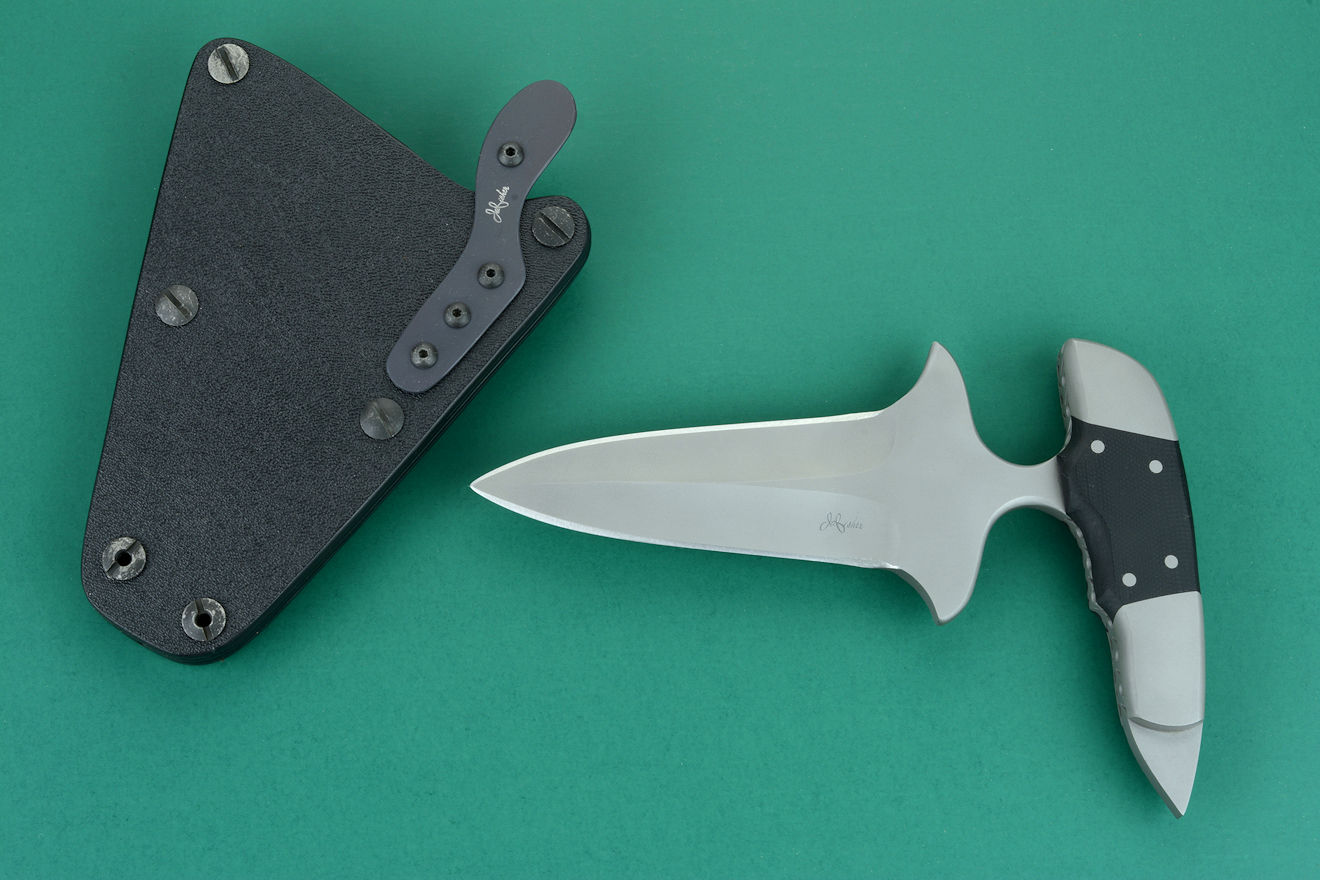
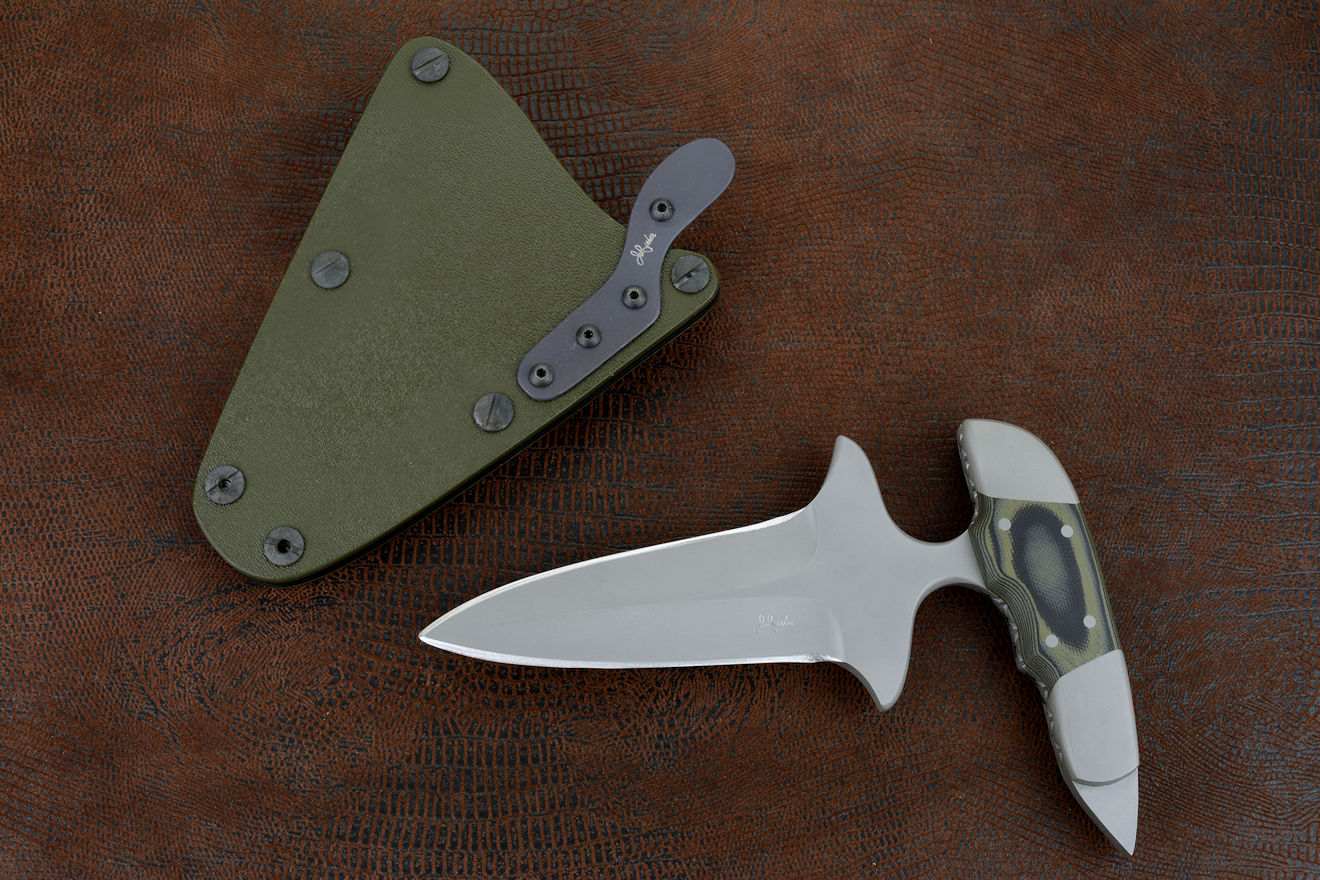
"Nunavut"
Jay Fisher - Fine Custom Knives |
|||
New to the website? Start Here |
"Nunavut" |
||
I make the very best real combat and tactical knives in the world. How can I say that? It's simple. Read this page and you'll understand. Unlike other knife makers, manufacturers, or boutique shops, I directly consult the professional combat and tactical knife user, work with him, and design what is clearly a superior, complete, professional, dependable, and durable tactical knife. Unlike those others, I clearly, completely, and precisely describe, educate, define, and detail all of the facets of the combat and professional tactical knife on this page. No other text in the world exists like what you will read here. That is why it's copyrighted, recorded, and registered in the Library of Congress of the United States of America. It is my absolute commitment to make the very complete, and absolute best knives in the world.
There is no fluff and folly here; I make the real thing for real soldiers, rescue professionals, law enforcement professionals, and users who demand the best in dependable, serviceable, combat-ready primary edged weapons and tools. This page has topics, photographs, details, descriptions, and answers to the most asked questions about real tactical and combat knives.
Topics: I've made this page in tactical form, which means a problem and solution type procedure to an end. The specific definition of tactical is at this link on the Military and Tactical knife Portal. I use a question and answer format for the large topics, and then a simple problem and solution format for the individual points and topics in the middle of the page. In this frank and honest detailing of the limitations and outright failures of many knives touted as tactical grade, you will easily see the effort, work, labor and value of the handmade custom knife, and clearly understand what you are getting for your money and what you may be forfeiting for the sake of economy.
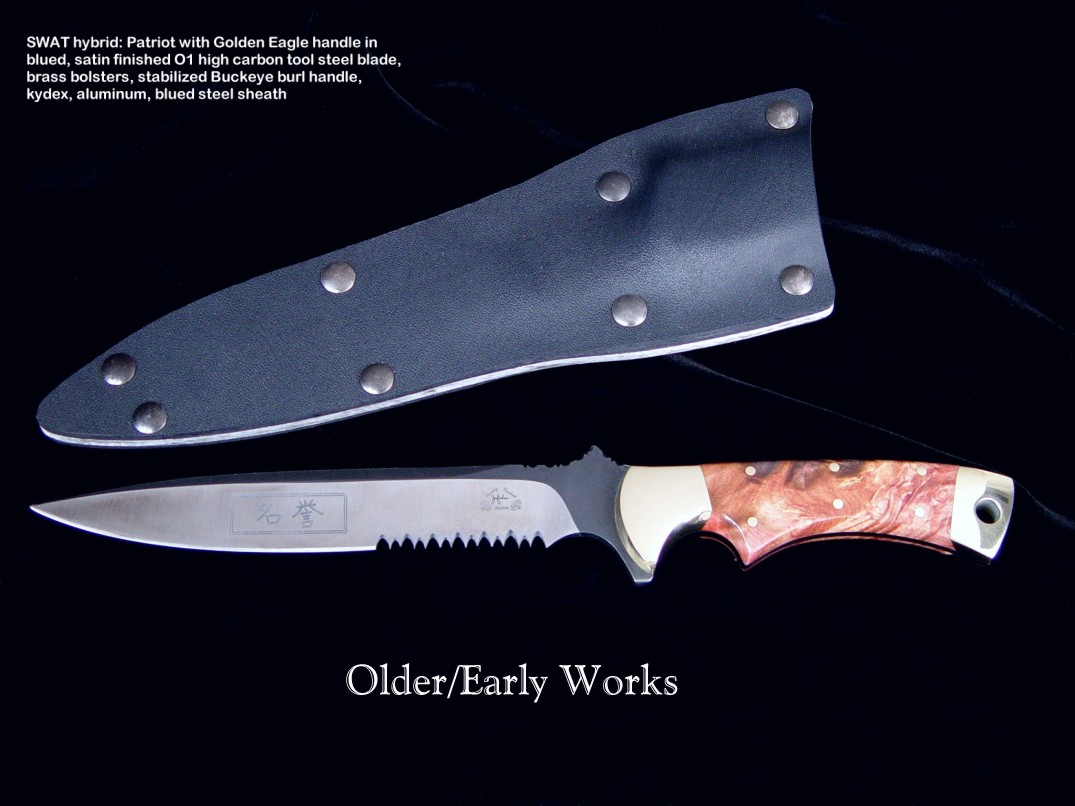
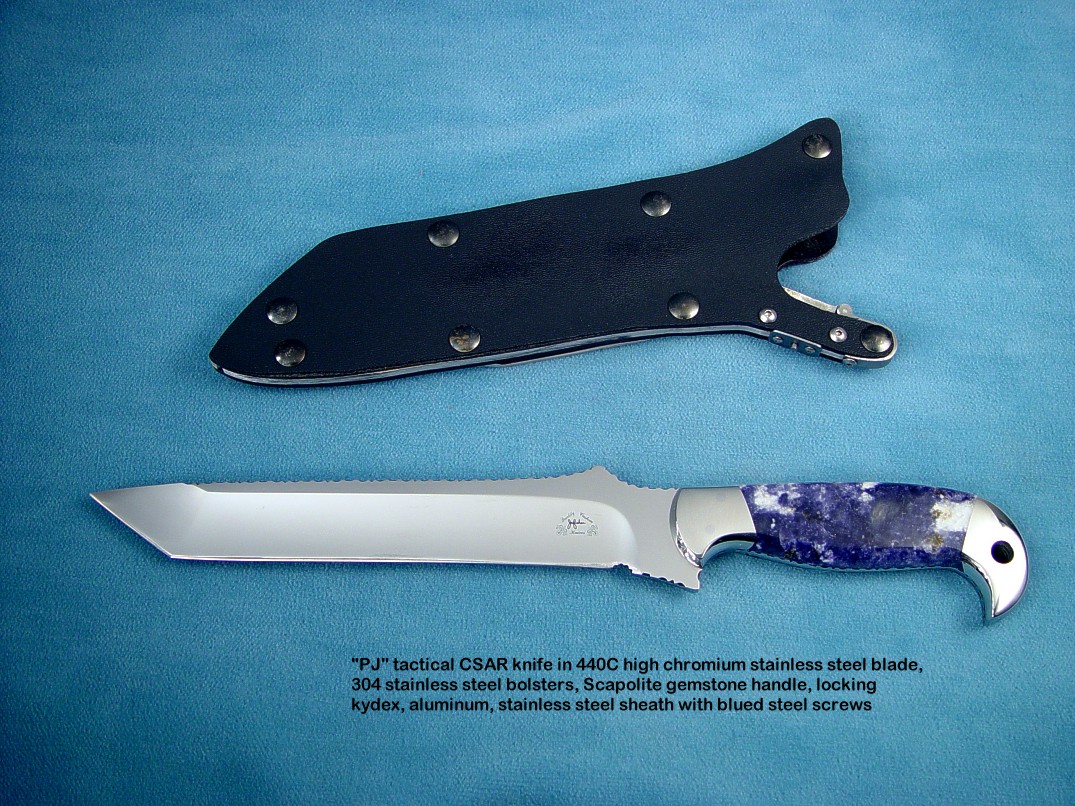
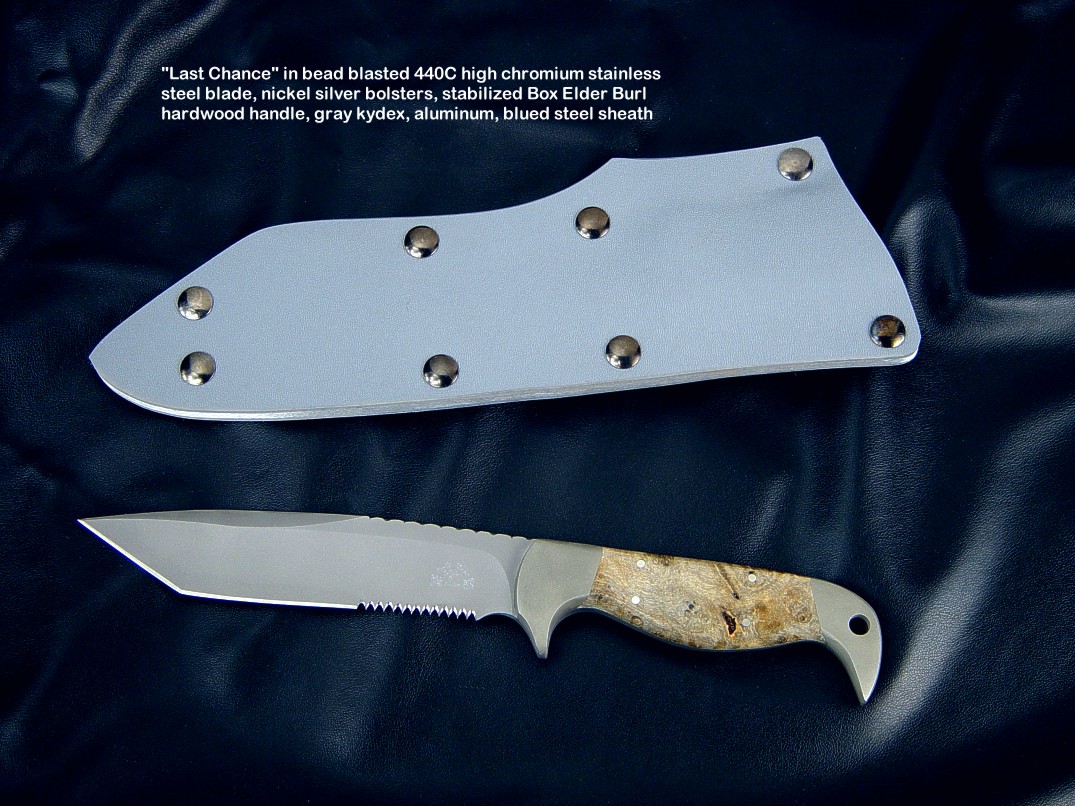
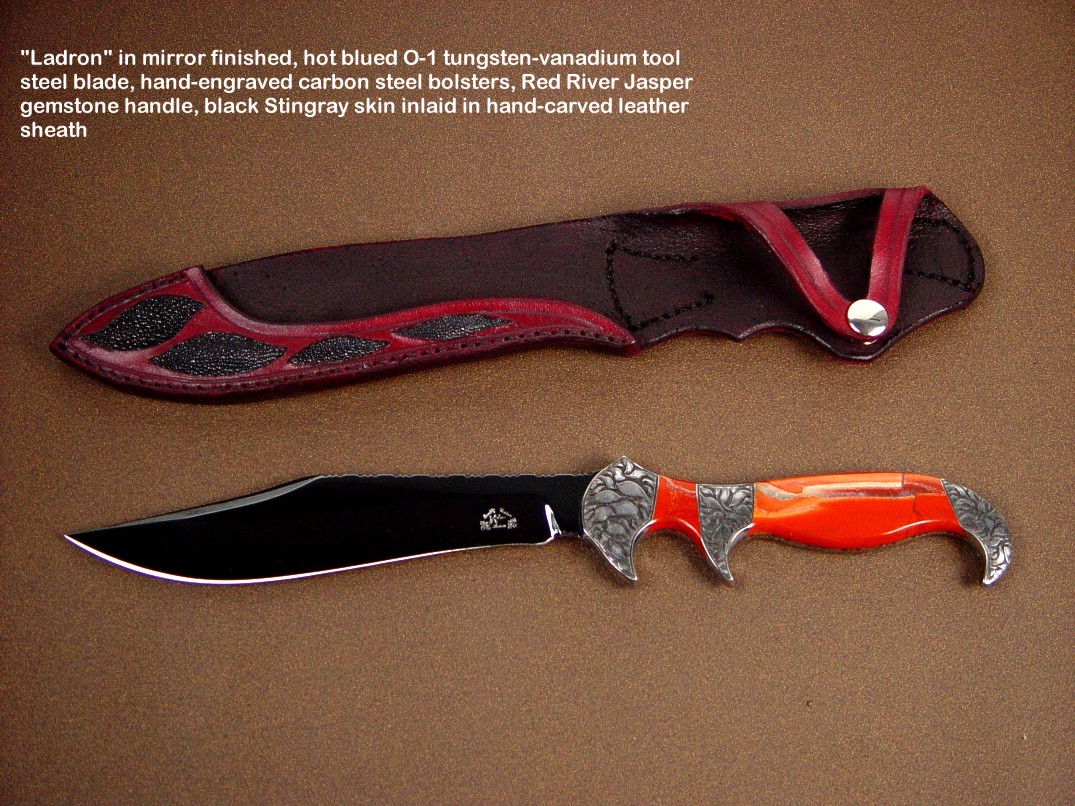
Photographs: I've inserted meaty and meaningful photographs of my tactical knives in all forms, and have included thumbnail boxes and links to featured knife pages where necessary so you can learn more about these knives. You'll see all types of tactical knives here, and some you might not expect to see. I've included some of the finer collector's versions so you can see what patterns I have available and what a finely made tactical knife looks like. You might think that some of these will never see combat, but you might be surprised to know that a good portion of the finer knives will, indeed, perform in the field. Do not discount the beautiful knife for usefulness and versatility, as the finish, materials, embellishment, and features you see do not limit the knife to a display case. Another reason I've included some of the finely finished pieces is so you can see what a knife pattern looks like completed and you can envision what your tactical version of the knife might look like in your mind's eye. I've also included a handful of some of my older and early works, so that you can see some of the more long-lived versions. I still revisit these patterns with newer tactical and combat knives as they are still great performers.
Details: The details in the text answers are my own, learned from my experience as a professional custom knife maker for decades. If details are available about the individual knives, you'll see those on the alternate photo text (available when you hover over the photo on most browsers) or on the dedicated page linked at the thumbnail photo label.
Descriptions: These can be general or specific. For instance, don't think that because a knife has a tanto blade, it's only suitable for CSAR work and is not useful for CQC or combat. Many of the knives cross fields and applications, and the description is only for that individual knife and not the pattern or design.
Answers: It is my hope that the answers to some of the problems and issues with modern handmade and factory knives are available on this page and the other pages of my web site, but if they are not, please do contact the maker or company of the knives you're interested in and ask them to communicate with you about the knives they sell.
Evolution: This page will continue to evolve, and it is my goal to make this the best Tactical, Combat, Rescue, and professional service duty knife page on the Internet.
Honor: I consider it a great honor to make real knives that are used in lifesaving, defense, and protection of the guys who put their life on the line every day. If you are one of those individuals reading this, please accept my thanks for your service.
"Jay Fisher is the best modern knife maker around, pursuing an ancient tradition but beautifully perfecting the craft by selecting the finest man-made and natural materials. Jay makes every type of edged steel weapon, fitting the blade to it’s purpose. The world’s elite clandestine rescue and tactical squads seek his weapons. Their lives depend on Jay Fisher Custom Knives- the best quality knives in the world."
--Bernardo M. Perez
Deputy Assistant Director-Ret.
FBI Laboratory
Washington, D.C.
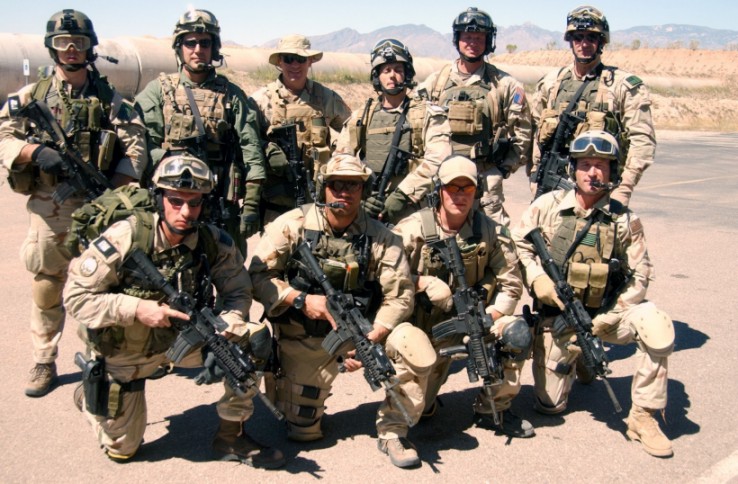
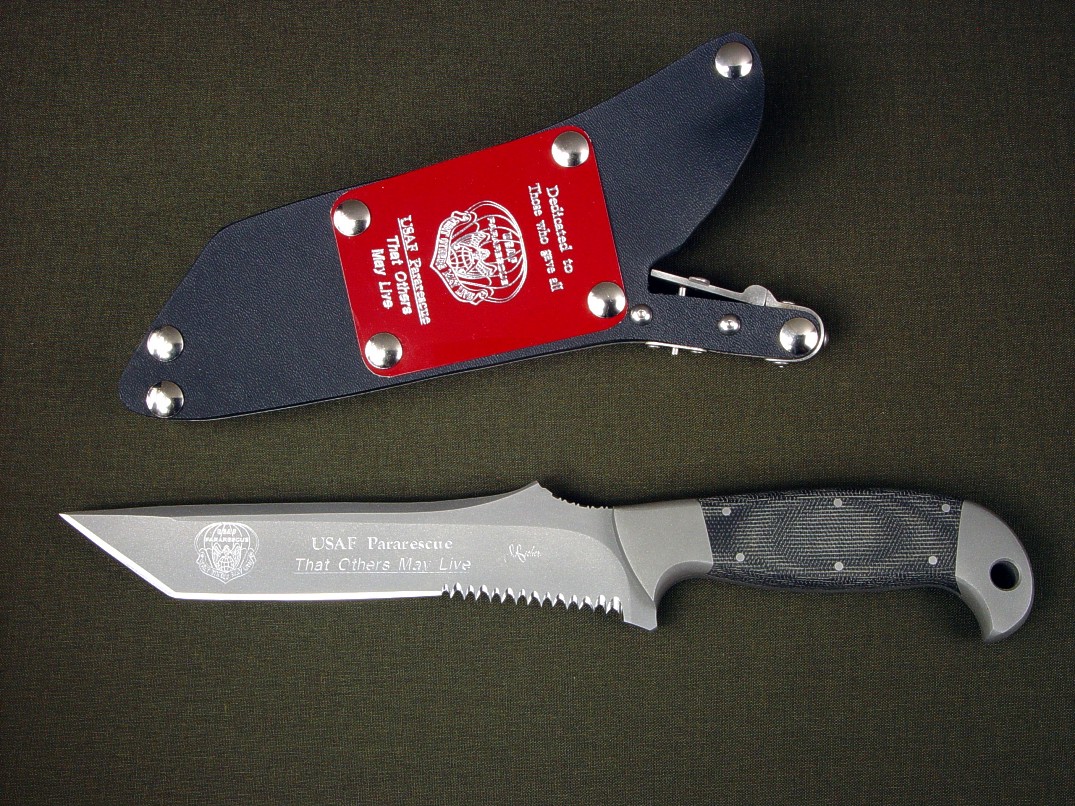
"My sheath held my knife in place at all times... On one mission when rappelling into a hot HLZ with a 70 lbs pack I went upside down and got drug when the Helo decided to split, my knife was there. Jay, I know of no other knife that you made that has seen so much action. From the first ever Jump mission conducted at the PJ School to the 2 OEF deployments 23 Combat missions in all; “not to forget multiple peace time missions”. When my life depends on my knife why carry anything but the very best. Thanks for building the best for the best."
--SZ (Super) USAF Pararescue

Jay,
Just walked in a few minutes ago ... knife was waiting for me when I arrived, and I
must say at first glance it looked huge; however, once I took it out of the sheath
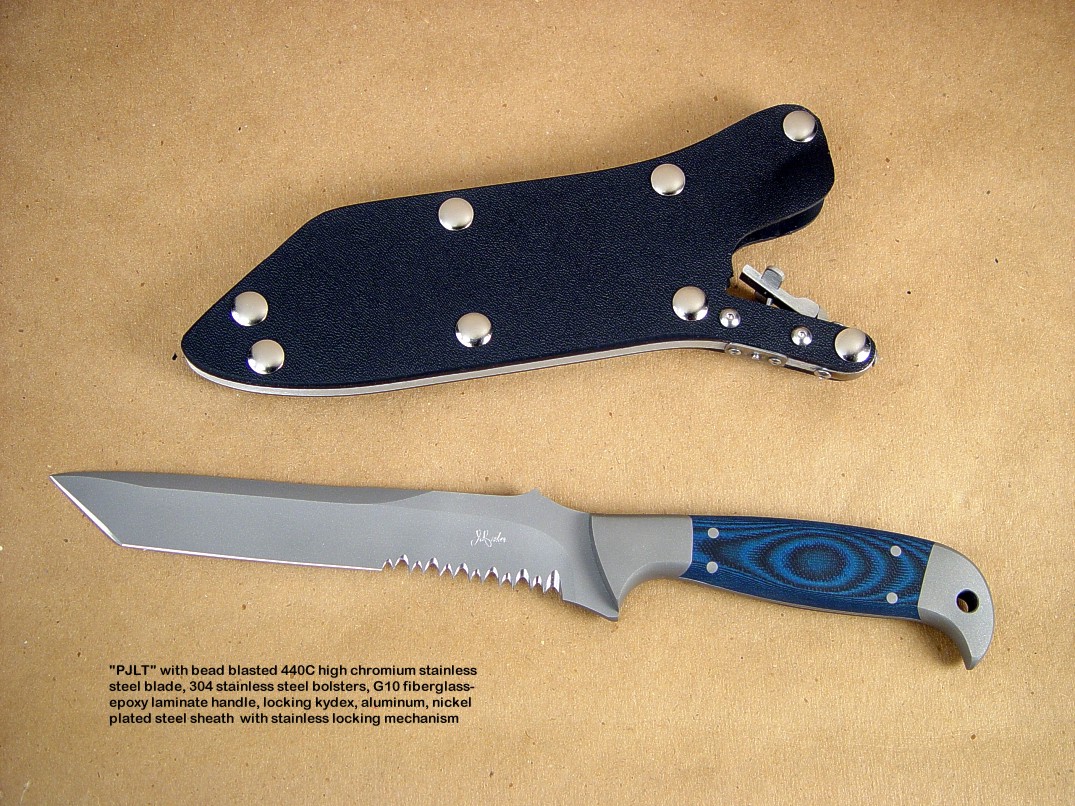
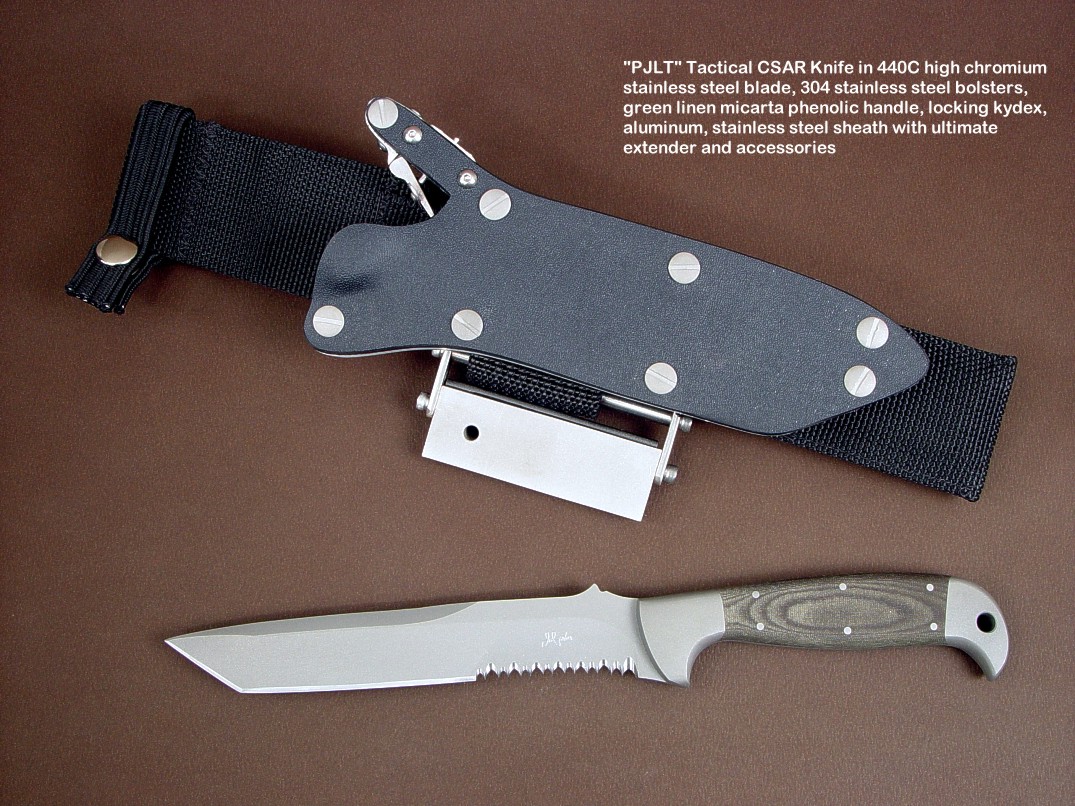
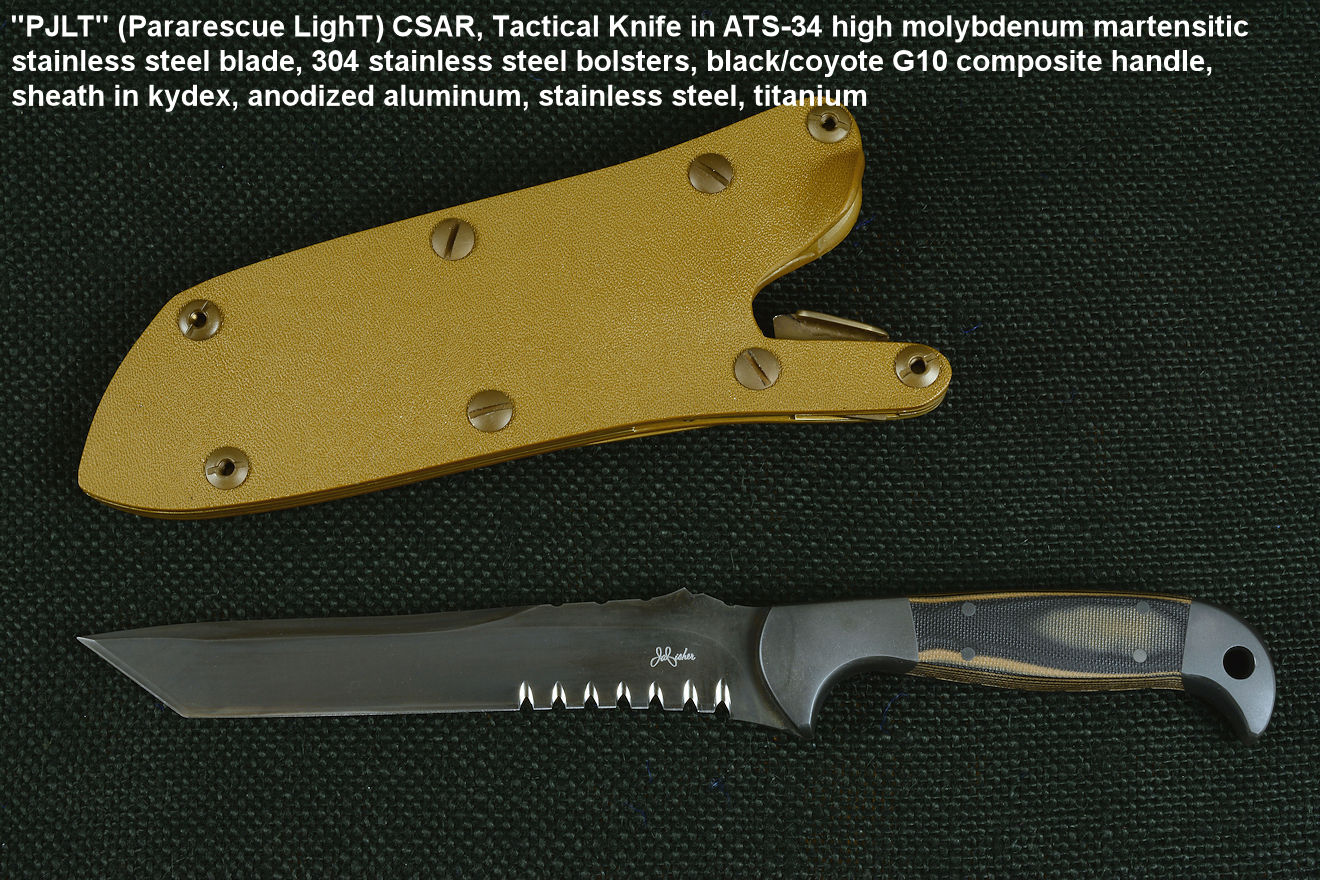
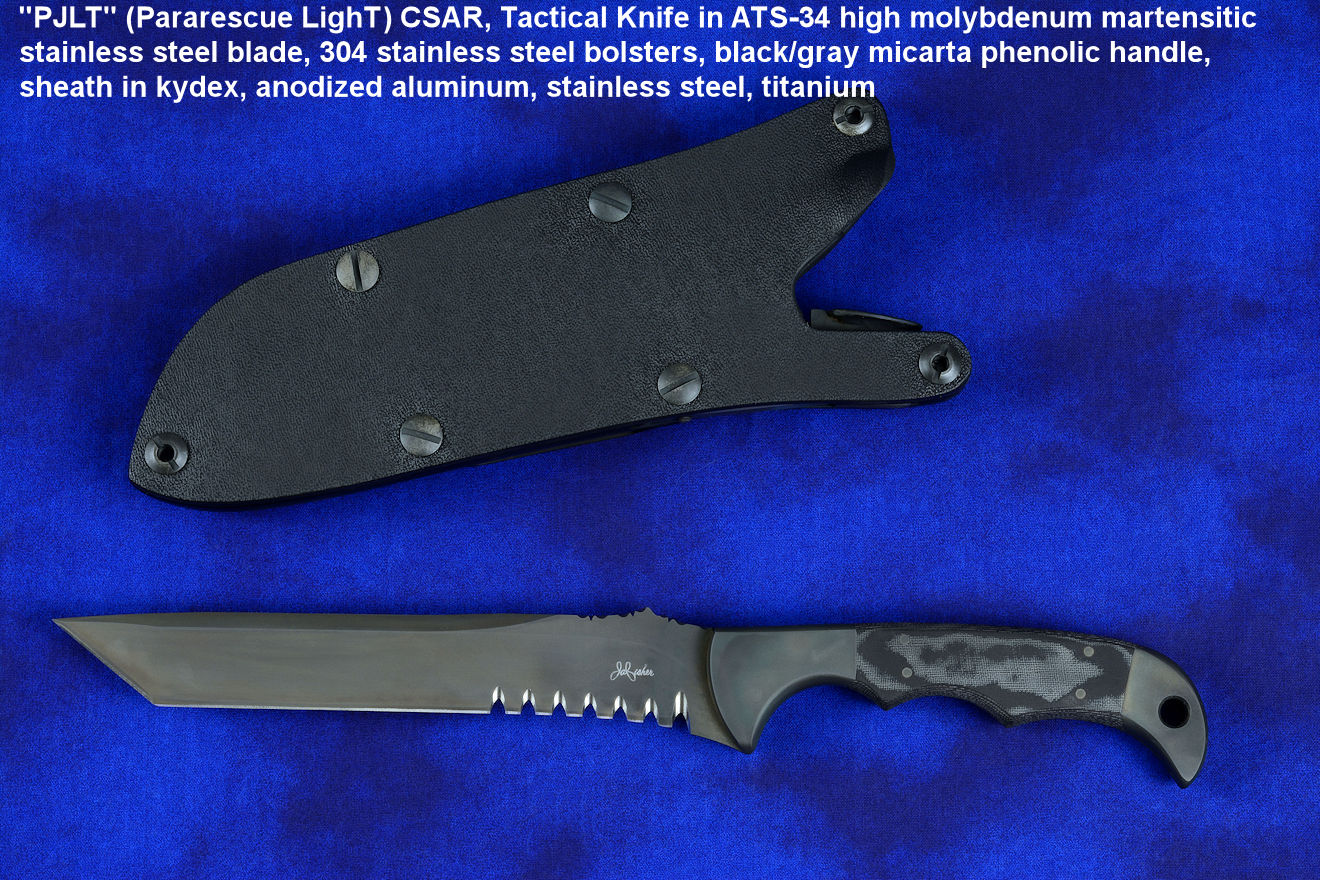
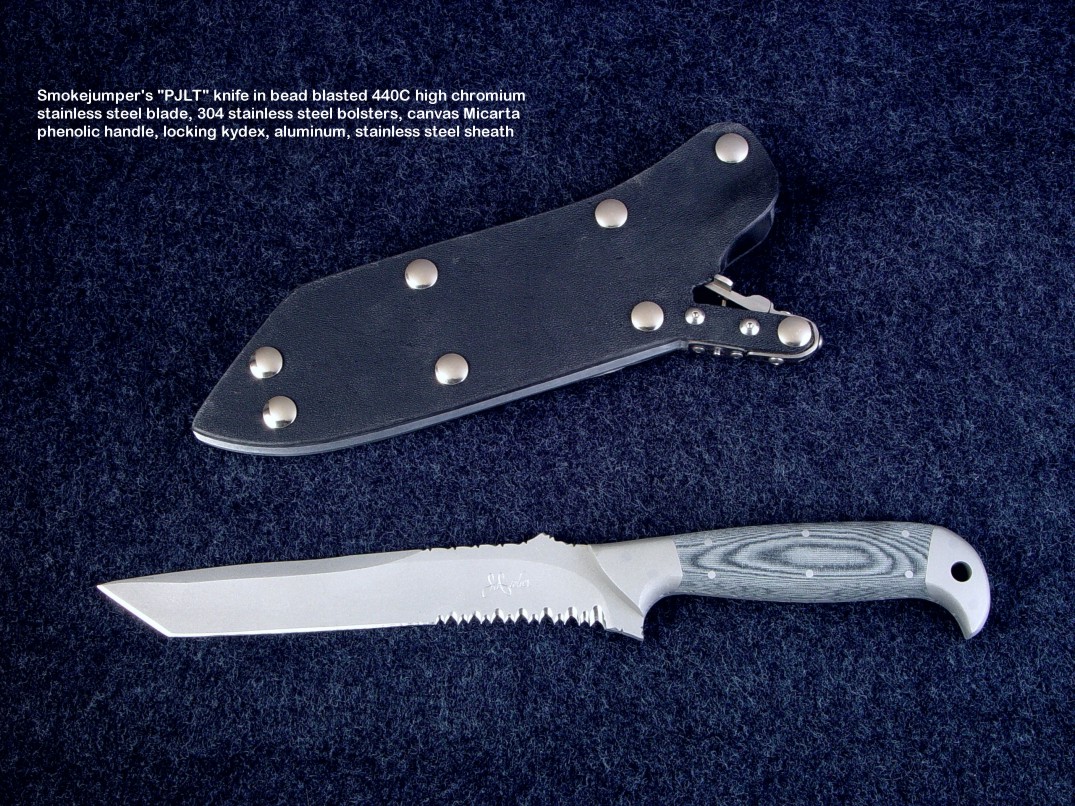
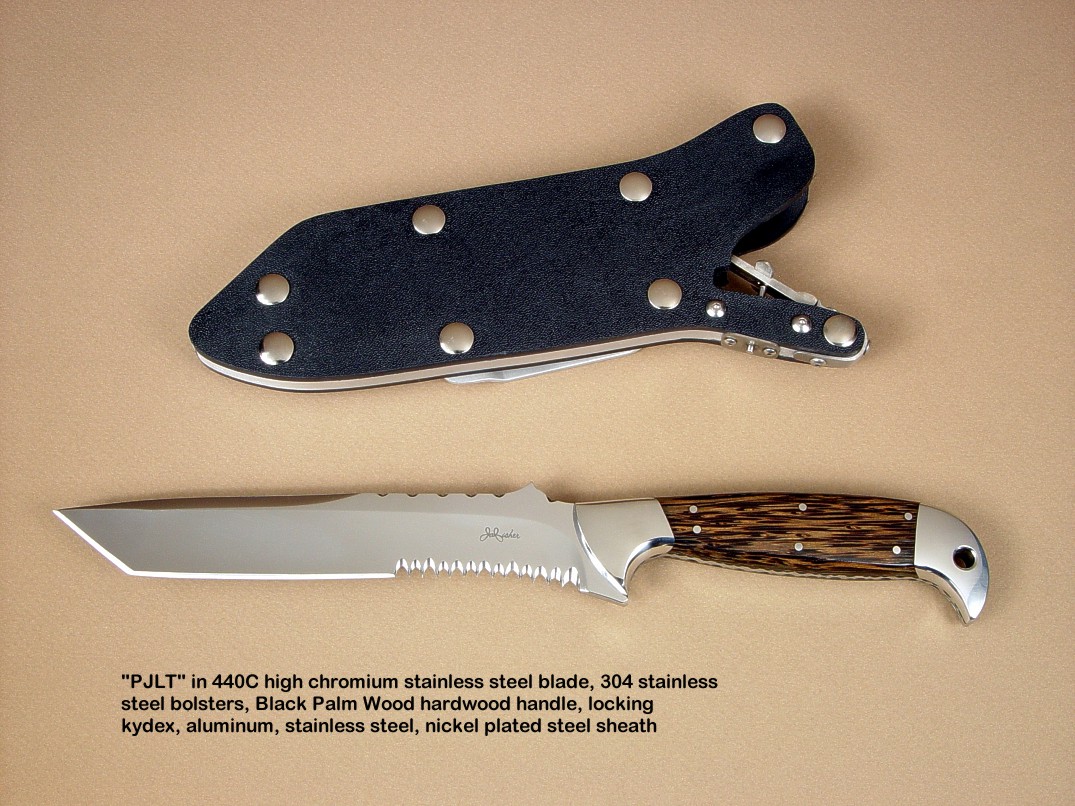
it had that incredible feel that I have come to love with your knives. My PJLT Tac
knife has been with me now on three different continents and it is now like and old
friend. For my up coming deployment to OEF I wanted something with a little more
bulk as well as something that I could carry in a survival/exfil mode...I must say
this definitely looks and feels as if it has the perfect combination of length,
weight, and balance to take on the most demanding tasks. I like the way you
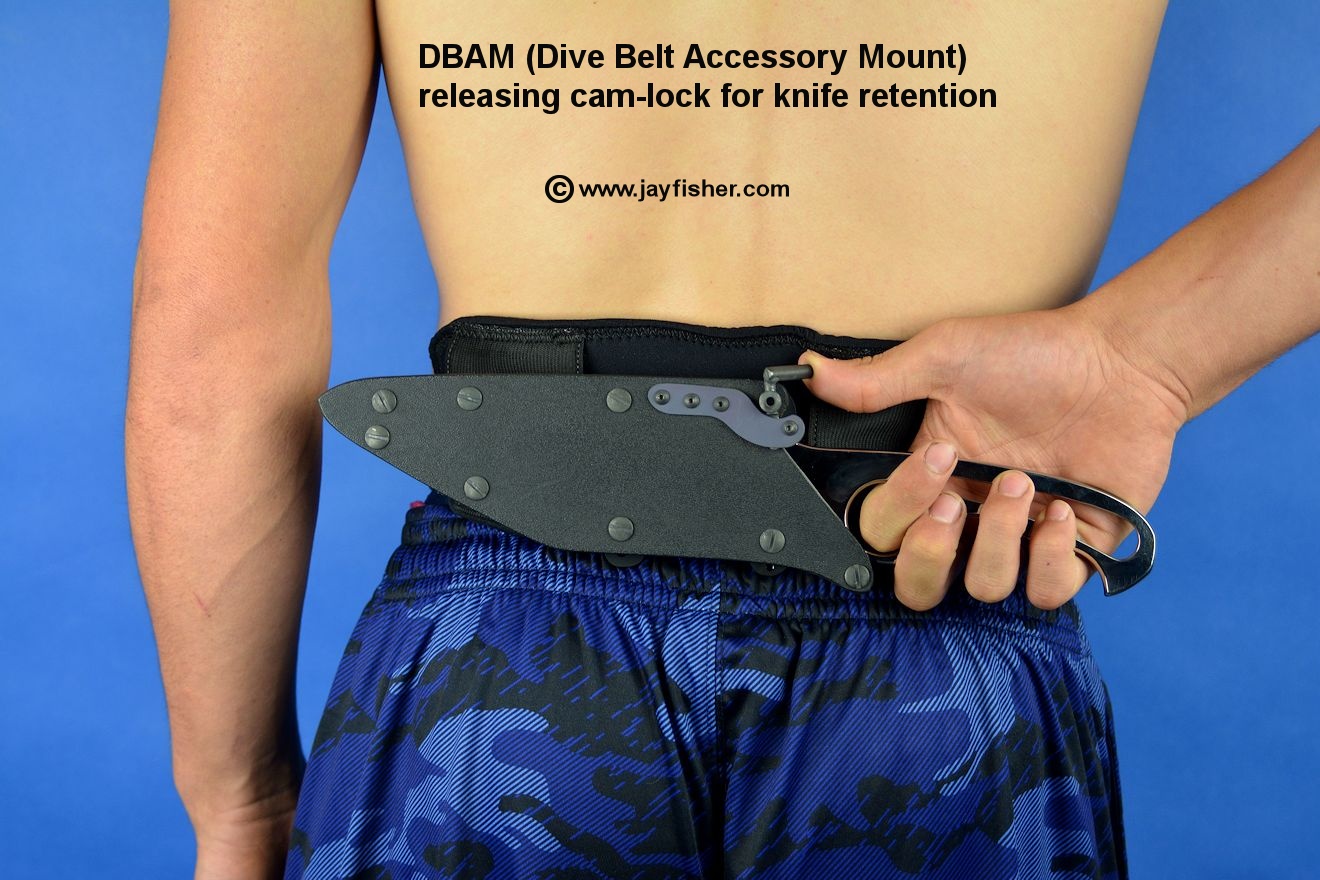
incorporated the webbing into this knife and it has the same secure locking mechanism
that I have come to trust. After six months in OEF and another 60 days in Africa,
I never once had the locking mechanism open while in motion. I carried it both
upright and handle down on my vest and never once had a problem. I can't thank you
enough Jay for your quick response and as in the past, having one of your blades
close at hand is a very comforting feeling.
... I sing the praises of your knives at every opportunity and I only wish that every
soldier, airman, sailor, marine, and civilian serving this great country of ours could
have the opportunity to carry one of your knives where ever they might find themselves - most
especially if that brings them into harm's way.
All the best Jay to you and yours and as always thank you very much.
--T. A.
Short Answer: Yes.
Long Answer: There are many knives in the world: knives made to prepare food, knives made for utility cutting chores. There are knives made for work, for hunting, for camping, and knives made to cut the soil for farming. There are knives for butter, and knives for boxes. There are knives that cut thousands of miles of textiles, material, and plastics in industry, and there are knives that slice cellular samples for microscopy. There are also knives for rescue and tactical operations, counterterrorism, defense, and knives that are weapons.
Without getting deeply into the sociological and political aspects of knives as weapons, it is probably enough to say that it would be great to live in a word where knives are not used as weapons against humans, ever. We are essentially large bags of tissue, bone, and fluids, so the sharpened edge will always be a tool and sometimes a threat and there is no law, government, decree, or environment where we would be able to live without the simplest of knives.
As long as there is conflict, there will be knives. Knives are our first shaped tool (rock hammers non-withstanding), and consequently, our first weapon. Since they are a simple form, they will not be made safe, will not be disarmed, and will not be made ineffective in any way. There are efforts in some countries currently to remove knives from the populace, and at the very least remove the points from knife blades so they can not pierce. What will they then do with the screwdrivers, ice picks, metal scribes, skewers, long screws, and sharpened sticks? The ridiculous notion that knife safety can be legislated is the same as gun control. Since law abiding peoples will dutifully give up their defense, and criminals will not, the law abiding lambs will be ripe for slaughter. Thank God Almighty that our forefathers had the intelligence and foresight to allow our people the right to keep and bear arms. And knives as weapons are arms.
I do not recommend or promote any knife being used by a non-professional as a weapon. There are much more effective weapons for home and personal defense, and in our country (the USA) I support and encourage protection of the second amendment. Though there are some cases where combat and tactical knives may be carried and used with proper concealed carry certifications within legal jurisdictions, the knives I make for combat, tactical, and defense use are more typically made for professionals in the military, law enforcement, federal and state agencies, and rescue and survival specialists. These are real knives; most of them have been designed with the input of those who carry them in their service. It is an honor to make knives for men and women who put their lives on the line every day in the duty, protection, and support of others. Sometimes, this requires a knife for defensive use, for slicing, cutting, and thrusting engagements, and for a weapon of silence, close range, and limited collateral damage.
While there are many knives available on the Internet and in the world that claim to be tactical, few would stand up to the reality of combat knife engagement. On this page, I'll detail specific limitations, problems, and outright falsehoods about the tactical combat knife, the rescue knife, and the mass marketed so-called tactical knife. When you are finished reading this page, you will know more than most people in the world about knife combat and professional knives, and be able to easily distinguish a well-made weapon and tool from a mass-marketed manufactured novelty that claims to be a reliable adjunct.
The opinions and details given are my own, gleaned from over forty years of making real knives, many for soldiers, counter-terrorism units, rescue workers, police, federal agents, infantrymen, firefighters, and emergency response and survival specialists, as well as my own experience in these related fields. This life's work represents not only my own input, but also the experience of the pros who carry and use the knives every day in their work. Please think about that, and give these people the respect they deserve in our society, nation, and world.
Most of what I write about are serious, blatant failings of knives. These are cheap practices, presented as valid values. These failings are common, massive, and corrosive to our industry, and frankly, there is no excuse for them. More
The subjects and topics on this page are blunt in their comparisons to and of other knives. While this is criticism, it comes from a professional. I receive criticism, too, but it is always from anonymous or low information sources, not the professionals who use my knives in their critical operations and missions.
Every successful business and endeavor has critics, and my professional knifemaking career is no exception. Clearly, what you will see on this page is not the average, normal, traditional, typical, or commonly accepted design, concept, and construction of a tactical knife. There are those who publically reject any deviation from their beliefs and practices in what they believe is a real combat, rescue, or professional tactical knife, and that is their prerogative, as this is a free country (the USA) and most people's comments are not restricted. I, too, have the right to say what I believe and to present in clear and concise language why I do what I do. The difference is that I have the experience of actually making what you see here, and my experience in knifemaking is over four decades long, and over 30 years as a full time professional knifemaker. This is my career, my profession, and my experience.
For most people who don't particularly like or accept my type of knife, they simply move on to find a maker or manufacturer who does appeal to them, and I encourage it, because, after all, knives are personal. However, there is a particular type of person who complains, grumbles, and then tries to curry favor with like-minded individuals that almost always post comments anonymously about my (and other's) works, as if they are or have some authority on the matter.
To this I have a clear statement: If you are not in the arena, with skin in the game, professionally, then your comments as critics from the cheap seats are ignored by those of us who are in the arena. If you are this type of person, you may be outraged by this comment, but this is the truth.
The people who are in the arena are the people who commission my works, design them, pay for them, and frequently ask for more. They are professionals, soldiers, Pararescuemen, SEAL Team members, rangers, Combat Rescue Officers, Counterterrorism Unit teams, police and SWAT Team members. They are people who benefit from my designs and see the value of them, or they wouldn't buy them, order more, and keep me in continual orders. They are who I make for, and they clearly let me know what they want, how they want it, how they plan to use it, and the distinctive advantages of the individual works I create. You can read some of their comments on my Letters, Emails and Testimonials page, and get a clear idea of what they think. It's also good to know that every single knife on this page is sold, in the hands of these great people, in use, appreciated, and depended upon.
It's humorous to read (usually on forums) the disguised, insinuated, and outright blatant lies that suggest my knives aren't used in combat. This is sad, because it demonstrates a lack of understanding, familiarity, and knowledge on the part of the person posting the comment. They aren't sure my knives are used in combat. I make all those Pararescue knives, but, after all, who knows if they're used? Have they even read anything on this website? How about this comment by Chief Master Sargent SZ above? I mean, really, 23 Combat Missions? Do they actually think I make this stuff up? These same complainers would be aghast to find out that I actually make knives for some of the top Counterterrorism Units in the world, and they can't even see those knives because they are not shown on this website. Someday, when I make this area of what I do public, what will they say then? That none of the knives are real? That they are carefully constructed in Photoshop? They'll have to think up something because, after all, this can't be real... right?
If you are one of these critics, and think that I just dream up knives, patterns, features, and executions of these in a vacuum, you are wrong. Like all of my knives, I listen to my professional clients to create for them the knives they request. If you are not one of them, frankly, you have no standing in the conversation. None. Sitting in the cheap seats where you have low information, no investment of blood, sweat, effort, or money while barking and complaining to others keeps you out of the arena, out of the game, and unimportant to the rest of us. This is reality. The critics will go on and on (anonymously, because that is what cowards do), yammering away way up in the stands, while the rest of us go on creating, living, and enjoying the successes gained by active and valid conversations, between patron and artist, between craftsman and client, between warrior and weapons maker.
I make knives for my clients, not for critics.
If you are a critic reading this and incensed and outraged, good for you, you have felt something. Now, apply that energy to offering what you think are valid and useful creations to people who are looking for them, and the very best of luck to you! Roll up your sleeves, get in the game, and spill some blood while putting your own future and your family's future on the line. If you are too afraid to do that, then you understand how fear can keep you paralyzed. They can put on your gravestone, "Dead, but not used up yet." That last comment thanks to Earl Nightingale. This one too, should help, "You become what you think about."
"You know, I never believed in decorous weapons until I met Jay Fisher. Where does one draw the line between a fighting knife and a work of art?
Jay Fisher is a throwback to the age when craftsmen were *all* artists, not mere producers of products, when every item that went out the door had a story and a purpose all its own, and when you went to a craftsman not because of what you wanted but because of who he was.
Jay is a guy who knows how to use the modern to serve the past. We really do make better steel today than we did a hundred years ago - the idea of cutting an ancient Samurai sword in two with a modern American knife does have its attractions - and the blend of old and new in his work is totally seamless. A knight Templar would not have hesitated a moment to take Fisher's steel on his Holy Quest. In fact, he would have thought the technological edge a gift from an especially attentive God.
I suppose that says it all. Jay Fisher is one of a kind, a man who knows the riddle of steel, and that the difference between a good weapon and a bad one is the combination of how you make it and to whom you give it."
--Worldwide best selling military historian and author Tom Clancy
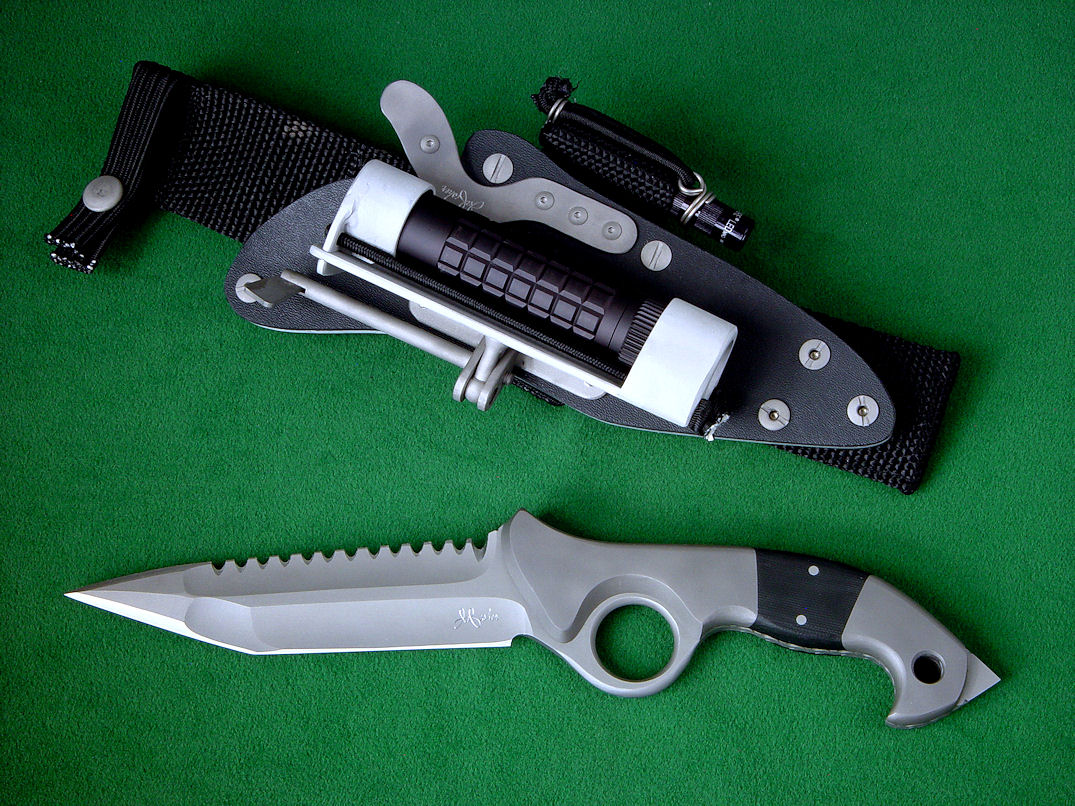
You'll read a lot about Primary Edged Weapons (PEWs) on this page and other linked pages on this site that discuss combat tactical knives that I (and others) make. It helps to remember that this is what a combat knife is: a Primary Edged Weapon. A folding knife with pliers is not a PEW, nor is a hunting knife with a dropped point. No folding knife can ever be a PEW (more on that below), and what most companies sell for tactical knives would make lousy PEWs.
When everything goes to hell, go to your PEW and pray. But you'd better have a Primary Edged Weapon you can depend on, not some thick, painted, half-ground, blocky spade of a knife blade and a lousy weak, screw mounted handle with a flimsy nylon sheath. More details about real PEWs on this very page; read on, brother, these are things you need to know!
When everything goes to hell, go to your PEW and pray.
Hello Jay –
I cannot add to what compliments already appear on your website– therefore I am parroting……….
You have the best artist’s/craftsman’s website compared to all I have seen in my many years and your writing is superb.
I am 67, a dual citizen, and at one time posted to the 18th Airborne Corps at Ft. Bragg back in the 60’s and 70’s, so I know
how pleased ANY soldier would be to carry and trust your final pieces.
Very fine, very fine.
All the best to you.
--Bryce O.
Edmonton, Alberta
Short answer: They are stronger, tougher, and more durable than other knives with more secure handles, robust sheaths, and reliable, extensive, and multiple stout wear options.
Long answer: I hope and pray that you'll never have to use a knife in the field of combat, other than for cutting some cord or opening a can. What I'm hearing from my military clients though, is quite a different story. The unspeakable actually does happen. Knives are used in combat.
If you've never needed a knife in combat, then hoo ya; may God shine his mercies upon you. If you are a military or service professional, you deserve some straight talk, so I'm not going to sugar coat it here. When the enemy jumps you in a back alley in Kandahar, or leaps for your firearm in a tight room, or a cargo line snares your foot on its way out of an aircraft that is not on the ground, you need a knife that you can get to quickly and easily, one that will cut what you need to cut, one that will pierce through seven layers of clothing that the enemy wears to protect himself to deliver a decisive and fatal wound. If you're pulling out your knife in combat, things have already gone to hell and your shank of steel better be up to the task of saving your life.
Combat knives (Primary Edged Weapons) are used for a variety of purposes, including disabling or killing your enemy. Rescue and survival knives are also made for a wide range of uses including severing or sawing tough materials, piercing, and withstanding marine and even arctic exposures. So how are my combat or Close Quarters Battle (CQB) or Close Quarters Combat (CQC) knives different? How are my rescue knives different or better made than what you will find in a hardware store, knife shop in a shopping mall, or on the vast brochure-based offerings of this very Internet?
They're extremely strong, very sharp and capable of being re-sharpened; they are durable and solid. They're balanced and designed to deliver great force at the point and cutting edge, and may be used in multiple grip styles. They're designed to pierce, stab, slice and chop while protecting the user's hands. They may have serrations for ripping, sawing, or tearing tough materials and hardwoods. The handles are made to be stout, strong, and rigid, and be gripped with certainty with bedded materials of high durability. The knives often have stout, thick rear bolsters for strength and rigidity in a reverse blow, and heavy, multi-pinned front bolsters to strengthen the handle-to-blade junction and guard the user's hand. The materials are corrosion-resistant and properly hardened and tempered for the alloy composition and blade geometry. The surfaces are never hidden with coatings or paints. The sheaths are made as tough as any military gear, with metal frames, bolted together, and are quite frankly, the best made military grade knife sheaths in the world. The accessories are far-reaching and variable, interfacing with multiple missions and tactical gear.
For decades, my goal and experience is and has been to work with clients to design and make the finest military grade combat, tactical, and rescue knives and sheaths available. Many of the knives you see here have been created with the direct input from the military, tactical, or rescue professional.
What you will see on these pages are the real thing.
Any serious knife combatant or collector who hasn't experienced Jay's quality really doesn't know how good a knife can be. It's beyond precision, the finest materials, or even art. Jay has a quality that is unique in the world: a sense for perfection in application, as well as beauty. When you feel the balance, you'll never want to go back to any other, but when you see the look, you'll want to put it in a jewel case! What a great conundrum.
--Tom and Joe, your Blade Combat team.
Short Answer: Most of them are junk.
Long Answer: Don't trust your life, your squad's life, or your charge's life to a piece of junk.
There are a lot of decent professional knife makers out there; I encourage you to look around and perform a serious comparison of them. Most successful makers will offer great details, descriptions, photographs, and testimonials about the knives they make and should offer serious comparisons with factory or boutique shop knives. Please don't settle for a cheap factory knife when it comes to buying a weapon or tool that may be the instrument that saves your life or your charge's life.
Knives touted and sold as tactical knives or combat knives by knife factories, boutique shops, and importers is a huge business, netting over a billion dollars a year. The market is directed somewhat toward military and professional knife users, but mostly toward civilian knife buyers that just want a tactical-looking knife. One would think that because of this extremely large market, there would be vast, credible information on these types of knives, there would be a quality product at every outlet, and the competition would hone the quality to a high degree. Unfortunately, this is not so. Most of the knives sold as tactical, for combat or professional use by factories (and some knife makers) are simply junk.
Factories, manufacturers, and boutique shops are in the business of making the most money for the lowest cost of product and labor they can, pure and simple. This fact limits any knife you buy produced in just about any factory, large or small. Some knifemakers have gone the factory route, and started their own small factories, and these are called boutique shops, pre-production facilities, or semi-production shops in this field. They, too, fall to the demands of bean counting, profit margins, and lowering their quality at the benefit of selling more volume. Factories cut corners, buy cheap materials, get cheap labor often from foreign countries, pay their workers less than they deserve, or they wouldn't make any profit.
Guys like me are working for profit also, but we're not getting rich like the big factory and boutique shop owners are because we don't deal in volume, we focus on quality. Factories are limited by their process, and artists are limited by their vision. On this page, I'll detail point by point why fine handmade custom tactical, combat, and professional knives are worth the investment of your hard-earned money. You will learn more from this page than any other source you can find about what comprises the very best professional tactical combat knives.
My words might seem strict, and they represent my opinion and you deserve to know where that comes from. My opinions are derived from my own experience as a professional knife maker, directly making and selling combat and tactical knives to military and professional service knife users for decades. This is my only business; it is my full time profession; it is how I derive all of my income, and has been since 1988. I've been making knives for about 40 years, and I've seen a lot of knives in that time. The truth is that I've made more knives than the average man has seen in his lifetime: thousands. I'm not boasting; it's just a fact of life in this tradecraft, profession, and art.
Along the way I've seen lots and lots of bad knives. I've had exposure to literally thousands of professional knife users, and they run a wide range of types: Infantry, Pararescuemen, Counterterrorism Units, Special Ops, Marines, SEAL Team members, SERE Specialists, Pilots, Policemen, SWAT Team Members, MERGE Units, Emergency Response Teams, Disaster Response Teams, Federal Officers, Sheriffs, Principal Security Details, and DEA agents. I have been very lucky to have the benefit of a tremendous amount of input from them, and the experience of making hundreds and hundreds of combat, tactical, and rescue knives. Those knives are used in the active duty field of combat and rescue, and I use the feedback from these professional clients to tune in and refine my work on all my knives.
There is a lot of hyperbole on the internet. Forums about knives, tactical usage of knives, and knife-related subjects are heavily slanted towards factory knives, and this is due to several reasons. As much as we'd all like to believe that we're independent thinkers, we are subject to the same advertising onslaught from knife companies and purveyors as the next guy, and we're influenced by words, presentation, associations, and appearance. Advertising campaigns work, and a great deal of the knife industry's dollar is spent on advertising. We are influenced into buying a particular knife, just as we are influenced to purchase a particular soap, automobile, or toilet paper. Most people do not research the knife they buy with a discriminating eye, they are simply sold by the hype.
Another reason the slant in internet discussions about knives is heavily weighted toward factory knives is that factory knives are common, accessible, and cheap to buy. So everyone can have access to them. I compare many of these discussions about factory knives to boys laying out their glassy marbles in the sun, evaluating them, admiring their appearance, and discounting or diminishing the marbles of other boys. Like marbles, among factory knives, there aren't enough features or quality to make any clear distinction of performance or value. And since most of these knives will only encounter some stubborn tape on a shipping box, it doesn't really matter which factory knife you choose.
For professionals, though, men and women that actually use a tactical knife in the field of combat, rescue, searches, or defense, there are options. These professionals will sooner or later educate themselves, and realize that an inferior tool can be a crippling sore, rather than a useful, reliable adjunct. It is to those pros that I write, so you can benefit from the hundreds of professionals that went before you, and helped me solidify my tradecraft of making fine custom tactical knives. Please think hard about the knife you want to carry into combat, the knife you are going to trust your life, your squad's life, your victim's life to.
In the next sections are some concrete distinctions between so-called tactical knives and Primary Edged Weapons you can see for yourself. The sections are broken down into their components. You can easily follow the outline by referring to the Topics link at the end of each section. The Topics box near the top of the page lists each section by subject. Please enjoy my effort to clear up some of the misconceptions about knives in general, tactical combat knives in particular, and thanks for letting me share my experience, knowledge, and knives!
Jay,
Just wanted to drop you a quick line. I picked up the knife from fed ex last night
and everything is there. Your work is superb! This thing is very light and fast in
the hand I cant wait to get it into action. Some people think I am crazy for spending
so much on a blade, but in the end knives are worth every penny! Especially if you
carry one as your back up weapon and your primary cutting tool into an environment
where it must work. Thanks again for your superb work again! Great job!
Vic, US Navy
With most knives, the word "tactical" defines a pop style.
In real combat knives, the word "tactical" means an ordered procedure to an end.
Real tactical knives are not about looks; they are about results.
When I started this section, I thought it would be a quick and simple grouping of issues with solutions, and would only take a bit of detailing. But as I wrote, I realized that there are many differences between a well made knife suitable for combat, tactical operations, rescue, and professional use, and the type of knife that is frequently sold to appear tactical in style only. The hype and advertising that is prevalent with the tactically styled knife is sometimes shameful, and I realized there was a need for a guy like me who makes knives for real tactical users to share what he has learned doing so over the last 40 years. So I continued to write, add topics, and detail them to make a straightforward comparison, without any hype or fluff about how a knife is styled, but pertinent facts about how knives are used, carried, and what makes the well-made knife worth the money.
Like other areas on this site, I'm sure to get some email over the comments. 99% of the senders will be positive and thankful for my efforts, and 1% will disagree. That's okay. We live in a free country, and I'm entitled to share what I know. I would be remiss if I didn't elaborate, and only gave out meager generalities about why I make knives the way I do, but weak and vague suggestions will be all you'll see on most other sites that sell this kind of knife.
Thank you for spending the time you are reading this. As promised, by the time you finish reading the content and examining the photographs on this page, I'm certain you will know more than the average man about real tactical and combat knives.
Jay,
...I opened the box and went for the knife immediately.
AHHHHHH! Just freakin' perfect size for me and my particular needs. The sheath needs a better call-out than 'Wow! Nice!' but that will have to come later in a follow-up.
Fits my hand like it was crafted just for me. Balance is perfect. A couple of careful swipes towards some of the packing paper, and more Joy! The proprioception and kinesthesia feedback was Just! Freakin'! Perfect!
That not-so-little item was a lottery. I am astounded that the fit is so good. I didn't expect it, but I'm so happy with the fit I could just do a Snoopy Happy Dance. That great big slug of serendipity will save me many hours of work. Dialing in a new handheld impact weapon isn't like the Aegean stables, but it's not nothing, either.
Thank you so very much, sir! This is a magnificent knife!
With my most sincere thanks, and deep regards,
R. N.
Hey Jay,
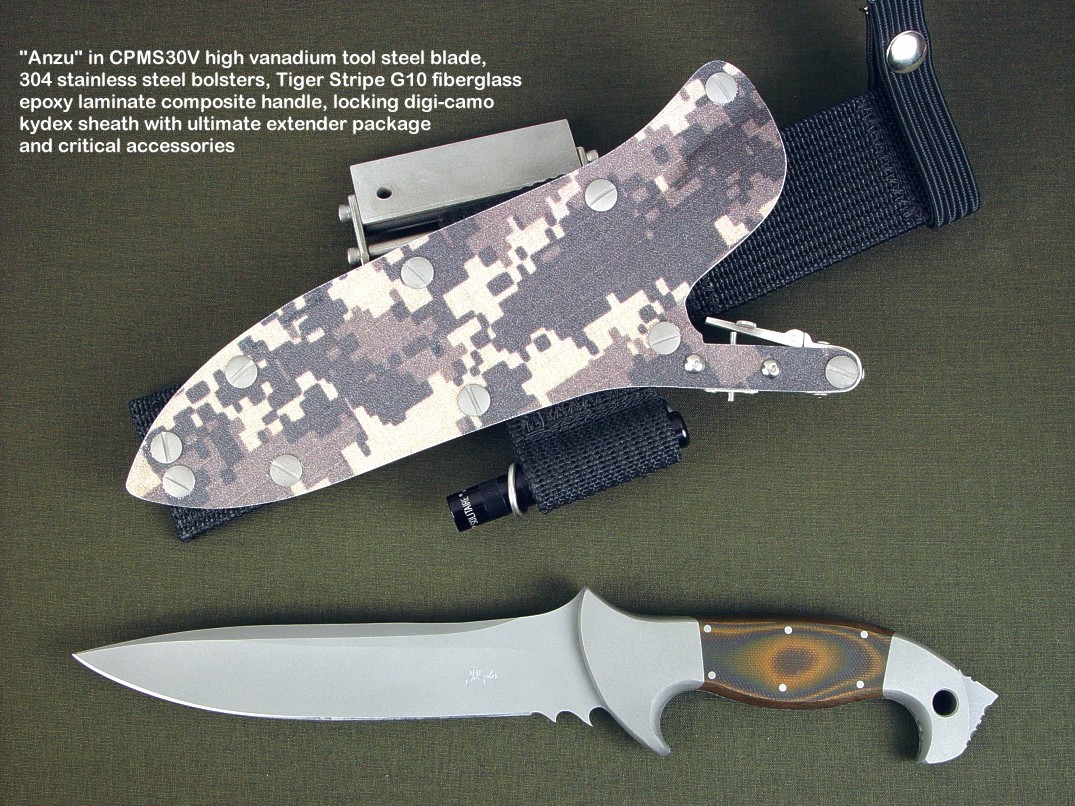
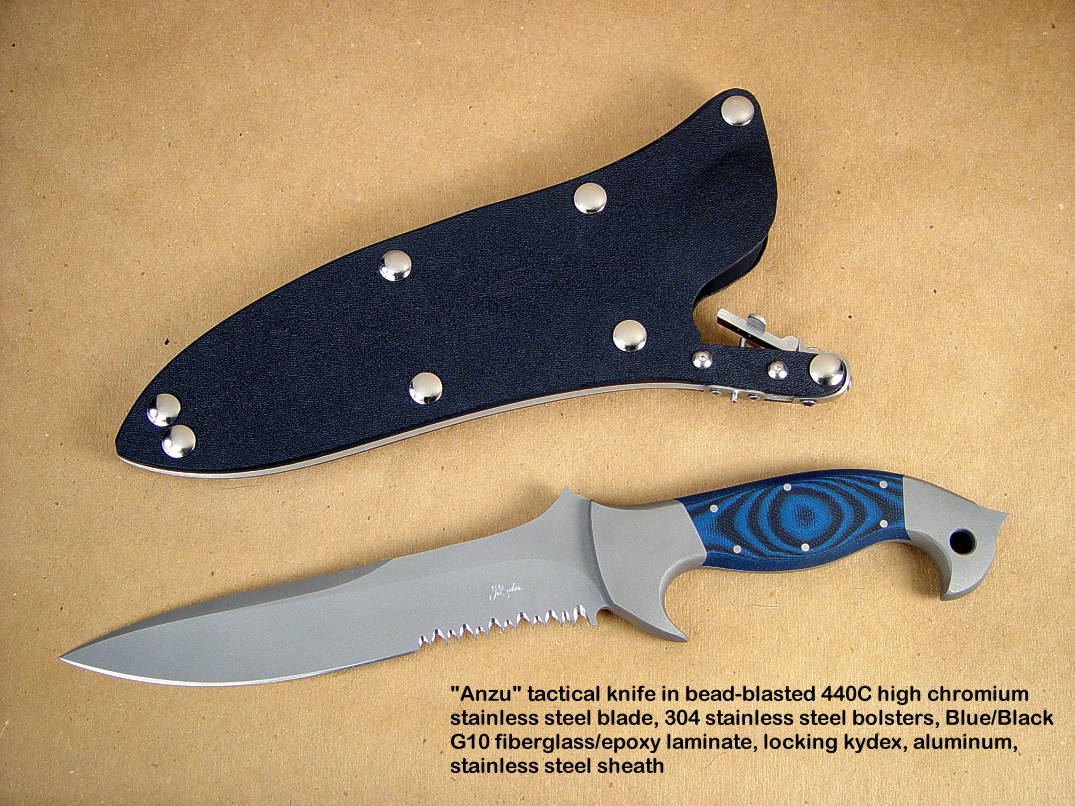
Long time no talk. I thought it was long overdue to give you some
feedback on the Anzu knife you were kind enough to sell me 7-8 months
ago.
First off, wow. What an unbelievable weapon. From its razor's edge to
the perfectly formed handle, it's the most impressive and useful tool I
have ever bought...because before the Anzu I didn't even
know what a real combat knife was. But now I can guarantee, it will be
on my gear anytime I go overseas.
Second, I got some serious use out of it in the field just recently
and that edge just keeps on cutting. It's still as keen as the day I
unopened it. Every time I take it out of its sheath, there are always
a few who look at it and ask where in the hell I got a knife like
that. Actually seeing the difference between a real combat knife and
those bendy POS knives from cold steel puts it into perspective.
Anyway, I am extremely happy with the knife and I apologize for not
writing sooner. Take care Jay, and the best to you and yours.
Respectfully,
-Chris
P.S. I will be contacting you in the near future with a custom knife order if you are accepting them right now.
A Primary Edged Weapon is not an axe, machete, or spade.
Problem: The blades on most factory tactical knives and many handmade knives are too thick at the cutting edge. This is because it costs a lot of money and requires skilled hand-grinding to produce a thin blade at the cutting edge. Sure, a thick-edged blade with a point can be used as a weapon (just as a screwdriver can be), but after two to three sharpenings the cutting edge has the thick geometry of a cold chisel. If you have a knife like this, you know exactly what I'm talking about. You may not see a thick grind on the picture; you might not even notice it when you hold the knife at a store or outlet. You will notice it when you try to stone up a keen edge in the field, and you work, and work, and work, to no avail. Why do factories, shops, and manufacturers do this? It's because it's cheaper to make a thick knife than a thin, properly ground edge, and by the time you need to sharpen the knife, the factory hopes you'll just buy another knife.
Solution: Finely made handmade custom knives are ground thin and even at the cutting edge, based on the required need of the knife user, the purpose of the knife, the steel type, the temper chosen for the blade, and the geometry of the knife in profile balanced with the cross- sectional thickness. Read more about blade geometry on my Blades page.

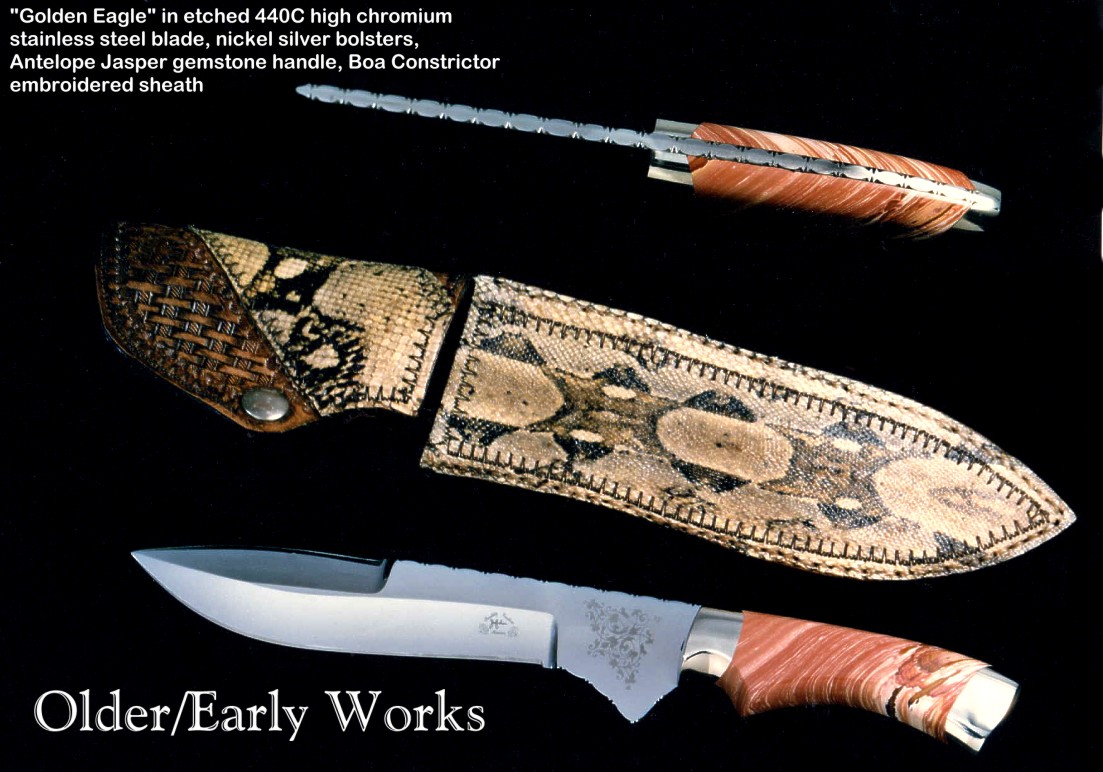
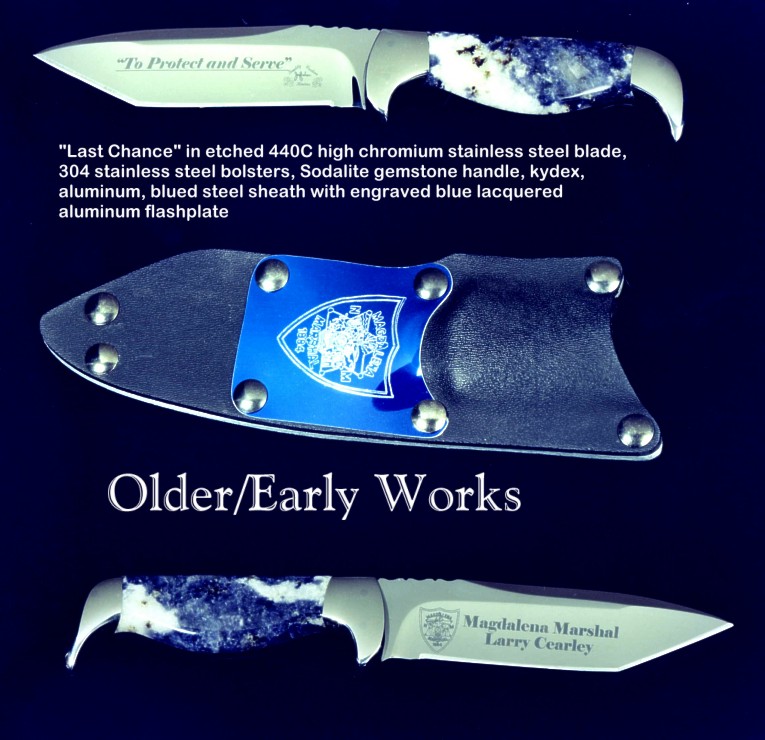
Problem: The blade grinds on inferior knives are flat, convex, too shallow, or too deep. These distinctions are very important because they set the weight, mass, balance, and most importantly, the longevity of the knife.
Flat and Convex Grinds: While it's tempting to call a flat grind or convex grind bevel a sturdier grind due to the thickness behind the cutting edge, it is an immensely impractical grind for a knife that is to be used for cutting or slicing year after year, and maintain the correct geometry for sharpenability. Sharpenability is a seldom discussed factor of knives, yet it is the most important service that the knife owner will perform himself. The straight wedge of a flat grind prohibits sharpening at the same angles as the knife is initially furnished with without regrinding the entire bevel on both sides of the blade. This is not in the scope, skill set, or machinery requirements of the knife user. A convex grind is even worse, as many of these grinds are polish-finished by machine initially, and that process and technique simply can not be duplicated in the field. Therefore, both of these types of grinds are unserviceable in the field. They may be sharp when you purchase them, but they will eventually dull, and you will have to sharpen them. Read more about blade grind geometry with illustrations and comparisons at this link on the Blades page.
Grind Depth: Underground or Overground: Another failing is an underground (shallow) grind. It doesn't matter how this grind is made, hollow, convex, or flat; if it doesn't extend beyond the midline of the knife axis, it is too shallow. I discuss this subject in great depth with illustrations on my Blades page at this bookmark. It's worth looking at, because you will clearly see the distinctions between a severely underground knife, a severely overground knife, and a normal knife or a knife that deserves as strong spine (all combat and tactical knives do). With an underground knife blade, the knife will never be as sharp as when you first purchased it unless you get a knife maker to regrind it for you. The reason factories and makers sell knives like this is because of economy, speed, and lack of skill. It's fast, cheap and easy to do a tiny grind on the knife and quickly get it out the door. I've also, sadly, seen severely overground knife blades offered for sale for combat use by well-known makers, and this is a horrible error. Since combat knives must have a substantial and supportive spine, overgrinding a combat knife will yield a weak, unbalanced, and overly thin blade that will eventually break (or bend) at the grind lead-off. This would be like you going into battle without your spine!
Solution: A knife that is designed to cut, slice, and pierce must be thin enough at the cutting edge to be sharp, and must remain thin as the knife is repeatedly sharpened and the metal worn away. This means that the grind must be thin, and the thinnest, most serviceable knife grind is the hollow grind. When properly ground with the right steel, the correct geometry, and the proper hardness and temper, a stable, strong geometry is established all along the cutting edge throughout the life of the knife. This does not mean that the knife is overly thin with a weak edge and grind area. A good balance must be maintained between strength of the blade and thinness of the grind.
Jay,
This is Jared Lay; my family has bought several knives from you. I bought my brother, Jeremiah Lay, a PJLT
Shank knife for him when he graduated the fire academy. Well, long story short, my brother uses the knife
all the time and just had it with him in the Philippines, after the destruction. He went into some areas
for rescue that were the first rescue people in. Just wanted you to know we love the knives you have
made and that they are doing great work across the world.
--Jared Lay
Problem: Most factory and many handmade knives are not sharp, and can not be made sharp. This is related to the previous topic. If the blade is too thick at the cutting edge, it can not be sharpened at a low angle. The lower the angle on the stone, the sharper the blade. Most knives are not sharp, and many people have never even experienced a sharp knife blade. Though they may shave with a sharp blade, they seldom think that their knife not only could be, but also should be as sharp as that razor.
Solution: All knives, and especially tactical combat knives should be as sharp as a brand new razor. They should be as sharp as a fresh box cutter blade, as sharp as any fillet knife, as sharp as the thinnest, most keen and smooth sushi knife. A truly sharp knife is not only a pleasure to use in all cutting tasks, it is absolutely essential for the tactical combat primary edged weapon. The key word here is edged. Otherwise, you might as well go into battle carrying a shovel or screwdriver. That edge should slick-slice through a single sheet of newspaper with just the weight of the blade. It should be so sharp that you wince if you touch it with your thumb. It should be sharp enough to slice through layers of cotton and deliver a cut without the application of immense pressure.
To give you an idea of how sharp finely made knives are, I'll give you a simple personal example. When I finish a knife, the last thing I do is sharpen the blade. This is the most important part of the entire knifemaking process. After sharpening, I rinse in clear water to remove any grit, and then apply a very light coat of wax on mirror polished blades, or light oil on media blasted blades. When I wipe them down with an old tee shirt, it is common that just the act of wiping slices through several layers of the cloth and keenly into my thumb or fingers, without me even knowing until I see blood. I've had slices of skin shaved completely off with these knives, so smooth that I don't discover them until I wash with soap and water. These knives, like all fine knives are scary-sharp, and handling them is not casual or relaxed, but becomes like handling a loaded firearm. You become aware of where they are pointed, what they may contact, and very careful in your steps and movement. You don't want to trip, stumble, or bump into something that could move that edge in the wrong direction because you know that whatever the knife touches, it will cut. This is how sharp your combat knife should be.
If you carry a knife in combat, you should know that your knife is this sharp, you should be confident that it can be sharpened this sharp, and you should be able to maintain this sharp of a cutting edge. To do this, you must:
In all but the last bulleted point above, it is the knife maker who establishes the factors that will allow you to own, carry, and effectively use your tactical combat and CSAR knife. For the last point, there is the best resource on the cutting edge made, written by a man who had 45 years maintaining cutting edges for industry. It's called the Razor Edge Book of Sharpening. Read more about sharpening on by Blades page.
Problem: A thick grind is mistakenly referred to as being more durable, but the durability of a knife blade is only partly the factor of the thickness behind the cutting edge. It is the materials, the geometry of the grind, the skill of the maker, and the hardening and tempering process that determines the durability of the blade at the cutting edge. I've read where guys who make knives that have convex, flat, or thick grind bevels claim that their knives are more durable than a hollow ground knife. This may be the case if the knife is used to chop down a tree, but what kind of combat knife is that? If you are a tactical combat knife user, it is unlikely that you are felling trees with your weapon. Remember, the knives I make for combat are Primary Edged Weapons, not axes, machetes, or spades. You wouldn't use your firearm to fell a tree, so why would you expect a Primary Edged Weapon to build your shelter? If the axiom that thicker is better were true, you'd see guys carrying hatchets, shovels, axes, and log splitting wedges into battle. Try shoving those through seven layers of heavy clothing or using them to cleanly and quickly slice a tendon with smooth and effortless accuracy.
Solution: The grind geometry of the knife blade must be suited to it's purpose, not simply left to manufacturing economy. This means a careful balance of the steel type, hardness and temper, intended use of the knife, size of the blade, blade shape, blade thickness, weight, and balance of the blade to knife handle. This is a lot to consider when the knife grind is left to CNC machines or unskilled labor's hands. The best solution is to employ a maker with the skill, practice, and track record of good blades in the knife building process. Read more about blade geometry on my Blades page.
Problem: The blade steels on factory knives and some handmade knives may not be properly hardened and tempered. This fault is harder for the knife owner to determine. You might have the edge roll over while cutting something hard, the edge might seem to dull far too often when you've only done mild cutting. The knife might actually bend. With a factory knife, unless you have access to a Rockwell penetration tester, you have no way of knowing what the hardness is, and many factories won't even tell you. Perhaps because the blades are farmed out overseas (often in Pakistan, India, and China) and the factories don't even know. Years ago, a group of Pararescuemen brought me some factory knives they had been given. They were neat looking folding knives from a well known American knife company. The guys didn't expect these knives to actually be PEWs, but hoped to use them for simple cutting chores in their CSAR operations. Their complaint was that these tactical-looking knives suffered continuous edge roll. If you know about knives, edge rolling should never occur on any knife, so I offered to test the blades on my hardness testing equipment. Imagine my surprise when I learned they were only 35HRC when they should have been 58HRC to 61HRC. This is not a slight discrepancy, this is a major blunder, as the knives had obviously never been heat treated! Any cheap drill bit could be drilled right through the blade. This is a huge factory that makes thousands of knives a year, but evidently has poor quality assurance. The guys tossed the knives in the trash can on their way out.
Solution: I've seen this a lot, and there is no solution except to get a better knife. You might insist that you are told what the hardness of the blade is before it's purchased, but this information should already have been given, and if it is not, don't buy the knife. Get an overview about hardness and temper on my on my Blades page. For even more detail, take some time and learn about Heat Treating and Cryogenic Processing of Knife Blade Steels.
Problem: Some knives offered and supposedly dedicated to combat are differentially hardened or differentially tempered. The makers are proud to exhibit their temper lines, or hamon. This should be an immediate red flag, and here's why: The very best modern high alloy tool steels do not need, and do not benefit from variable hardness and temper, as they are hard, wear resistant, and tough, through and through. A differential temper is applied to a knife blade steel that can not be both hard and tough, and by very definition is an inferior low alloy steel. Typically seen is a plain carbon steel that is hand-forged (1025, 1095, 5160, and others); these steels do not have the benefits of high alloy content, such as high chromium, molybdenum, vanadium, or tungsten. These include ALL HAND-FORGED BLADES! None of the high alloy steels can be hand-forged, so it's an easy distinction. I've even seen a high alloy cold work tool steel (O1) that was differentially tempered, and this should not be done, as O1 is capable of very high wear resistance without this treatment which can introduce variations and unpredictability in the makeup of the steel, not to mention brittleness at the edge. The maker who does this claims a highly flexible blade with a very hard cutting edge, but the tempers that he claims will yield a blade that will easily flex, cracking the harder cutting edge. High alloy steels should be treated with uniformity, accuracy, and strict process control that does not alter the uniform structure of the steel like a low alloy blade that is forged in an open fire. Much more on this specific subject on my Blades page at this bookmark. If you see a hand-forged knife, step away; these are not good steels, but fashionable steels only.
Solution: Work with a maker who uses accurate and uniform process control for the most modern high alloy tool steels made. Any hand-forged knife can not be (by very definition of the steel) as wear resistant, tough, corrosion resistant, and dependable and predictable as a high alloy tool steel processed correctly in a clean and accurate environment. A combat knife is not a piece of primitive art, where the attractive nature of the hamon line will intimidate your enemy into surrender. The enemy won't be impressed by the pastoral mental image of a burly smith pounding away, or be frightened by the shower of sparks from the trip hammer. Your other combat metals are not hand-forged either, and that should be a big hint. The combat knife must be of uniform and extremely durable high alloy modern tool steel, correctly processed to the manufacturer's requirements for the steel alloy. Don't be sold by claims of superior hardness with increased toughness, as if this were possible, the manufacturer of the steel would regularly recommend this treatment for metal shears, ball bearings, and metal forming dies made of these steels in industry. Guess what? They don't differentially harden and temper! Nor do any of them hand-forge. There is a reason for this, and it is because when properly processed, superior blades are possible, predictable, and ultimately superior without this added and unpredictable treatment. Need more info on this? Dive into the subject on my Blades page at this bookmark.
Problem: The blade steels of some factory knives are misidentified. This happens a lot more than you might think. As blades are farmed out (mostly overseas), and as automated machinery is used to construct the blade, seldom does anyone verify, confirm, and assure exactly what the steel is. Factories might just trust the contractor they farmed the blades out to (often foreign) and rely on only what was written on their purchase order. I've had blades tested from big stateside factories, and they flat out lie about what the steel is! Is there is a difference in calling a blade S30V and using the proper name CPMS30V? Though we may have taken the shorter version of the designation as quick slang, I know that some factories will refuse to use the CPM designation which makes you wonder since Crucible Particle Technology tool steels are the guys who make CPMS30V. Could S30V be some other type of steel or even just a similar trade number? I've had blades tested that are stamped right on the ricasso "ATS-34" and are not, and easily and readily rust. If you complain, they'll just give you another cheap factory knife or at best your money back.
Solution: Purchase your knives from a reputable maker who actually makes his own blades from start to finish. If he does this, he chooses reliable suppliers, and will catch any potential problems with the steel in the process of making the blade, particularly if he does all his own work, including heat treating. This is another reason for makers to heat treat their own knives, followed by hardness testing of each one. If a wrong steel is accidently substituted, it simply won't heat treat and finish the same, and the maker will catch it.
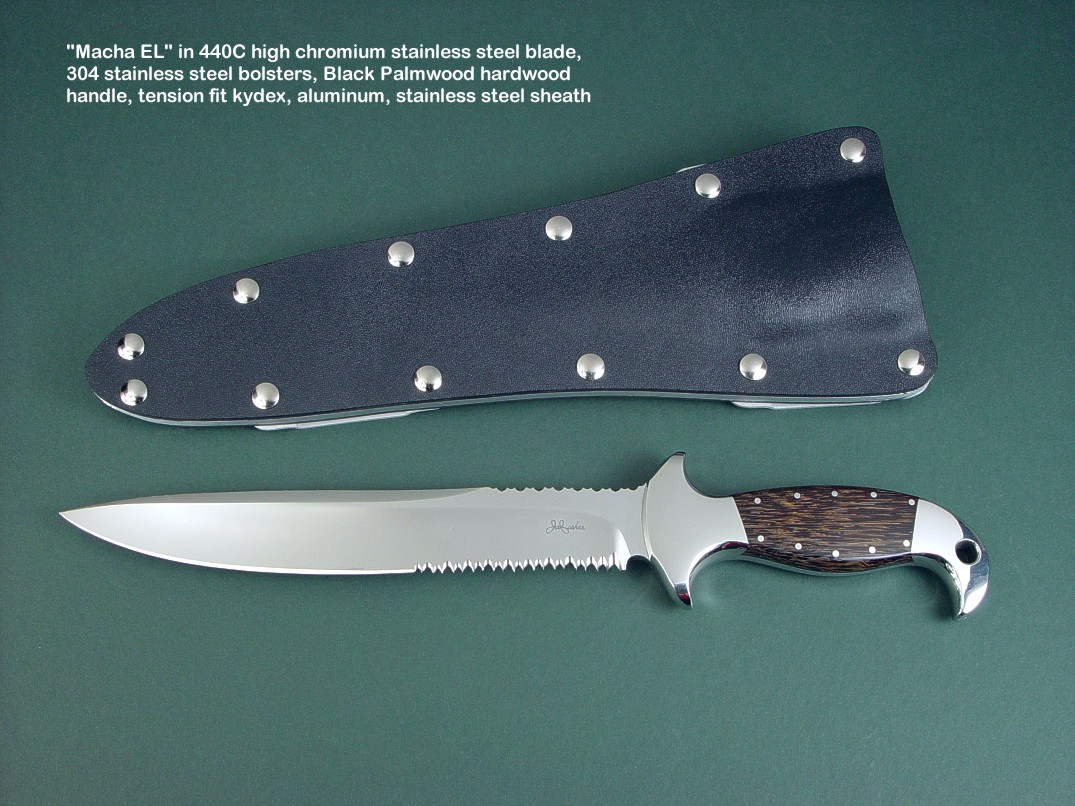
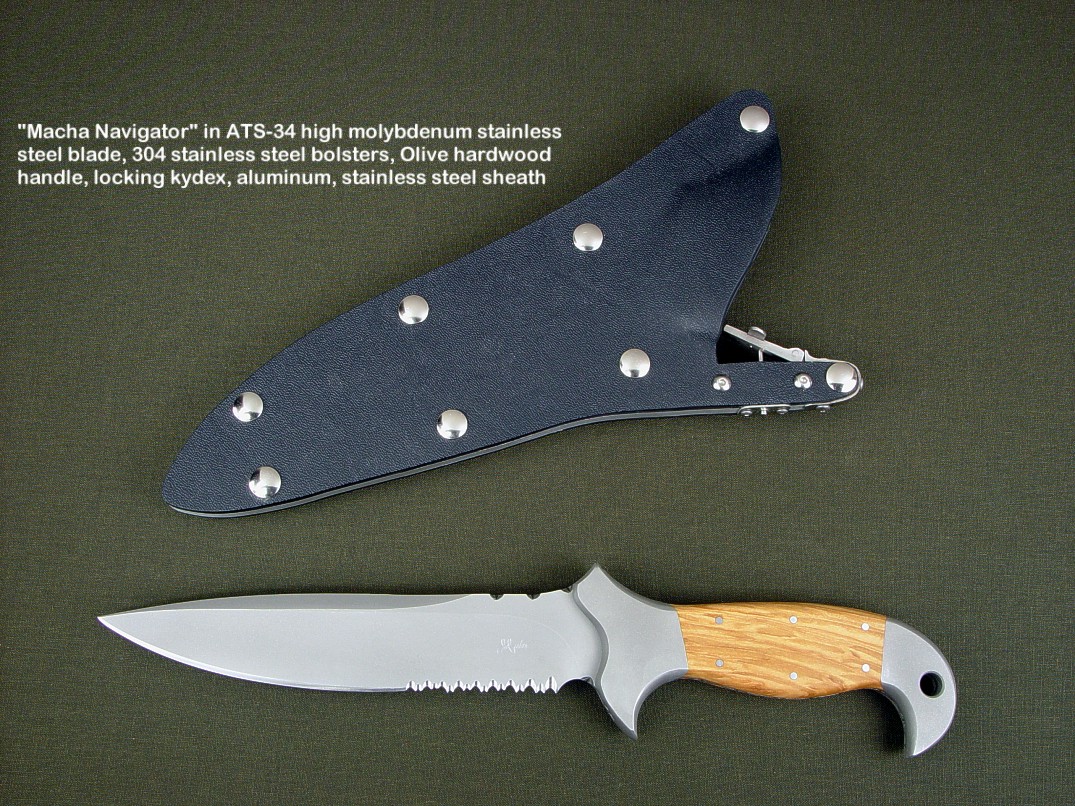
Hi Jay, the Macha Knife is Awesome!!
Mate the knife you sent me is totally wild! It
has a great feel in my hand and well balanced too. This knife is already
fitted to my Tac Vest and it will serve me well over here in Baghdad. I
have shown only a few and some of them are very excited and one who
wants an exact replica of my knife. Thanks again Jay for this truly
remarkable weapon! I will be in touch,
Your Aussie Mate in Iraq! --T.M.
If you cant Stand Behind our Troops...Then Stand in front of them

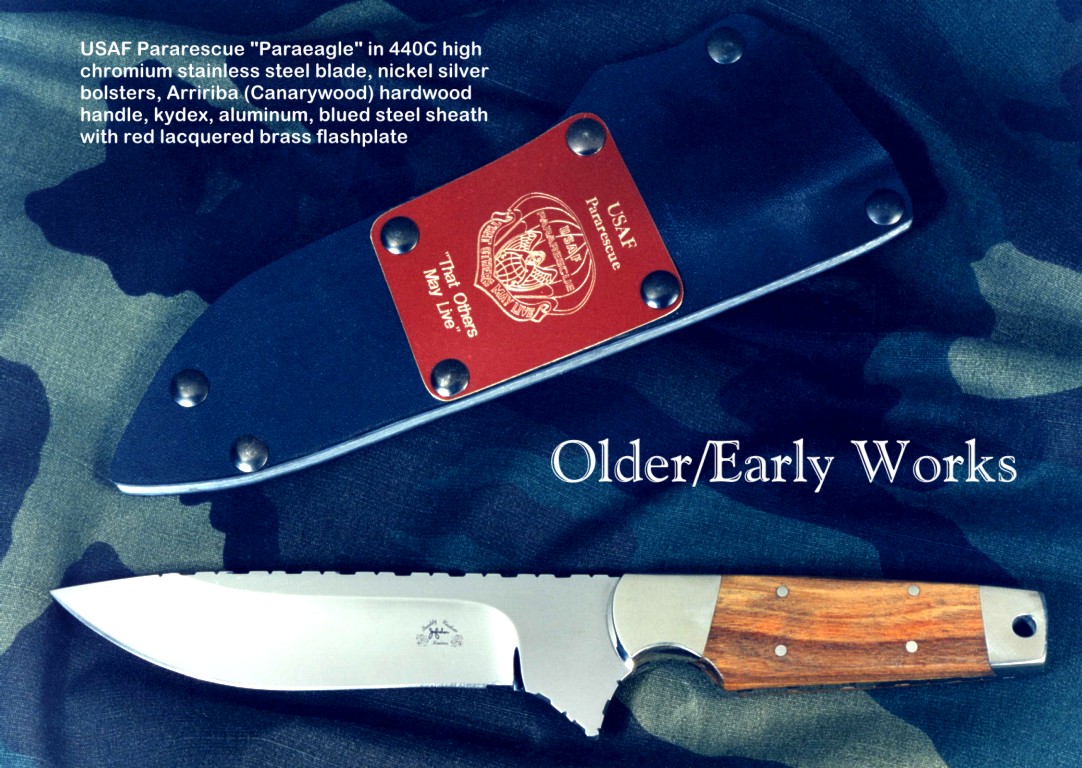
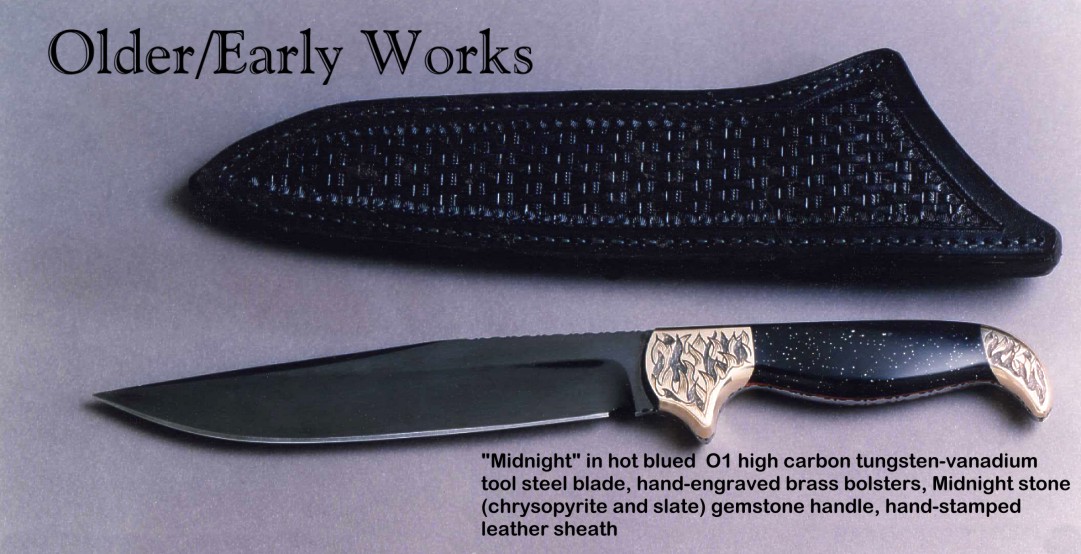
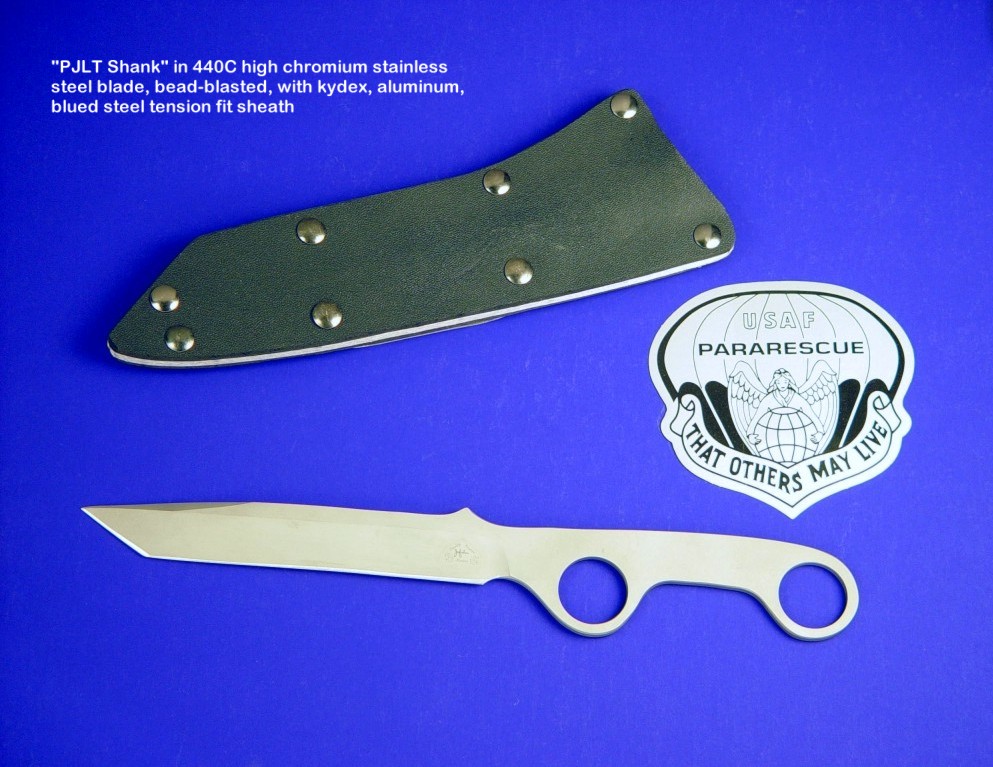

Problem: The factory or badly manufactured blades are often coated. This is a cheap, terrible way to finish a knife. Some coatings are purchased often from gunsmith supply companies, and are either sprayed on or dipped, and may be baked for hardness. They are only slightly more durable than paint. Painting a knife is like painting a ladder. You don't do it, because if there is a flaw, crack, imperfection, or fault, you won't know it until it's too late and you have a broken blade in your hand (in the case of a ladder, a fall). Factories do it to give the knife a so-called tactical look and to cut corners on finishing the blade, purely and simply.
Another technique used on knives is plating. Called electroplating, plating, hard chrome, fused coatings, or other descriptive terms, it is simply the process of electroplating a different metal on the base metal using a metal salt bath, an anode, and electricity. This same process is how a bumper is chrome plated. The reason for chrome plating (on a bumper) is to inhibit corrosion on the steel beneath the plating, because without it, the low alloy carbon steel would rust away. We all know that this is fine until one tiny scratch allows moisture to contact the steel, and then the plating blisters and peels away, as the rust underneath the steel flares up like uncontrolled teenage acne. On a knife blade, chrome plating is generally accepted as existing on the cheapest, most poorly made blades available from foreign sweat shops. This is due to another reason, the reason that knife blades would be chrome plated in the first place. Chromium plating has a great affinity to fill in voids, irregularities, pockets, scratches, inclusions and scars in the base metal. This means that the knife blade does not need to be finished, just roughly sanded, and the chrome will fill in the rest with its reflective and even beauty. Instant beauty, right? Sounds good, no?
No, is not good, and here is why. First, if a knife blade needs chrome plating to protect it (or paints or other coatings) then it is the wrong material for the job. Rather than purchase a more expensive steel that is naturally resistant to corrosion, the plating is supposed to protect the lesser steel from the environment and exposures. Where on the blade must the chrome plating not exist? Why, on the cutting edge, that's where. So the instant the knife is sharpened (before it ever leaves the maker's or factory shop floor) the chrome plating is abraded away, leaving the bare steel cutting edge and relief open to all of the corrosive exposure it can bear. The blade may look chromed and shiny for a while, but the cutting edge will be rusty and dull. And by dull, I don't mean just the surface finish. I mean that the cutting edge will dull as it corrodes away because the steel choice was not suitable for use in the first place, and that is why it is chrome plated!
You might read that a special chrome plating is used, typically called "hard chrome" in the machine tool trade. This is not quite the same as chrome plating of a bumper, as it's an industrial process made to increase the wear resistance of the surface of a metal. The plating is very, very thin, on the order of less than a thousandth, perhaps a ten-thousandth or hundred thousandth of an inch thick. While it is extremely hard, one might question why you would want this kind of hardness plated on a knife blade. Since the cutting edge is worn away immediately and continually, this chrome plating does not protect or harden the very edge, where hardness is critical, only the surface coating of the blade. So, I suppose the blade would be resistant to the rubbing of the knife sheath against the sides... but it is of no help to the actual cutting edge. Meanwhile, just as with other coatings, any infiltration of moisture or contaminants is a serious problem.
A painted or coated blade may actually accelerate corrosion, because eventually there will be a hole in the coating, and moisture, salts, and corrosives will eventually be able to get underneath the coating to attack the blade, without you even knowing about it.
In combat knives, hard chrome (or any chrome) plating can introduce another serious concern, and that is one of glare reduction. If you are in the school of thought that a flat, non-glare knife is what you need to keep your position muted, that bright chrome plating will give you away just as quick as a mirror polished blade. To some, this doesn't matter, but the corrosion resistance limitation at the cutting edge, the hiding of the blade steel beneath, and the extra added expense of hard chrome plating a blade means that this is a very bad idea.
Factories and makers have got a bucket of hype, though, about why blades are coated. There is no disputing that the coating does not and can not protect the cutting edge or relief, because the instant the knife is sharpened, the coating is gone. Since this is the very spot that suffers the highest exposures and wear, this would be the area that could use some help, but gets none. Learn more about blade coatings on my Blades Page.
Solution: Purchase knives with blades that are not coated in any way. This will allow you to see the surfaces of the steel blade, and be aware of anything that is going on with your knife. Corrosion, fractures, pits, or any indicators of future issues will be obvious, and in the case of a PEW, this may save your life
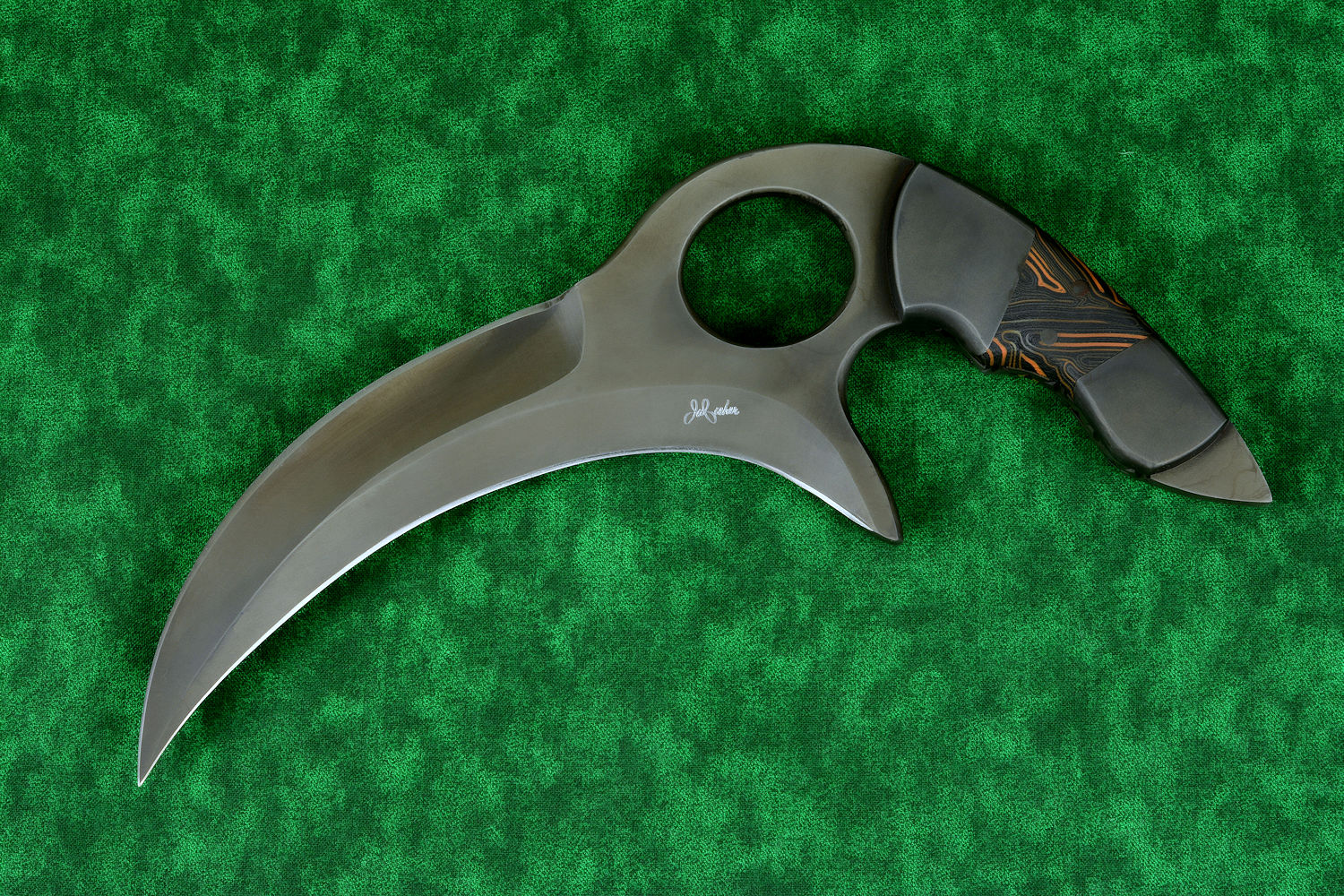
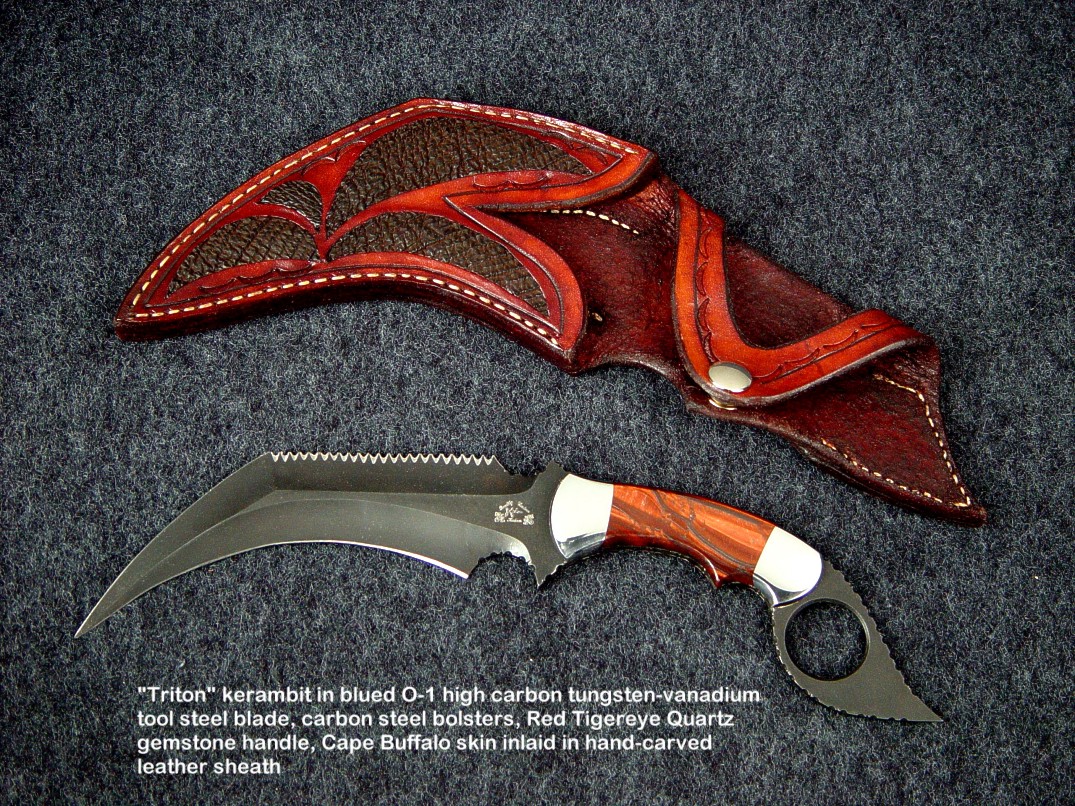
Problem: The blades on most factory tactical knives are straight. This may be applicable and even useful in some circumstances, and some knife users specifically require a straight blade. I sometimes make them myself at a client's request. But in factories, that is all you'll see. The reason is because steel is purchased as a straight, thin bar, and therefore the wider the bar, the more expensive the knife. So, it's in their best interest to make all of their knives straight-bladed, in contradiction of the human hand and mechanics of human body motion. The swing and curvature of a moving arm, slicing, cutting, or thrusting motion: all these are curved arcs. So, in true combat situations, curves are usually advantageous. This translates to a knife blade that is curved to accentuate motion and amplify power of the human hand. You won't see any curves in large factory combat knives, only in little Kerambit blades that are too small to do anything with. And the straight handle should be downright outlawed in combat knives, as it is the easiest to lose a grip on. More on handles below.
Solution: Purchase your knife from a source that has a high degree of relationship to your specific needs. This means having a large inventory of pattern styles and customization options. If the knife source has a great deal of experience working directly with military, tactical, emergency response and rescue professionals, chances are he has the models, patterns and designs that will suit your needs.
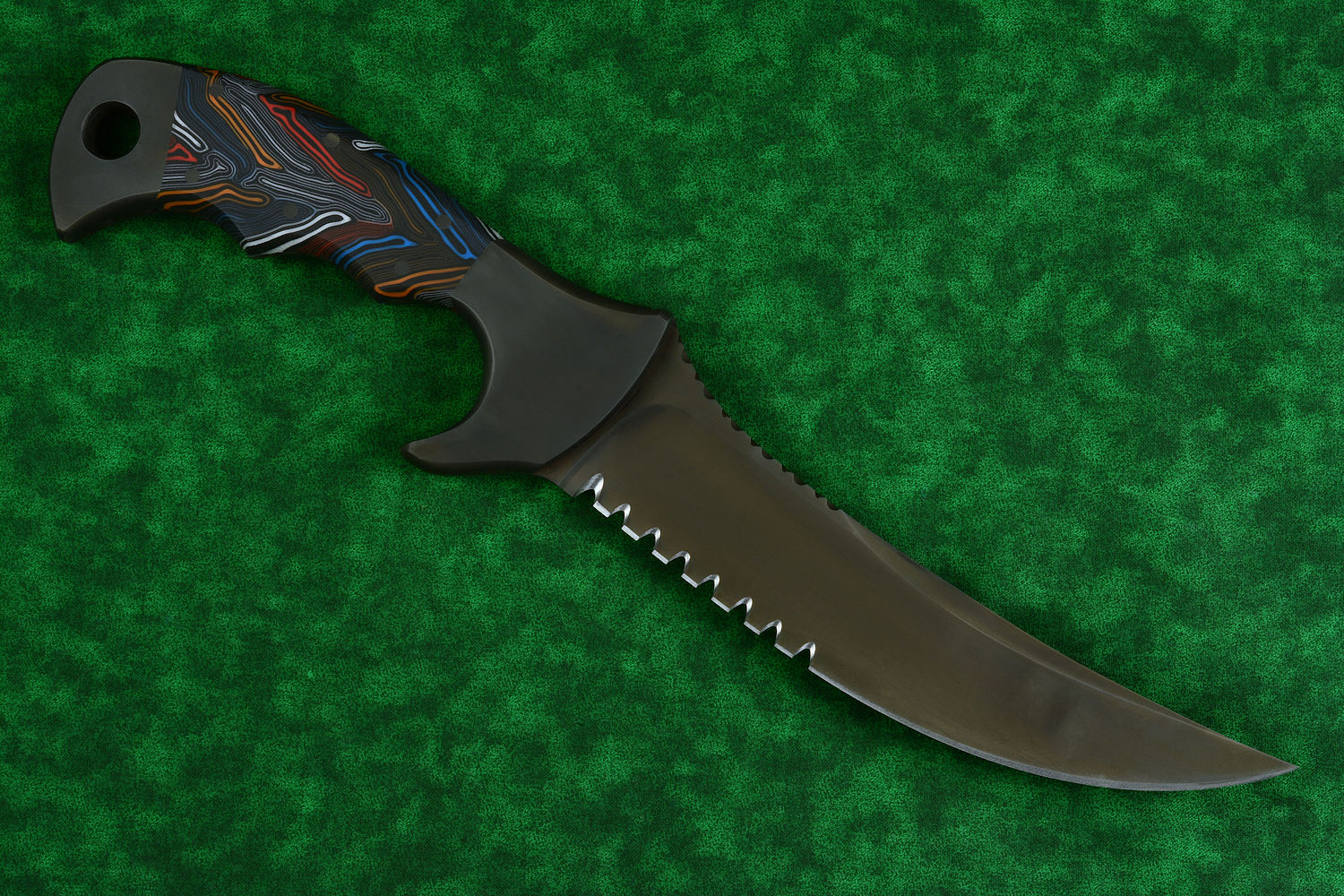
Problem: The blade grinds (bevels) on most factory knife blades, boutique shop knife blades, and poorly made knife blades are abrupt, mismatched, and misaligned. This is a huge issue and I can't believe how often it is simply ignored even by knife aficionados. The grinds (bevels that distinguish a knife from a flat bar of steel) should be even, well-rounded, and carefully matched side to side. If they are abrupt and sharply cornered at the grind termination, the knife will break at that very location. Grind terminations should be sweeping and curved, to distribute the forces between the blade and the handle over a larger area, not forming a corner at the plunge. The grinds should be evenly and well-matched, so that uniform thinness exists at the cutting edge and continually along the edge even as the knife is re-sharpened and used up during its life.
Solution: Look carefully at the blade grind, even if you have only a photograph from a web site. There should be a sweeping curve in the grind termination, not an abrupt, squared-off geometry. If you can inspect the knife by hand, aim (carefully) the blade point right between your eyes and compare both sides of the blade grinds with each other. They should closely match. Look at the lead-off, where the grinds exit the blade at the spine. They should be matched and balanced. If any of these areas are mismatched, abrupt, or out of alignment, the knife is an inferior knife and you can expect other problems, problems you may not see. The overall quality of the blade grind speaks to the entire knife construction process and you can learn a lot about a knife and the maker or manufacturer by knowing how to examine a blade grind. My Knife Anatomy page has loads of information about knife and blade areas, definitions, and details.
Jay,
The knife arrived today safe and sound. It is far more amazing in
person than I could have imagined. My challenge now is to actually
deploy such a work of art in the field (the first scuffs will be the
hardest, after that it should get easier). I have never owned
anything like this, thank you. I know it will be a great companion
for many, many years.
Thank you again for all your help and patience with my questions.
Cheers, E. C.
Problem: The PEW knife blade should have a design suited to the primary purpose of the knife and often they are just a facsimile of an older, well recognized shape. If a knife is to be used for combat and defense, the point should be as aggressive as possible, which means that often a swage is formed on top of the spine to reduce point profile without sacrificing spine strength. This allows more pounds per square inch to be applied to the tip, and greater thrusting force to penetrate. If the blade is for CSAR or working with textiles, tough materials, and light prying, the point should be wider, thicker, and have more metal to increase point strength. If a knife's primary function is slicing, it should have a broad, thin, and extremely sharp belly. Since the direction of most factories and knife manufacturers is one based solely on appearances, these tangible properties of action that the knife needs are seldom addressed.
Solution: Get your knife from someone who can address your specific needs and concerns for the knife's use. This means having a knife maker or supplier who is someone you can talk to, someone who can answer your questions with reason and certainty. There are many makers in the world who you can talk to; I'm not the only one. With the direct connection of the internet and modern technology, there is simply no reason you can not find the knife you need or have it made. Do not settle for a certain type only because you've seen it repeated over and over in print, advertisements, and media. As a tactical professional, you may have ideas that the world is waiting for, useful modifications, designs, or features that can save not only your life, but the lives of your fellow professional.
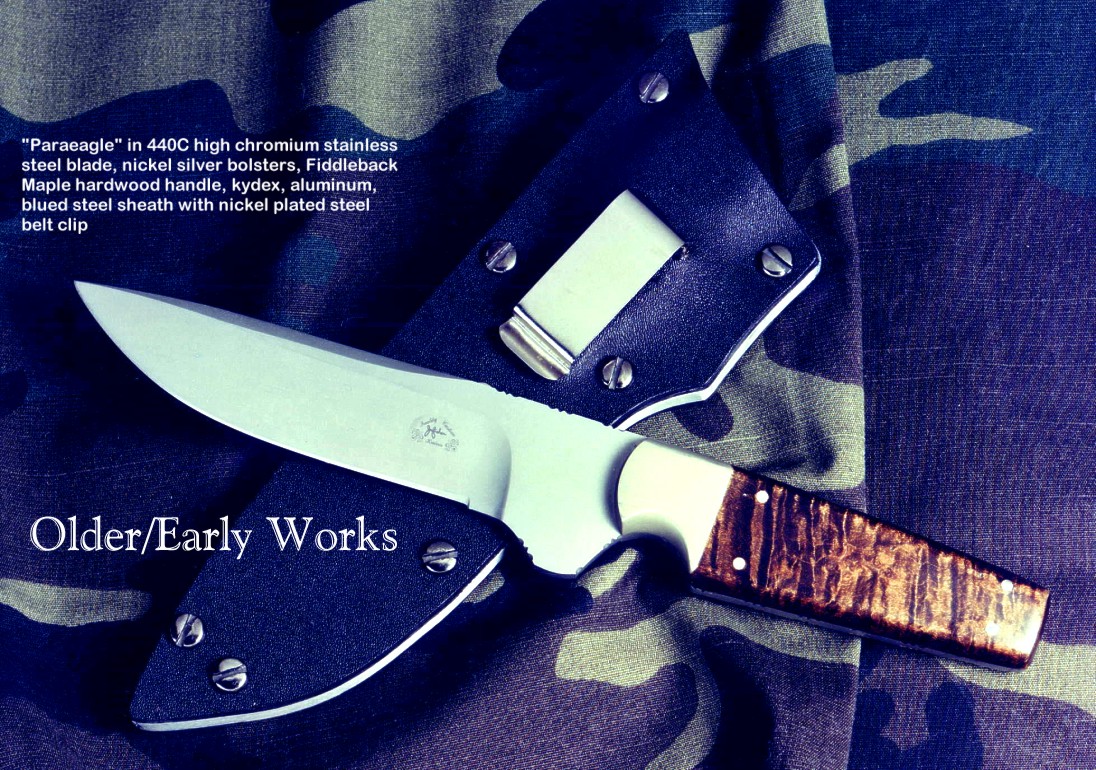

Problem: Knife blade steels are frequently offered that are not suitable for the combat, tactical, CSAR, SERE, law enforcement, or professional knife. There are a lot of steels out there, and just about any of them can be fashioned into a knife blade. But the really good, high quality modern tool steels are expensive, difficult to work with, and are more valuable as a top flight tool and weapon. Some makers and suppliers will claim that plain carbon steels or 420 grade stainless steels are best, and this is just wrong. The reason these lower class, lower alloy steels are used is one of economy of manufacture, not of any benefit to the tactical combat knife user. It is because they are saving a buck that they only offer these steels. They've done their research, and the bean counters have determined that it is not cost effective to purchase finer alloys and pay the added expense of working with them as they are harder on abrasives, can not be forged, require high temperature or elaborate atmosphere controlled hardening processes, and are much harder to finish than cheaper steels. Since their lower quality knives do not justify the higher cost required to use them, the finer steels are simply not offered.
Solution: Go to a maker, supplier or knife company that uses the finest, most suitable knives for your combat and tactical needs. Yes, you will pay more but the knife becomes a once-in-a-lifetime investment, it's made to your specs and needs, and has the highest quality modern tool steel available. The professional combat, CSAR, or SERE knife is no place to cut corners for the sake of economy. Here's a simple illustration. Do you think that the military specifications or professional medical machine interests and manufacturers are using the same steels in their devices that are used in the leaf springs of an old truck? How about this exercise? Do some research right here on the internet on stainless steel ball bearings. You'll find that 440C is listed as having the highest dimensional stability, the highest hardness, the maximum toughness, and highest wear resistance of all the stainless bearings. 440C has substantial corrosion resistance to steam, oils, acids, and caustics. When you study 420 series stainless steels (typically offered in cheaper factory blades) you'll find that they are only slightly more corrosion resistant, but are notably softer, less wear resistant, with limited toughness, and lower durability overall than 440C. Their selling point? They are listed as a more economical alternative... 'nuf said?
Problem: Blades of manufactured knives are poorly finished or not finished at all. While a fine finish on a tactical combat knife blade is not a requirement, it's interesting to note that no options, variety, or selections of finish are offered on any manufactured knife. Simply put, you get what they offer and nothing else. This means a blade that is finished to 180 grit at the most, maybe gone over with coarse Scotch-Brite®, or maybe painted with a bake on coating. Poor blade finish can accelerate corrosion, hide imperfections, and be harder to clean.
Solution: A custom maker can properly finish the knife as you require it. If high corrosion resistance and easy cleaning is needed, he can bring the blade to a mirror polish if the steel type supports it. If a subdued finish is needed, he can media-blast the surface of the steel so that it will uniformly grip wax sealants, which allow it to be easy to clean yet uniformly subdued. If a black blade is needed, he can professionally hot blue the blade, so that the appearance is black or non-reflective, yet the steel is not hidden (such as in coatings and paints) and corrosion is inhibited. Will a factory do this for you? No.
Problem: Most knives sold for tactical or combat use do not have the features needed like cutters, swages, serrations, filework, or other options that the user might require. Years ago, when I started working with the military, one of their absolute requirements was serrations that work, and continue to work, even if they were broken and damaged. They simply needed to have serrations that were not cosmetic but useful, teeth that would rip through hardwoods, tough textiles, bone, and even aluminum if needed. I worked hard to develop serrations that work, and discovered that nearly all serrations on factory or poorly made knives are there for show and of little or very limited use in the field. Factories didn't include line cutters, useful swages, cutters, teeth, shapes, profiles or any type of useful adjunct that the soldier might need. Their scope of their blade work is limited by the machines they use to make the knife blade and the economy of what they can sell it for.
Solution: A custom maker should be able to add features to the blade that the client requires. Serrations that work, rip teeth that rip, line cutters that catch and sever line, filework that offers some tooth without abrading the skin, thumb rises to help improve grip, lanyard holes through the tang and bolsters, swages to reduce point profile, multiple grinds at varying angles and depths to increase point strength, chisel edges, deep choils to aid in sharpening, reverse blade angles for wrist protection. These and many more options are offered only by custom makers; you simply won't find any of these on any factory, boutique shop, or imported knives. Learn more about serrations than you'll ever need to know on a special serrations page on my site here.
After the previous sections, you probably thought I'd covered it all, but there are more issues associated with factory, inferior, boutique shop, and imported knife blades. I may add more as I can, but from just these you can see some of the issues my professional clients express and solutions I try to implement. Please remember that this page is about tactical, combat, and military knives, though the specifics generally apply to most of the knives I make. What about handles, fittings, sheaths and accessories of tactical knives? Read on, brother, read on.
The knife handle is your link to your Primary Edged Weapon and tool.
Losing your link may cost more than your knife.
Jay, the knife is fantastic. The knife fits
perfectly into the sheath, the function is flawless.
There aren't any improvements that could be made to
this blade. I thank you for making me such a fine
knife! It will have many years of hard service in
its future.
Thanks Jay,
--C.J., US Army
Hi Jay,
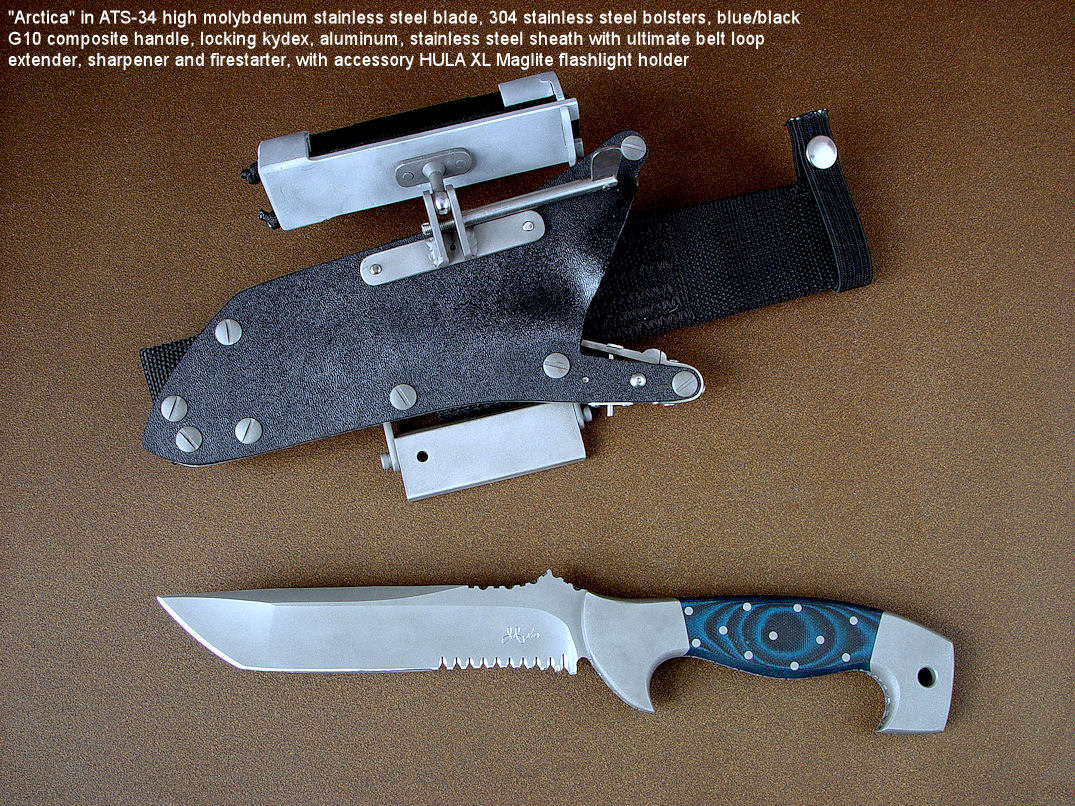
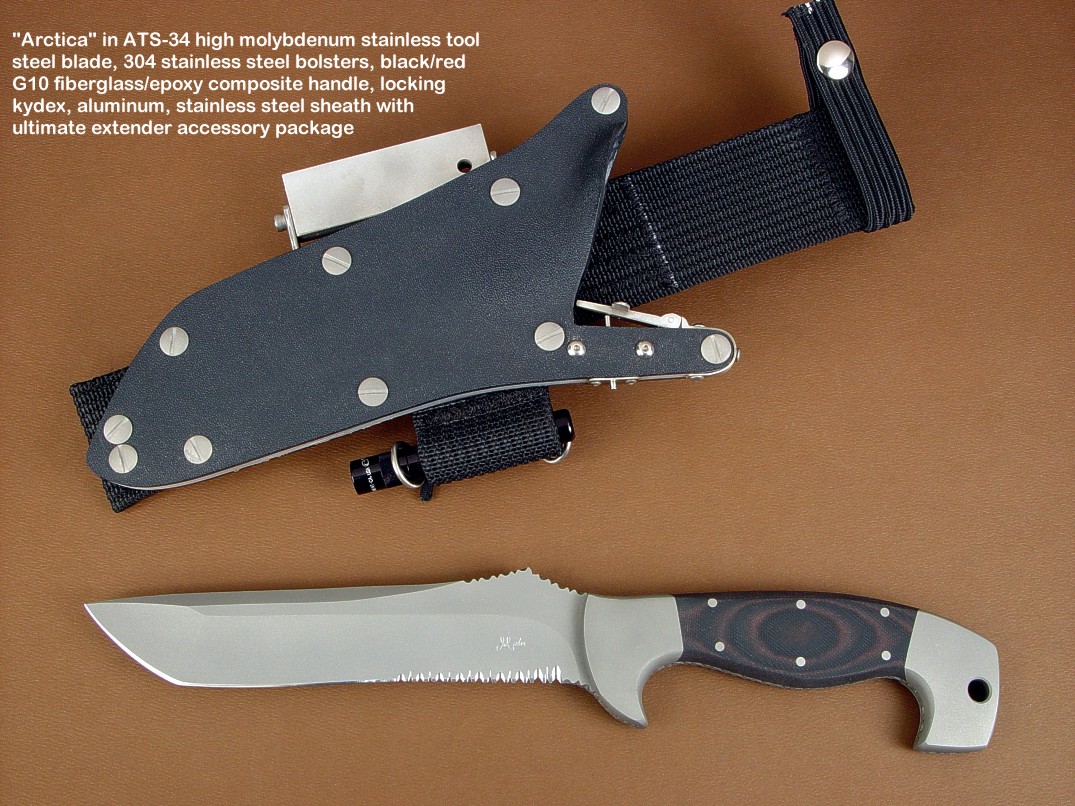
Thanks for checking in; I received the Arctica today.
Wow! There is no way I can describe how impressed I am with this knife.
The pictures on your website are great, but they just don't compare to
experiencing the reality. It's going to take me days to get used to every
detail, especially with so many great accessories included, so here are
my very first impressions:
The balance is perfect; that big rear bolster really balances out the
hefty blade so that it pivots perfectly on the first two fingers of my
grip; combined with the thumb rise, this thing handles like a much lighter
knife.
At first I thought the space between the bolsters was a little large for
my hand, then I realized, a knife like this was designed for guys who wear
gloves! Sure enough, with a pair of shooting gloves the grip is perfect.
The flat finish is ideal for a no-nonsense work knife, and the squared-off
file work adds detail without being "showy" (which I don't think would suit it).
I love how all the metal parts on the sheath and it's accessories match the
finish on the knife.
There are so many other impressive details, but you're a busy guy, and anyway
the point is I couldn't be happier, thank you so much for making this knife and
giving me the opportunity to own it.
You have a customer for life; I'm already
looking at some of your inventory knives!
Thanks again,
J.
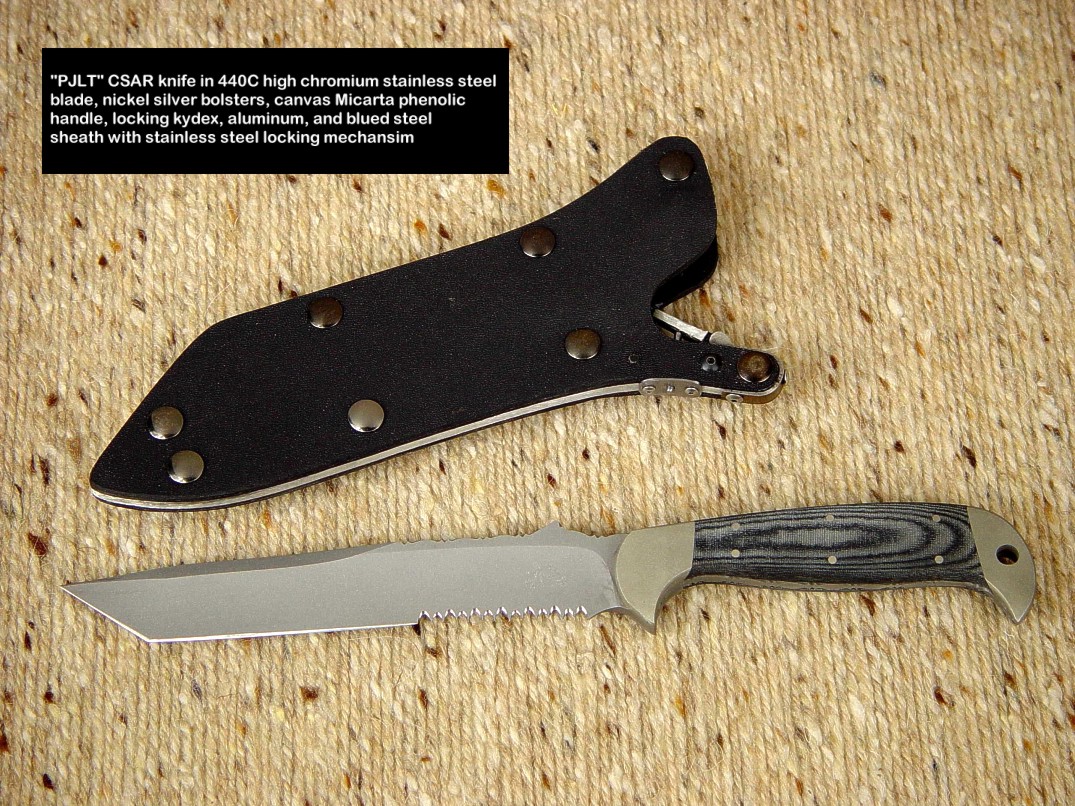

Problem: The handle shape is the most significant factor in settling the knife in a positive and solid grip and maintaining it throughout the high activity and sometimes violent movements necessary in tactical combat, rescue, and life saving efforts. The surface texture is not the most significant factor, the handle shape is. Most poorly made and manufactured knives have straight, simple, and squarish handles, or they have round pipe-shaped handles. This is an artifact of the machining process, as the more complex the shape of the handle, the more effort, skill, and cost necessary to produce. There may be some quillon, guard, or protuberance to prevent your hand from sliding forward on the blade, and sometimes not even that. What poorly shaped handles rarely have is any rear quillons, and this seems to be a standard in the industry. The knife then can simply move forward and out of the hand, and away it goes. There is also little concern for the belly, finger grooves, and size of the handle, and of course, no fitting to individual hands is ever done; it's a one-size-fits-all affair.
Solution: a well-made combat, tactical, defensive, and rescue knife is made with a handle shape that invites your hand, anchors it positively, accommodates the swell and curvature of the heel of the hand, the belly needed for the middle fingers, and offers rounded and dressed quillons that can lock the handle into the hand, no matter the environment. A well-made knife may have substantial thumb rises for applying pressure, finger rings for absolute security, and be custom fitted to a knife user's hand, even considering if the user wears gloves. You've got to go to a custom knife maker for that, friend.
Problem: there are a host of poor handle materials used on knives, and it surprises me how factories, boutique shops, and other makers may push these. The lack of durability is the main issue, followed by toughness, wear resistance, moisture and chemical resistance, and sealing potential that leads to longevity in the knife tang. Some of the obvious offenders are leather, which is the hide of cows that is stacked like washers on a hidden tang (which is weak on its own accord). Leather absolutely can not be sealed, ever; it is not strong, not durable, and offers no sculpting potential, wears easily, will hold water against the tang so the tang will corrode, will dry, shrink, crack and eventually fall off the handle. Yes, I know it's traditional, but it is not durable, modern, or worthy of a fine knife. Another offender is injection or die molded soft neoprene, rubber, foam, or other cushy and soft materials. These are touted as being comfortable, and may well be on the handlebars of a motorcycle, tool grip to prevent vibrations, and very little else. These materials absorb moisture, hold it against the tang, encourage corrosion, are weak, can tear, rip, and snag, and move enough on the handle to prevent accurate and solid control of the knife.
Some makers of so-called combat knives handle the knife in cast fiberglass; remember that it is not fiberglass you have to worry about; it's the polyester resin that actually makes up the bonding, bulk, and major part of the handle. The idea is that a rabbeted tang is dropped into a mold form, and the liquid polyester resin is poured in, and sets and hardens around the tang. The problem is that the tang is, by very definition, very small and stubby, and the polyester resin only lightly bonds to the metal. While you may think that fiberglass polyester resin will bond well to steel, it does not, and this is not the Bondo® on your wrecked Ford. It is simply too much to ask to have cast polyester resist all of the intense forces, impact, and abuse that it will see on a knife handle. Much more about cast polyester (fiberglass) handle material at this bookmark on my Manmade Knife Handle Materials page.
Overall, all of these handle materials are very short-lived. When they fail, who will re-mold a handle for your blade? No one. Some hardwoods are good, but woods that are porous and not self-sealing and resinous are bad choices, as they will absorb contaminants, moisture, and will expand and contract at a different rate than the steel in temperature and moisture changes, eventually splitting away from the tang. Moisture will eventually penetrate the space between the tang and handle material, where corrosion will go on, unchecked, until the handle fails. The same goes for antler, stag, horn, or bone. These are not durable and will shrink and crack. Ivories have limited life also, and shell, mother of pearl, and even some plastics are too brittle to support the tactical combat knife.
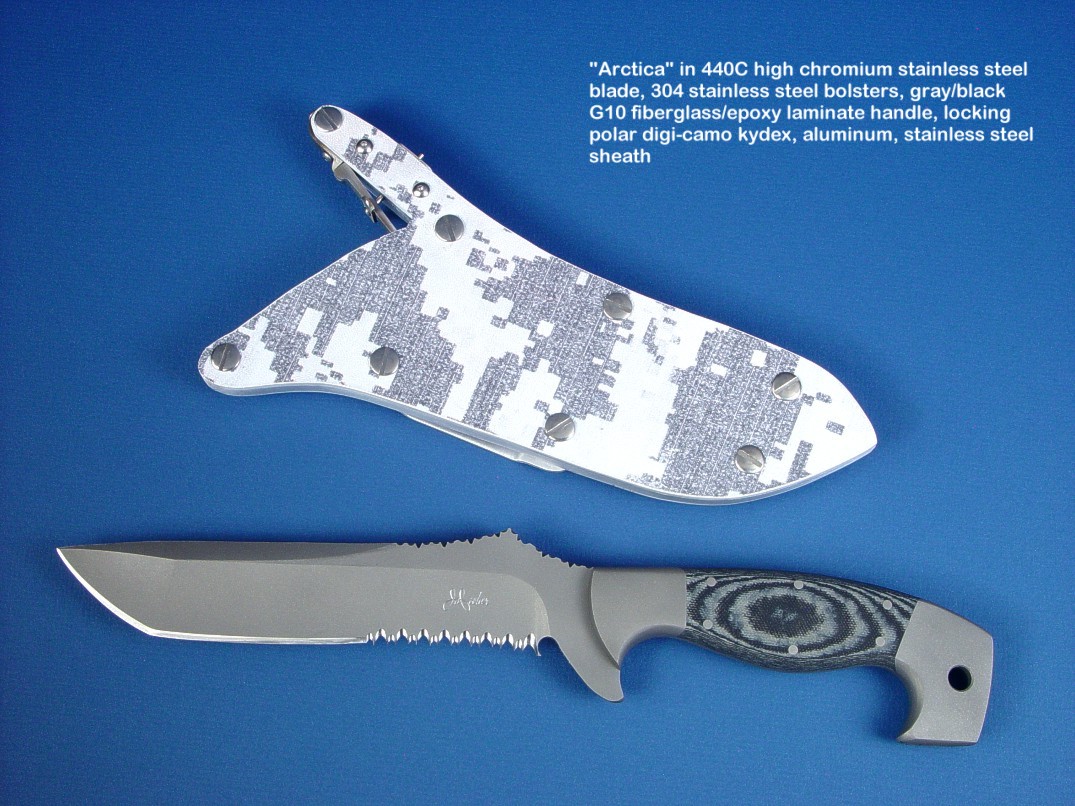
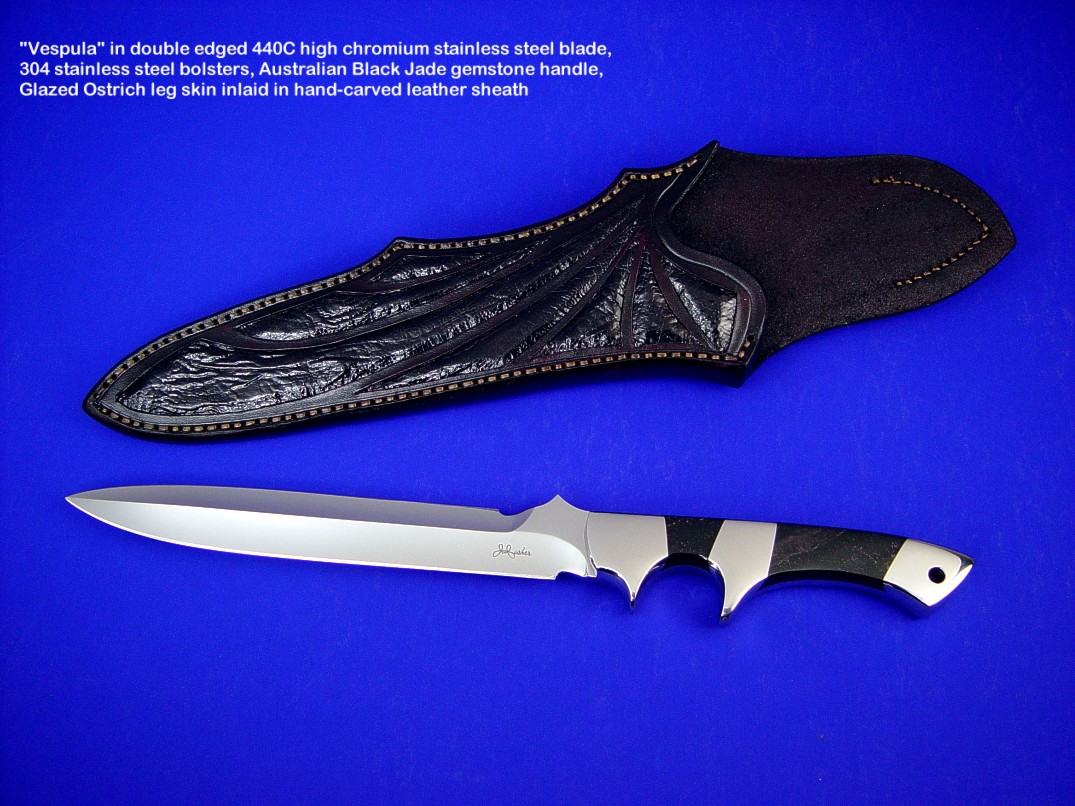
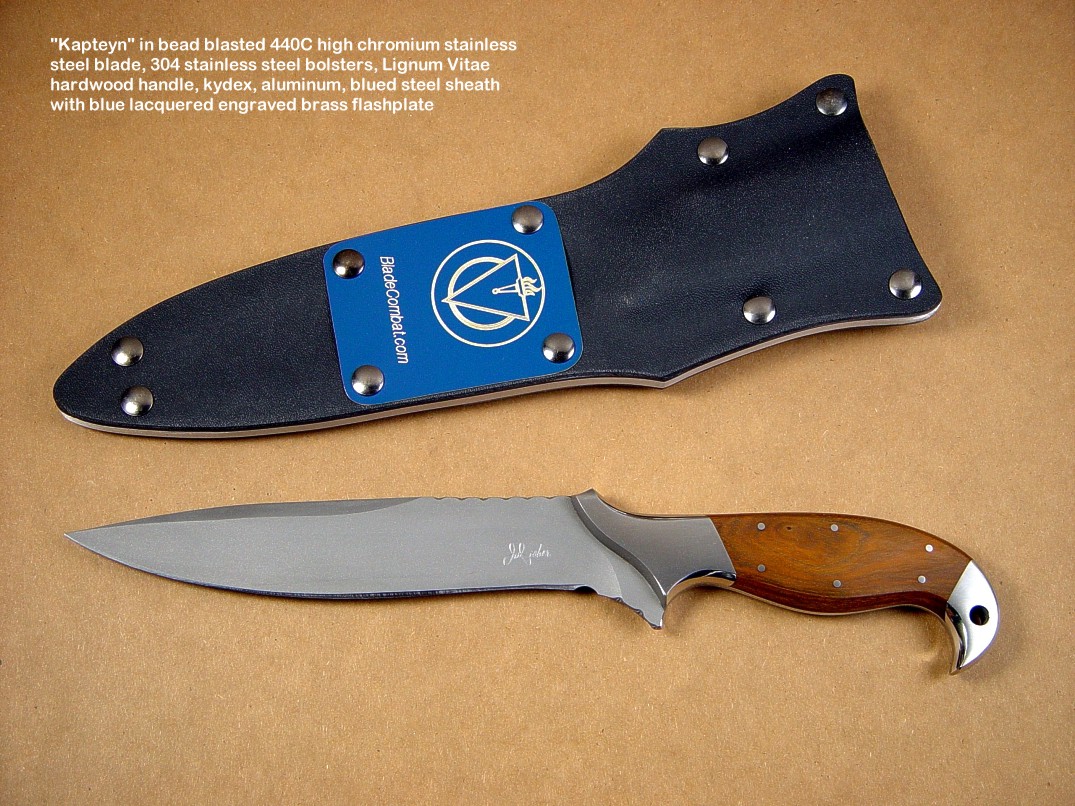
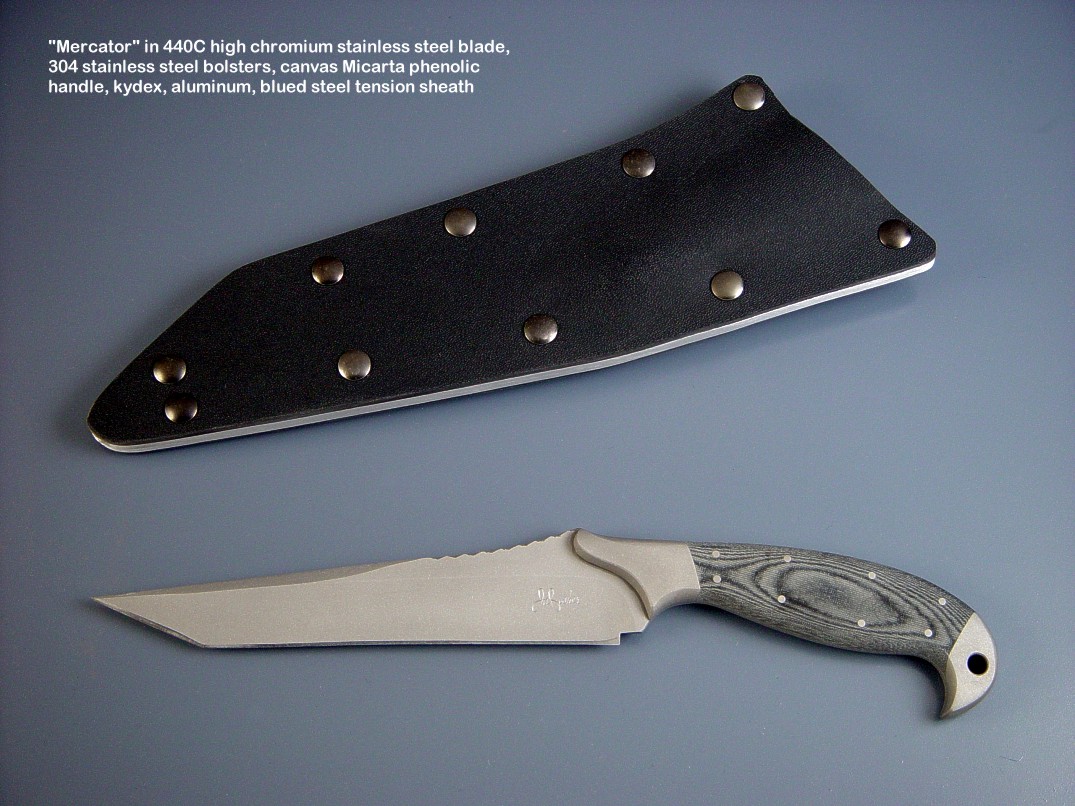
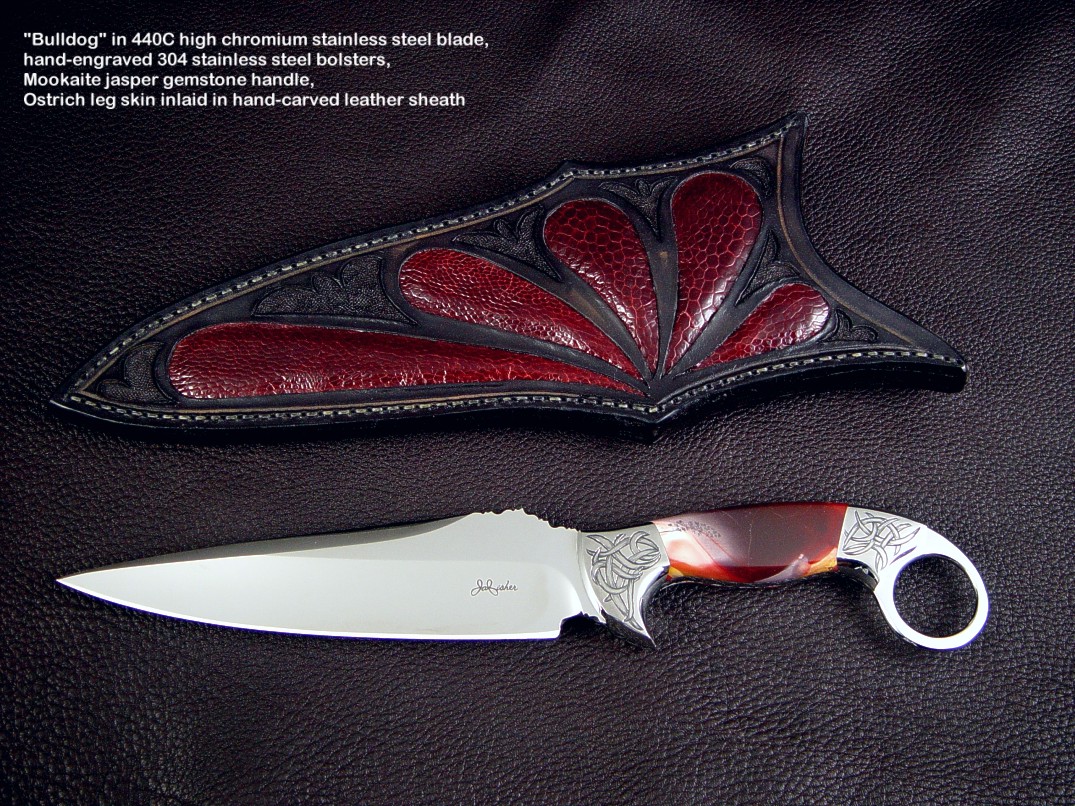
Solution: since the key is durability, there are a group of fine materials that have proven themselves in the combat, rescue and tactical field, and some that are ageless that you may not have considered. The flagship of these is Micarta® phenolic thermoset plastic. Another excellent material is G10 fiberglass/epoxy laminate. Others are self-sealing, naturally heavy and dense hardwoods like Cocobolo, Lignum Vitae, Kingwood, Ebony, Rosewoods, and Ironwoods. Some woods that may not be naturally waterproof can be made so with pressure stabilization which injects polymers or phenolics into the wood grain and thousands of pounds per square inch. The ultimate handle material is surprisingly gemstone, for if done right, will outlast the blade. A careful choice of gem is important here; jades, jaspers, agates and similar minerals are both very tough and very hard. And yes, in case you're wondering I do make many gemstone handled knives that have seen combat. Read more about all of these handle materials on this site at these links: Horn, Bone, Ivories, Woods, Manmade Materials, Gemstone Knife handles.
This is an email that illustrates one of the typical and looming issues of poorly made knives. Though this is only a chef's knife, what do you think happens to the tactical and combat knife that has a handle mounted the same way? Are you aware that most of the knives sold as tactical combat knives have three rivets mounting the handle scales?
Jay, I have a Sabatier boning knife with a broken 3-rivet Micarta handle. Would you give me a
price for replacing the handle?
Thanks.
B. L.
Three rivets is a very poor way to mount a handle on any knife, yet you will see this over and over in all types of knives. Why are handle scales mounted this way? It's because it is cheap and fast for the manufacturer, maker, or factory. It is not because of any advantage to the owner or user of a knife. They will eventually fail.
Problem: Many knives made and sold for tactical, combat, or professional emergency use have handles that are poorly attached to the knife tang with few or weak mechanical methods. You'll often see a pair of Micarta phenolic or G10 scales screwed to the handle with one, two, or three screws or hollow rivets. Screws are a poor fastener for a handle, because they can and will eventually loosen. The only exception to this is using screws made of corrosion-resistant austenitic stainless steel (18-8 or 304 stainless steel) and in multiples of more than half a dozen and locked with a professional machine grade thread sealant on a bedded and sealed handle, something rarely seen on any knife made and sold for combat.. Typically, knives touted as tactical will have two or three rivets which are also a very poor way to mechanically attach a handle to a knife. Why? Because like screws, rivets can loosen. This is because all of the pressure that the handle takes is transferred to the knife tang and blade through those few meager fasteners. When you think of the pounds per square inch on those small fasteners, you get a clear idea of why they can loosen and fail. Rivets and screws create high stress points, right at the surface of the handle material where they are peened and spread or where screw pressure is applied, and this can cause splitting, checking, and cracking. Many rivets are even hollow, and the boutique shop who continually does this hopes you'll overlook the weak, corrosion-inviting handle attachment method and think you might thread some chute cord through there. Screws and rivets have to be checked continually as they are prone to loosening, and create another potential problem for the knife user to worry about. Additionally, those very fasteners can be points where corrosion will start. Corrosion may be accelerated because these mechanical fasteners are often made of mild steel that is plated, or brass, or some material that can corrode. Sometimes, screw-apart handles are desired because they can come apart, and the manufacturer or maker claims this will allow cleaning. Why would you need to clean underneath the handle scales of your knife? Probably because that is where corrosion has started because the handle is not fitted, bedded and sealed to the tang. See the topic below for more discussion on that.
Solution: I've always been a believer in the bedded multi-pinned handle and here are the reasons why. The pins I use are zero clearance, which means there is less than .001" (one thousandth of an inch) between the pins and the holes in the handle scales and blade tang. This allows no movement. Also, the pins are made of the same highly corrosion resistant material as the bolster, usually high nickel, high chromium austenitic stainless steel. The use of many pins helps distribute forces all throughout the tang-to-handle junction, and multi-pinning creates less point-contact stress areas. The pins can not move, will not move, ever. Since there are multiple pins that are physically smaller than screws or rivets, splitting, checking and cracking will not occur because there are not large holes that have to be drilled in the handle material that remove significant portions of it, weakening it. The pins do not stress or rigidly clamp down on the handle material, because they are not swelled, peened, or spread in any way that would create high stress points in the handle scale. Consequently, I have never had any problem with any handle scale mounted this way, ever. The handle mounting is permanent solid, and zero worry. The same goes for gemstone handle scales which are mounted with hidden pins and bedded (see below).
In the rare case that screws are used in a tactical knife, I insist on using at least six, but usually more like 20 to 40. Yes, you read right. Each screw is made of 304 or 18-8 stainless steel, and is thread-locked with professional machine grade locking compound and the handle is bedded to the tang with a permanent polyepoxide thermoset compound, high strength grade. This assures a permanent and solid fit that can transmit the forces from the handle to the blade.
Problem: I remember when mosaic pins were first appearing on the handmade knife market. You could buy an assortment of brass, copper, or aluminum rods, tubes, and tiny bars from the local hobby shop, mix up some epoxy and dye it black, and goop up the whole mess to assemble it into a cool-looking "pin" made of whatever you found. I came up with some neat ones myself, but rarely use them anymore. It isn't because they have become commonplace, with companies selling all types of arrangements and designs now, though this does tend to make the new into the mundane. It's because a mosaic pin, by nature of its construction, has a large diameter. Any large diameter mounting method requires drilling a big hole out of the handle material which creates much more area stresses than a bunch of small holes. Those areas promote checking and cracking in the wood handle, and those large holes remove a good portion of the reinforcing material of a phenolic or G10 handle. It's not only the strength of the pin that is important, it is also the ability for stresses and forces to be transmitted from the handle scales to the pin. When twisting, jarring, hammering, torquing, and violent movements are transferred through one or two large holes in a handle material that is missing some of the reinforcing canvas or fiberglass, this can cause stresses and loosening. Not to mention that rarely are the mosaic pins made of corrosion resistant materials; that just wouldn't look cool.
Solution: Mosaic pins may have their place, but not in a tactical combat knife that is expected to suffer severe stresses in the handle. Only the best, strongest, most secure and permanent method of scale mounting should be used, and handle problems will not occur. See section below that discusses bolsters as they add to this permanence and security.

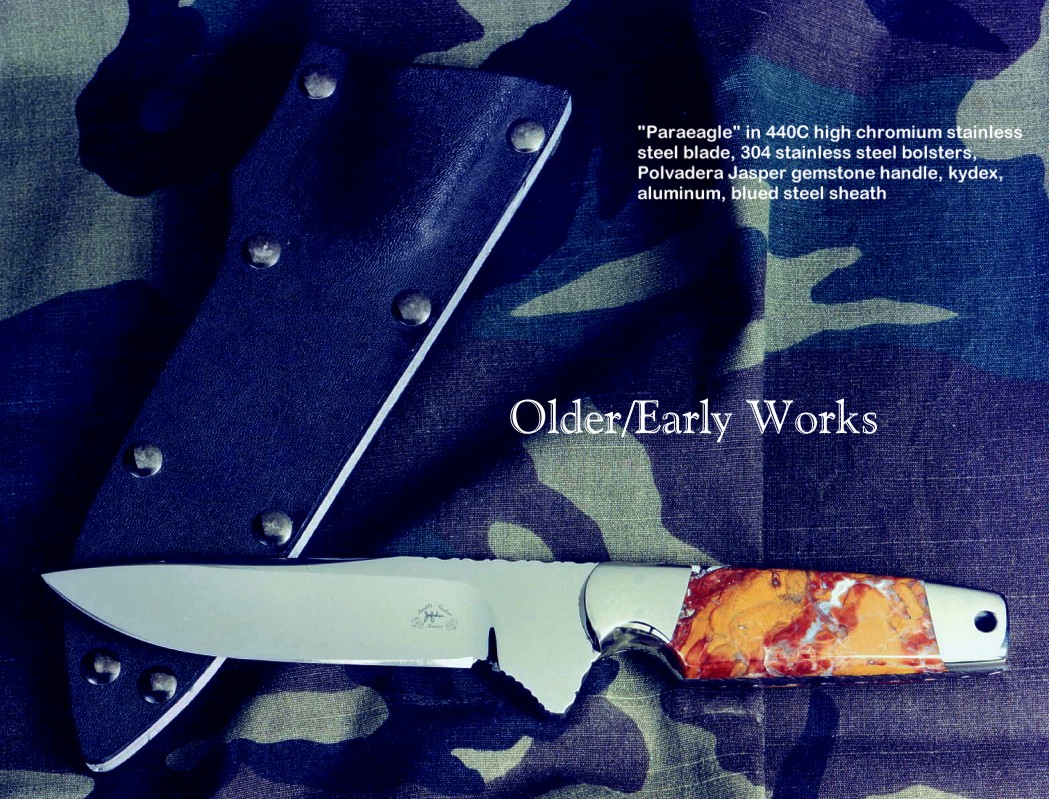
Problem: Most poorly made knives sold for combat and tactical use do not have bedding between the handle material and tang. This is very bad, and one of the issues that makes one knife last for a year or two, and another last for generations. Bedding is literally the filling and sealing of voids, no matter how small, between the handle material, the pins, and the tang of the knife. Without bedding, moisture, contaminants, salts, and acids can and will accumulate between the tang and handle material of any knife, and that is where corrosion will start, grow uninhibited, and slowly eat away the tang. There is no absolutely corrosion proof tool steel used in modern knife making, so even the highest chromium tool steels can corrode inside the handle if it is not bedded. You won't know a thing about this until the handle literally snaps off, maybe during combat or a rescue. What a thing to have happen when a few pennies of bedding compound could have prevented it! Another significant issue is that properly bedding the handle material to the tang ensures that forces transferred from the hand to the handle material, to the tang, and on to the knife blade are evenly and uniformly distributed. This is much different from the screwed handle above, where a couple of screws or rivets transfer these forces. The quality of bedding compound is not the same in all types; hardware store epoxies are not adequate, as they will yellow, weaken, absorb moisture and some chemicals and eventually soften and fail.
Solution: There are a whole host of fine and permanent bedding compounds based on the polyepoxide thermoset family of adhesives and compounds. The proper bedding forms an ionic bond at the molecular level with the steel, for the highest adhesion and greatest resistance to moisture infiltration. The knife maker should use the highest quality compounds of permanent life, thoroughly and solidly filling all voids in the handle, sealing the innards of the handle and tang from any environment and exposures while supporting transfer of energy throughout the handle material to tang union.
Problem: We've all seen the traditional service Ka-Bar with its leather handle; this has a hidden tang knife handle. Hidden tang knives offered by manufacturers or imported are often of poor mechanical construction, and the handles are easily broken. The hidden tang is a special case, because the blade has a shoulder (read about hidden tangs on my Knife Anatomy page), and the shoulder requires the removal of a large amount of the tang, weakening it. Then, the tang is reduced even further to a small rod, which is threaded and accepts a screwed-on pommel. Sometimes, the rod is part of the tang, welded to the tang, and sometimes it is brazed or soldered on. There are problems with all of these methods. The brazing or soldering should never be done on a combat knife, as this has limited strength and can fail. If the tang is of one solid piece, it must be properly annealed at the tang so that the hidden tang is not as hard and brittle as the rest of the knife blade. If it is left at full hardness, it can snap. Same goes for a threaded rod that is welded on to the tang; it must be properly annealed. When annealed, there will be some flex in the hidden tang handle, as the steel of the tang now has more toughness, and is less stiff. A new host of problems occur, as flex and movement of the tang will allow flex and movement of the handle materials. The handle materials may crack; if bedding is used, it may crack, weakening the handle further and allowing contaminants and corrosion at the tang and shoulder until it fails.
Rabbeted tangs: Warning! A rabbeted tang should never be used for any combat and tactical knife. This is a handle that has the tang chopped off, cut away, and shortened. Why would a maker or manufacturer do this? First, it is a decision of economy. It's cheaper to use less metal in the handle. Another reason is this method is used for molded (read about polyester/fiberglass and cast rubber handles above) or for aluminum or other handles that are formed around the small piece of tang metal. This type of handle also appears where a handle material is presented in the round (like stag crowns) and no securing method other than adhesive is used to mount the handle to the blade tang. The issue is that no matter how it is made, the tang is a small, stubby piece of metal and cannot be fully supported by the handle material. This means that it is markedly weaker (perhaps the weakest possible handle next to a folding knife) and a knife with a rabbeted tang has absolutely no place in a combat tactical knife where great pressures and critical forces will be brought to bear in the handle-to-blade junction. You simply can not trust this type of handle in the combat, professional, and rescue field. Don't do it!
Solution: I never make rabbeted tangs for any tactical knife, period. Though I have made hidden tang knives in the past, I seldom make hidden tang knives that will be used in combat, but sometimes a client requests it. When I do, I create a wide shoulder, a wide tang, and the tang, threaded rod or portion of the tang that is inside the handle material has a large diameter and is annealed for toughness. If welded, I use a GTAW high purity atmosphere process, and choose steels that are compatible with the blade steel and are have higher corrosion resistance. I use handle materials that may have limited degree of movement so that if there is motion, the entire handle has limited flexion. Careful use of spacers can help transfer some movement, and the bedding compound used should have some flexibility. Because of all of these concerns, I usually recommend full tang knives for professional, combat, rescue, and service duty use, as they are stronger and more reliable overall.
Problem: Manufacturers often use inferior fittings, badly designed fittings, or ill-fitting fittings on knife handles. We're talking about bolsters, guards, pommels, spacers, pins, screws, rivets, and any fittings on the knife handle that is not a handle material. The simple machining methods of stamping, pressing, and die forging are obvious and apparent in the knife manufacturing trade; who wouldn't opt for a stamped-out part created in China, India, or Pakistan rather than take the time to shape, carve, sculpt, mill, and finish a small piece of metal that is only a component on a handle? This is, after all, a labor intensive process. So you'll see things like tiny guards that are just a thin, flat piece of metal slipped over a hidden tang handle, or no bolsters at all, or integral bolsters milled on a CNC machine on cheap or badly made knives. These are weak, may be attached with poor mechanical methods, compromise the integrity of the knife handle, and offer little in the way of protection, security, and confidence for the hand to handle union that is the most important and active part of combat and tactical knife use.
Solution: Makers should create solid, reliable, sculpted forms for the handle that invite and solidify the union with the human hand. They should spend the time to create components for the knives that are commensurate with the quality of the blade, highly and permanently reliable, and construct them of materials that actually exceed the toughness and corrosion resistance of the blade! They should fit them with solid mechanics in permanent fashion, seal and bed them permanently if applicable, and finish them properly to the uniformity of the knife. More about Bolsters, Handles, and Guards.
Problem: bolsters are important, but bolsters are such a sore spot with makers, manufacturers, boutique shops, and importers that the trend has been to eliminate them all together. Talk about a cost-cutting measure! Just don't bother to bolster the combat knife, it doesn't need it... right? Wrong. The knife blade-to-handle union is weaker without a bolster, the handle scales are not solidly bedded to the tang without bolsters, the stresses to the handle scales are much greater, and the handle will eventually loosen and fail. Bedding does not work well without the bolster and with the combat knife will probably fail, defeating the entire purpose of the bedding, allowing corrosion and stress points to damage the assembly. Without a bolster, there is no area for a finger to bear, there is limited guarding, and no help in extracting the knife from the sheath. There is no reinforcement for the lanyard, no width and mass at the butt that can take any impact without damaging handle materials, no solidity to the knife handle at all. Omitting the bolsters on a full tang knife is like omitting a guard and pommel from the hidden tang knife, relying upon only a rivet, screw, pin and some hope to keep it all together.
Solution: The bolsters strengthen the handle to blade union, protect the hand, solidify the handle material to the tang, make a knife strong, solid and complete. The bolster is absolutely critical on knife that will have handle material. Here's why: bolsters reinforce the tang just where it needs it most: at the blade to handle junction at the ricasso, and at the butt. The torsion, twisting, impact and other forces between the hand and the blade can be tremendous in knives that are carried for combat, tactical, and professional use, and you don't want them snapping off at this critical area during lifesaving or defensive efforts. The front bolster should help to guard the hand, should offer an area of substantial thickness for bearing down upon in high-force cutting operations. The bolster stops the blade from travelling forward deeper than necessary, and may prevent injury to the hand this way. The rear bolster reinforces the butt of the knife handle, gives an area of purchase and safety, strengthens the tang for impact, an offers a tough area for lanyard attachment, increases bearing surface in a reverse grip, and aids in extraction from the sheath. Both bolsters together should be dovetailed to lock the bedded handle material to the tang, and should be permanently and rigidly mounted. Unlike an integral bolster, good bolsters are not made from the same steel as the blade, so they can be tougher and corrosion resistant or even corrosion proof! More about Bolsters, Handles, and Guards.
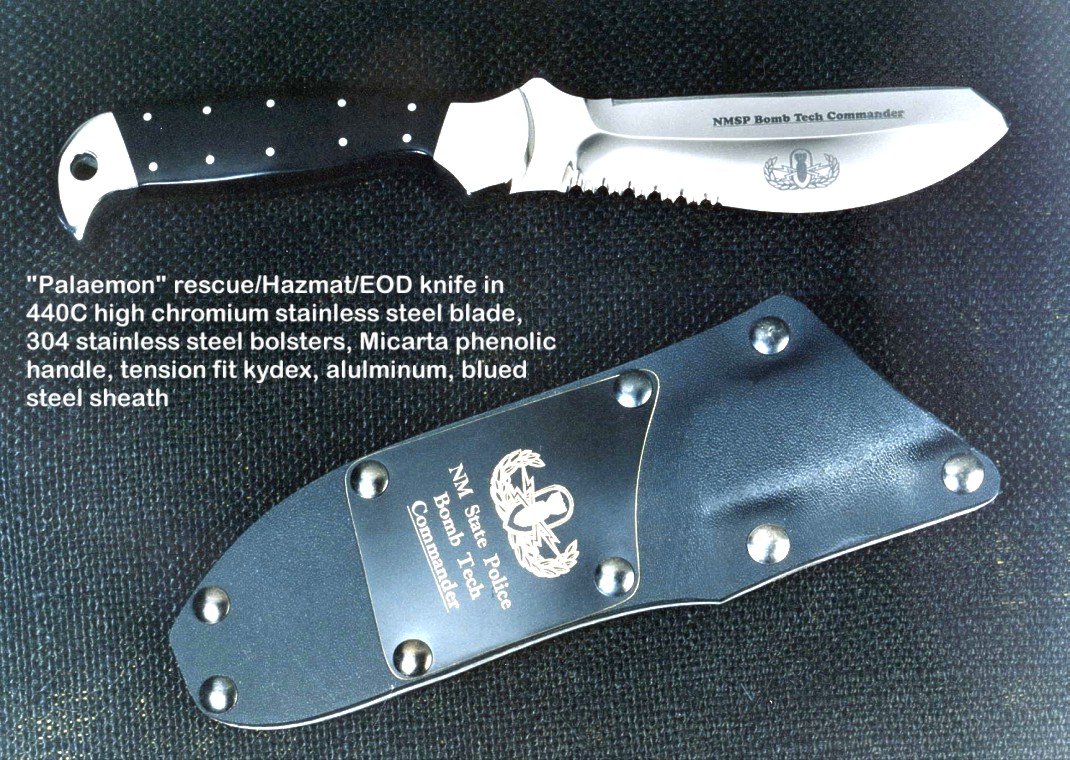
Problem: Frequently, you'll see bolsters on knives that are squared, that is, the angle of the bolster to the handle materials is 90 degrees to the tang. This is an artifact of a simpler, cheaper, and faster way of mounting the bolster and handle material. By making this area square, it's easier to set up on cutting machines, and the bolster does not have to be dressed at all. But the problem is that there is no mechanical strength in this arrangement, only the shear strength of the adhesive or bedding compound, if they even use any! So the handle scales will eventually loosen there, and you'll see a small fracture in the bedding compound along this junction. This will allow moisture and contaminants to infiltrate, and the tang will eventually corrode and snap. Another squaring of the bolster is the front face of the front bolster, the part that faces the blade. If squared off, it will hold debris and be a sharp, angled corner that can tear up a sheath, damage materials being cut, and even injure the hand.
Solution: I dovetail all my bolsters on all my combat and tactical knives. The dovetail angle allows the bolster to overhang the handle scales, locking them in place, solidifying the bedding and the entire handle. The handle material can not lift off, up, or away from the tang at the bolster areas, ever. The increased surface area improves bedding solidity, the handle material can not flex and sealing is permanent and reliable. Dovetailing the bolsters and handle material makes a solid handle! More about Bolsters, Handles, and Guards.
Problem: The bolsters of some makers are attached with screws. While this may be applicable for art knives, folding knives and knives that have moving parts and must occasionally be disassembled, this is a poor way to attach bolsters on most combat and tactical knives. Screws rely upon only the thread contact for strength, and with small machine screws necessary for knives, this is small contact, indeed. Screws can and will loosen in time, though they can be helped with thread sealants, this is a weak choice. The forces brought to bear on the combat knife bolsters can be extreme; why trust a tiny machine screw to that task?
Solution: I secure my bolsters with zero clearance pins, fully peened for absolute permanence. These bolsters will never come off, never loosen, never fail. There is no clearance between the bolster pins and the bolster, and the pins are swelled in place by heavy peening, eliminating the seams. I use at least .125" thick pins and sometimes larger and there are multiple pins so the bolster can never move or rotate no matter the stress. To give you an idea of their permanence and solidity, the entire bolster has to be sawn or ground off to be removed. In the thousands of knives I've made this way, I've never had any bolster fail in any way, ever! More about Bolsters, Handles, and Guards.
Thanks Jay.
We all really appreciated that you took time out of
your day, as busy as you are, to let us come by and check everything
out. It was very impressive to see all the work, skill and care that
goes into the knives you produce. I also wanted to express thanks
for being so supportive toward what were trying to do, and more so,
the military in general. We all thought that was really nice. I'm
really excited about this knife, just the plastic cut out today was
neat, I cant wait to see the finished product.
Once again thanks,
N.F., USAF Pararescue
Problem: Integral bolsters are bolsters that are milled from the same bar of stock that the knife is made from. This is usually done by a CNC (computer numerical control) milling machine, but it is frequently touted as a great benefit, even though it is a decision of economy, and handing over bolster construction to an automated machine. Though solidity is not in question, there are other concerns with this type of bolstering method. The integral bolsters may be milled at a 90 degree angle, and the problems with that are the same as listed in the squared bolster topic above. Even if they are milled at a dovetailed bevel, there are other issues. One is that this method more than doubles the thickness of the blade stock, so the knife blade stock must be much more expensive and that expense is passed on to the knife client. Another issue is that the bolster, being of the same material as the blade, is only as corrosion resistant as the blade, and even the highest chromium tool steel blades will corrode when continuously exposed to the acid in most people's hands. Since the handle needs to be tough, not hard, is the bolster tempered back from the full blade hardness? If it is not tempered back, the bolster is hard, not tough and may even be brittle. The bolster can not be engraved or embellished unless it's etched or engraved before heat treat, limiting the fitting, smoothness, and regularity of the handle to the knife tang. If, by some miracle, the bolster area is tempered back, it looses much of its corrosion resistance as stainless tool steels excel in corrosion resistance only if they are very hard. The softer the stainless tool steel, the less corrosion resistant it is. Another issue is one of finishing, sculpting, and forming the shape of the bolster, which is highly limited when done by a CNC mill, vs. a sculpted, carved, and properly mounted bolster.
Solution: The solidity of an integral bolster at the price of reduced corrosion resistance and limited shape and finish is not worth it. I permanently attach much more corrosion resistant, tougher bolsters on nearly all of my full tang combat knives in absolute permanence. See topic above. More about Bolsters, Handles, and Guards.
Problem: Look around at factory knives, imported knives, and poorly made knives that are sold for combat and tactical use, and you'll see a lot of square edges, sharp cuts in the handle material, and sharp and aggressive angles on both the blades and handles. What you won't see is carefully radiused and rounded forms, shapes, and contours. This is because it is expensive and time-consuming to round and dress corners and edges, not because the squarish handle looks cool, feels better, or somehow improves the performance and grip on the knife. It is an artifact of cost-cutting and a big mistake on knives made to fit the human hand. At best, these knife handles and components may be chamfered, which means that a milling cutter or sander puts a bevel on the corner. This may make the knife look techhie, but this type of handle is best left to little folding knives, not something that offers sharp or squared edges to the human hand for abrasion or injury.
Solution: I fully contour and round all edges, finger grooves, finger rings, outer surfaces, bolster quillons, handle scales, tang bellies, and butts on my tactical combat knives for a comfortable, solid grip. All of these surfaces and contours are matched side to side and the only sharp or aggressive protuberances on the handles are the skull crushers, talons, and persuaders that are intended to be there. Even the lanyard holes are dressed so they won't cut lanyards.
Problem: Sometimes a tactical knife user wants the simplest knife possible, one with no handle material whatsoever, and no fittings at all, just the blade and the handle formed with the tang. Though there are some offerings of this type of knife by factories and manufacturers, they are thin, weak, and poorly made because of the expense of having a thick metal tang to offer some volume to the hand, and the necessary milling of the handle tang to reduce the weight of the thick piece. These milled areas also have to be dressed, and that is never done.
Solution: The maker should offer a worthwhile version of a skeletonized knife. To me, this means at least a quarter of an inch thick blade, (.250), with contoured (not simply chamfered) or profiles to add minimal comfort to the human hand that will hold the knife. Finger rings should be radiused and finished, the handle surfaces should be as smooth as possible within the limits of this type of handle. Read much more, including advantages and limitations, selection and options and see many examples of skeletonized knives on this dedicated page of Skeletonized Knives.
Problem: Some people think that if you leave a rough and abrasive surface on a knife handle, or make deep cuts with a mill in the handle, you'll improve the grip strength on the knife. This is a question that frequently comes up with polished and finished knives and handles. If roughness were best, most knives would be covered in a coarse sandpaper-like texture, or have sticky surfaces or have deep gouges sharply angled into the handle material, bolsters, and tangs. The best handles would be the knurled metal handles, as they are just about as coarse as you can get.
Solution: The surface texture does not determine grip strength, the handle shape does. If a handle is shaped properly, you will not drop the knife from your hand. This is such a common misconception that I've included a special section on it below.
Problem: The most common error of factory knives is poor balance. Tiny stick handles, mismatched blades, straight lines with little creative thought or useful applications and features are common on bad knives. This is probably the number one offense of factories and makers. It translates to a knife that has abrupt, even uncomfortable lack of appeal. It separates a novice from a professional, and is the cause of many ugly and unusable knives.
Solution: Balance is not an easy term to strictly define. It does not mean that a knife should literally balance on the forefinger with the weight of the blade exactly opposing that of the handle. Knives are all different, and must be balanced accordingly. The maker alone is responsible for that; it takes years of practice to develop one's own style of balance. You can get a good idea of a knife's balance from the photo. Does it look handle-heavy? Does the blade seem to come from the handle at an unusual angle? Does it look comfortable and invite you to pick it up? Will it easily conform to the hand going in, yet be smooth and easy going out of the hand? Some knives look rudimentary, some look refined; this is a balance characteristic. Is a tactical knife balanced with tactical style, function, design, and accoutrements? The balance issue is the foundation of value and determines the usefulness and value of the tactical and combat knife. Read more about balance, and the six most important and overlooked characteristics of knives.
What good is a fine or well-made tactical combat knife if you can't reliably and safely bring it to the conflict? How good will the CSAR rescue knife be if it falls out of the sheath and plunks into the Atlantic? Will the sheath you have for your knife fit the PALS system on your MOLLE gear, can you wear it at the right place, or do you have to keep your PEW in your rucksack or pack? If you are in law enforcement, will the leather knife sheath stand up to the rigors of daily wear, will it be stiff enough and durable enough to protect you from the blade, yet be easily and quickly accessible? Factories, importers, knife manufacturers, boutique shops and many other makers have seemed to forget you need a real, worthwhile, and extremely durable knife sheath to bring your blade to the party. Otherwise, the knife is just a wall hanger.
Every now and then, I get a letter that moves me. It is one of the reasons I'm so hard on factories and other knife makers about their work. It disturbs me greatly to know that our men and women are not carrying the best knives into battle that this country is capable of producing. Here's one of those letters and my response.
Sir,
I'm currently deployed to Iraq and found that a back up is a must have. I work in closely with the
local population and my weapon at times cannot be used due to distance or situation. I have a
Fairbairn-Applegate full size fighting knife now. I read your web page and you seem to know
what's going on with knives and sheaths. The problem I have is: I don’t have the proper sheath.
I need a combat locking sheath like in your pictures, so I can access my knife in a split second.
The best and most concealed place while in IBA is the small of my back. Mounting the knife
horizontal on my belt seems the best. If you have any ideas on what to do or a different path to
take please let me know.
-TSgt H.L.
Ali AB, Iraq
My Response:
Hello, TSgt L.
Thanks for writing. And thank you for your service to our country.
Your letter hit me hard. It is truly sad that manufacturers and makers of knives do not carefully
consider the sheath when making and selling their knives, and do not consider the lives that may
be at stake because they do not supply an adequate or useful sheath. All I can do is not make that
mistake on my own knives.
I’m sorry that I can not make a sheath for your knife. My locking and combat grade sheaths are
constructed with the knife, in concert, so that components like thumb rises, ricasso ramps, edge
clearances, and mounting variations must happen in the construction of the knife, so that a workable
locking sheath can be designed around the knife, with the knife. Each individual sheath can only fit
a specific knife. Unfortunately, I cannot build a sheath around a factory knife or other maker’s
knife, as they don’t build the knife with the components and geometry that will allow a locking
sheath to work. Beyond that, I get so many requests to correct inadequate sheath work that I would
be out of the knife making business, and into the sheath making business only. Even if I did take
on that type of work, it would require the knife in my hands while you would be left in the field
unarmed.
I do make an extremely good combat knife, and can make it to your specifications, to fit a specifically
designed locking combat sheath of my own construction. I know my work is not cheap, but I’ve got one of the
best track records of useful and durable combat and tactical knives and sheaths in the business. I know
this does not help you at the moment. In the chance that they might be of help, I would contact the
company or maker who made the knife and ask them to outfit their knife with a proper sheath. Please be
brutally honest in their shortcomings of the sheath they supply for their knife, because it is your life
and other lives at stake. Barring that, you may have to do what I’ve heard of other soldiers doing in
the field: using found parts, moleskin, leather bindings, bent metal, screws and other parts to make
their sheaths work. I’m terribly sorry I could be of no further help.
Jay
How important is your tactical knife sheath? I saw a recent advertisement in a big knife dealer's catalog with a picture of a tactical "fighting" knife that was evidently well made, because it cost over $4000.00. It had a Micarta handle and the blade was sanded, knife and sheath made by a German maker who specializes in integral knife bolster construction (topic above). Accompanying the fine German knife was a sheath that Tandy leather sells as a hobby sheath project for high schoolers. This was the typical 5 oz. plain unfinished leather, machine-stitched with cotton, a thin, tiny leather strap made to secure the handle, a universal bad sheath that you can find at any dime store. And this knife was supposed to be carried in combat? Okay, scrap the whole combat idea. Is this the sheath that is commensurate with a $4000.00 knife? How about a $400.00 knife? Okay, maybe a $40.00 Chinese import. What I don't get is that there is simply not enough interest in sheaths to warrant knife makers improving their sheath-making tradecraft. All I can do is not make the same mistake.
I am committed to making the very best combat sheaths in the world, period. I'll put my sheaths (knives too!) against any other sheath in the world for quality, workmanship, usability, and value and I know who will come out out on top.
I encourage you to read my general Knife Sheaths page here, for many details, information, and pictures of working, fine, and custom knife sheaths. On that page, you will get a good idea of the background and skills it takes to make even a basic good sheath, but that's just the beginning.
To understand why special sheaths are required for military, tactical, combat, CSAR, and counterterrorism use, take a look at the Best Combat Locking Sheaths made on this special page.
Tactical sheaths and knives I've made are used by professional rescue services, infantry, police, SWAT teams, Sheriff's officers, hazardous materials teams, bomb squads (EOD), emergency responders, US Army Special Forces, Airborne, Military Survival Specialists, Special Operations Squads and our nation's top military rescue service, USAF Pararescue. These fine sheaths are made of a single, thick (.125") layer of Kydex on each side, thermo-formed and fitted to the knife.
Kydex is a combination of acrylic and PVC (methylacrylate and polyvinylchloride) and is impervious to just about everything but very high heat (above 250° F) and a few concentrated chemicals (like methylethylkeytone (MEK) and toluene). It is waterproof and bonded with waterproof cement to .250" thick 5052H32 corrosion resistant, high strength aluminum welt frames that are mechanically attached with nickel plated, blued steel, or stainless steel Chicago and machine screws. Belt loops, straps, and horizontal-vertical belt loop attachment plates are die-formed 5052H32 high strength, corrosion resistant aluminum, and are usually reversible and mounted with 1/4" post Chicago machine screws. The aluminum is often anodized with a near-ceramic hard coating, and the Kydex components are suited to periodic salt water immersion and resistant to many chemically corrosive environments. These are very, very tough sheaths, quite simply, the very best combat knife sheaths in the world.
Beyond tension-fit military, combat, and tactical sheaths are my Locking Sheaths. A long time ago, a few military clients asked if I could make the ultimate knife sheath, one that was essentially waterproof, unbreakable, resistant to anything you could throw at it, a sheath that could be confidently carried into the field of battle and trusted to do its job. And a few of them asked if I could design a locking mechanism, so the knife would positively lock into the sheath, and even be carried upside down across their chest while parachuting on HALO jumps. These are High Altitude, Low Opening combat jumps designed to drop combat or rescue troops behind enemy lines without the aircraft being seen by radar as it flies at high altitudes.
Read about the history, details, evolution, and various types of my Locking Tactical and Counterterrorism Knife Sheaths here.
In the hundreds of these that I've made for service and combat, I've only had one problem since the prototype, and that is of one serviceman loosing his knife because he didn't shove the knife all the way in and make sure it was locked! Well, I can't think of everything...
The locking sheath is not cheap, remember that it is the finest one made. It can add $500 or more to the price of the knife/sheath combo. Sometims, I'll attach a removable engraved flash plate on the sheath front signifying tactical group or affiliation. These are brass or aluminum, lacquered or anodized for beauty and longevity; some of them are stainless steel with ceramic fused imagery, and are reversible. Some are etched with photographic detail, and some are machine-engraved. The plates are often removed for tactical operations and re-attached when the knife is retired to a place of honor.
Most of my latest kydex military combat locking sheaths are black, with non-glare media-blasted and anodized aluminum welts visible at the edges.
In the following topics, I'll detail the exact and specific problems, issues, concerns with tactical and combat knife sheaths, and offer what I have learned: some worthwhile and reasonable solutions. Take a look.
If your sheath doesn't ride to the party, your knife can't dance.
Hello Jay,
I bought a Krag from you several weeks ago. It is wonderful. Built like a tank, a perfect example of KISS. It
maybe isn't quite as lovely to look at as some of your other work, but I would expect gravity to fail before
the Krag failed.
But this letter is not about the Krag. It's about the Hybrid Kydex sheath that came with it.
I don't know if my experience with what is normally considered 'a sheath', is out of the ordinary, but until I got your hybrid sheath I never, ever had any sheath that was sturdy enough, or dependable enough, out of the box, to serve in anything but casual wear.
I have modified or replaced or discarded almost all of the other sheaths I have used. The ones that made it to non-casual use usually had some duct tape or electricians' tape doing one-shot duty, or maybe a cotter pin added, or somesuch. 'Kludge' is a good description.
I am in awe of the design and the execution of your hybrid kydex holster. You have won the holster/sheath contest, hands down, and nobody else made it thru the qualification trials. They can all go home and cry in their beer, because I don't think anyone is ever going to top what you have done.
Holster orientations of up, down, left, right, horizontal or vertical, use with different thicknesses of belt or strap, can all be selected just as one wants, and every single one of them is rock-solid dependable, not a hint of flaky or gimmick. Easy as can be to change in the field, is sorta a cherry tossed on top of a perfect piece of gear. Oh, and don't forget that the service lifetime of this holster looks to be long enough to outlive the user.
Perfect. It's just bloody Perfect.
Thank you again.
Regards,
R.
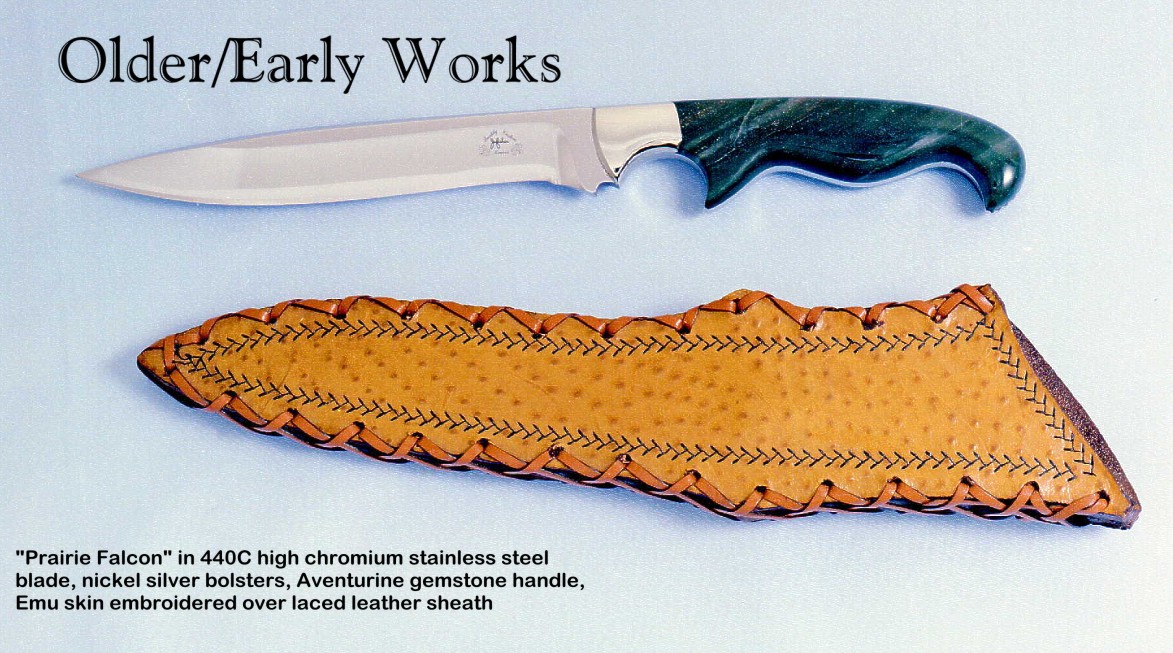
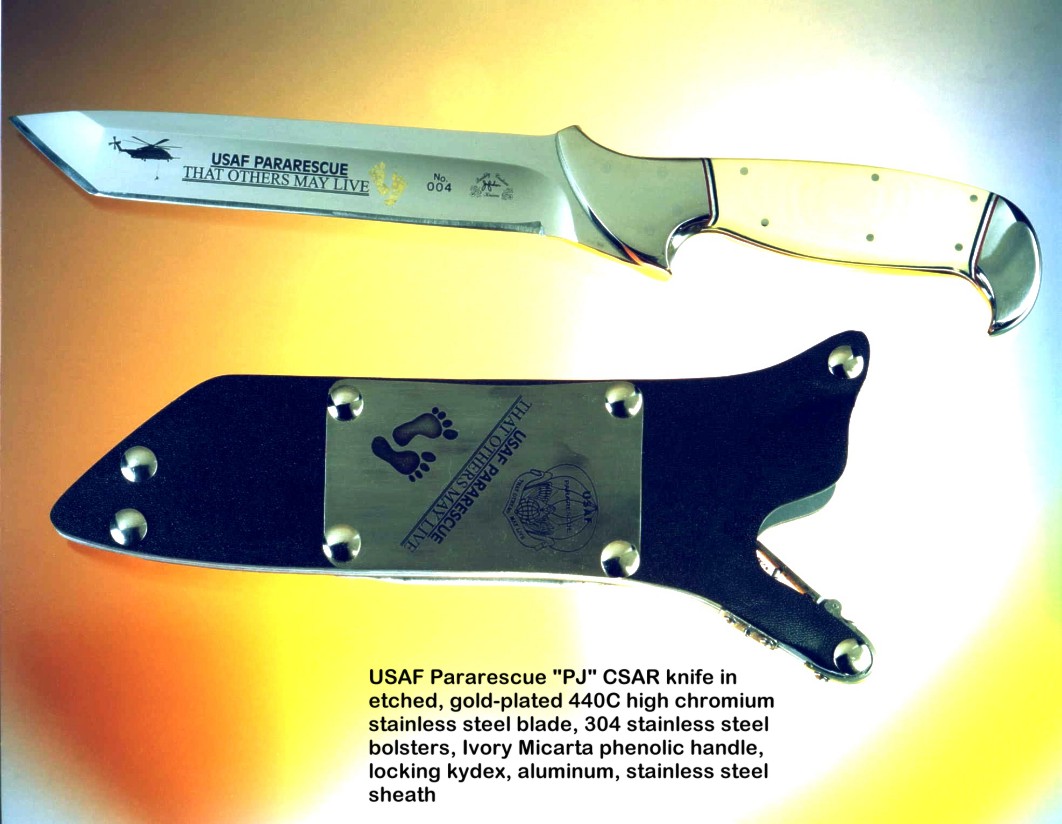
Problem: few manufacturers, knife boutique shops, importers and makers dedicate the time, effort and labor in making and supplying a knife sheath that is up to the quality, durability, longevity, and security necessary for actual combat, law enforcement, or professional use. This is a major issue as the knife sheath has always taken a back seat to the knife. Knife sheaths available for the knives are often afterthoughts or adaptations of sheaths from other disciplines, like hunting knife sheaths in leather that have simply been adapted to fit tactical knives. This is no small matter; there is a huge need for a serious tactical knife sheath in every field of combat, rescue, emergency response, and law enforcement. Just do a detailed search on the Internet and see what you can find. You will be shocked by the lack of sheath savvy, discussion, details, types, and availability of realistic combat sheaths.
Solution: the maker of the knife should make a sheath that is commensurate with the quality, need, durability, convenience, operation, service, longevity, and quality of the knife. This may not mean much if the guy is making a cheap knife, but if you've read the sections above, you know how important every component and fixture in the modern tactical knife is. The sheath is no different. It should be not only as good as the knife, it has to be a bit better, because it will see the most exposure, encounter the most bumps, abrasions, and stresses, be exposed to more of the ambient environment than the knife, and be expected to protect the wearer from the knife blade's cutting edge and point. The military or tactical knife sheath should be the best sheath made, period!
There is only one way to make a knife safe, and that is a sturdy and dependable sheath.
Problem: the sheath materials most manufacturers and knife suppliers offer are weak, thin, and flimsy.
Leather: Thin leathers (often 5-6 oz.) are used, in single layer thicknesses. They do this for two reasons.
Kydex, Nylon: Kydex sheaths in single layer thickness (.060") are standard fare for most knife sheaths . This one- sixteenth of an inch thickness is thin enough to quickly heat and form, and can easily be secured with hollow or solid brass or steel rivets. Factory or poorly made sheaths are commonly made from thin kydex, and then covered with a military-looking sock of nylon. Called ballistic nylon, it is not ballistic repelling, nor is it hard and durable, so the term ballistic is just an advertising ploy. You'll see comments like 1000 denier, Nylon, Nytaneon, Nytanium,and Cordura, and these are all nylon cloth. The denier rating is only one of coarseness of the fiber. Though entirely useable for the application of belts, straps, extensions and wear options, as well as heavy duffles and storage bags, these manmade fibers do not belong in the construction of the sheath body or coverings. Factories use these inferior materials not for any benefit of the tactical and combat knife user; they do it to cut their costs and to make a cheaper product without any care, concern, or options available to the professional knife user.
Solution: For my sheaths, if the application requires leather, I use 9-10 oz. leather shoulder, making them as stiff and as strong as possible with thick tapered welts, and stitch every one with polyester or heavy nylon thread (340 weight or more), the toughest binder on the market. When using kydex, I use double-thickness 0.125" (1/8") thick. My sheath welts are thick, strong and tough, in leather sheaths I use welts of multiple thicknesses of leather and the sheath mouth is frequently over 0.750" or 3/4" thick. On my kydex sheaths, I use 5052H32 high strength corrosion resistant aluminum welts, for the ultimate in durability, longevity, and dependability. On later models, I fully anodize the aluminum for a ceramic-hard coating. I don't use any rivets in the sheath construction, as they are thin, weak, and will eventually corrode and fail. Instead, for my kydex sheaths I use stainless steel Chicago screws and posts and stainless steel machine screws. In my locking sheaths, all fittings, components, and mechanisms are austenitic stainless steel for the ultimate in corrosion resistance and durability. Read more details about my sheath construction:
Problem: there is little consideration of the environment or exposure potential for the tactical knife sheath. It must withstand the rigors of heavy wear, the high temperatures of the desert in summer, the low temperatures of the artic and mountain tops. It may need to withstand salt water marine environments, and occasional, periodic, or repeated submersion. It will get muddy, sandy, and may bump against jagged rocks, metal equipment, or tangles of brush. The activity and movement potential of the tactical and combat knife user is typically extremely high, and the knife needs to stay in place, yet available at all times. The sheath will definitely take more abuse than the knife, be exposed to more abrasive environments, be worn against the body and rub against gear continually, whereas the knife itself only comes out occasionally to do its duty. Most factory, manufactured, imported, and many boutique shop and maker's knife sheaths are simply not up to the task. Take a look around on the Internet, in publications, and at stores, shows, and outlets and you'll get the same picture about sheaths as you do about the so-called tactical knives. They're both made for a marketable tactical look, in an accepted tactical style, and not made for real combat, rescue, or service duty use.
Solution: While I do make sheaths to look good, the appearance of the sheaths are secondary to their purpose and exposures. Tough, corrosion-resistant materials are used, and knives that will encounter marine grade environments will have sheaths that are essentially waterproof and can be tossed in the rinse tank with the other gear after being exposed to salt water marine environments. If leathers are used, the leathers are lacquered, sealed, and stitched with the toughest binders on the market. All components of both my leather and kydex sheaths are both adhesively and mechanically bonded for the greatest resistance to exposures. Read more details about my sheath construction:
Problem: the level of depth that the knife rests in the sheath is a careful balance. The depth should be deep enough to protect the wearer from the knife blade, point, and cutting edges to prevent the wearer from accidentally removing the knife or losing it, yet offer enough handle, shape, grip, and extension to allow immediate deployment of the PEW or rescue knife. Most sheaths commonly available have lousy retention methods, or none at all. The full extended handle with a snap and strap retention is most frequently seen and is a simply awful way to try to retain a knife in the sheath. The snap will come loose when dragged or bumped against an object, brush, or obstacle, and the knife can simply fall out. Sadly, this is just about all you will see offered! Some kydex sheaths even have snap/strap retention, but a better choice is a tension fit if you can find them. Unfortunately, most tension fit sheaths made are very shallow, usually covering only the blade and front quillon. Too bad they don't make a deep tension fit in a double thickness kydex with an aluminum frame!
Solution: my solution is two fold. For leather, I make deep sheaths, They are deep enough to encompass most of the handle, while leaving the rear quillon, bolster, and lanyard hole accessible for the extraction from the sheath and immediate knife deployment. I also make some models with double snap-tab retention so they cannot be removed or fall out of the leather sheath. For tactical knives, my latest works are all locking and I offer a variety of options:
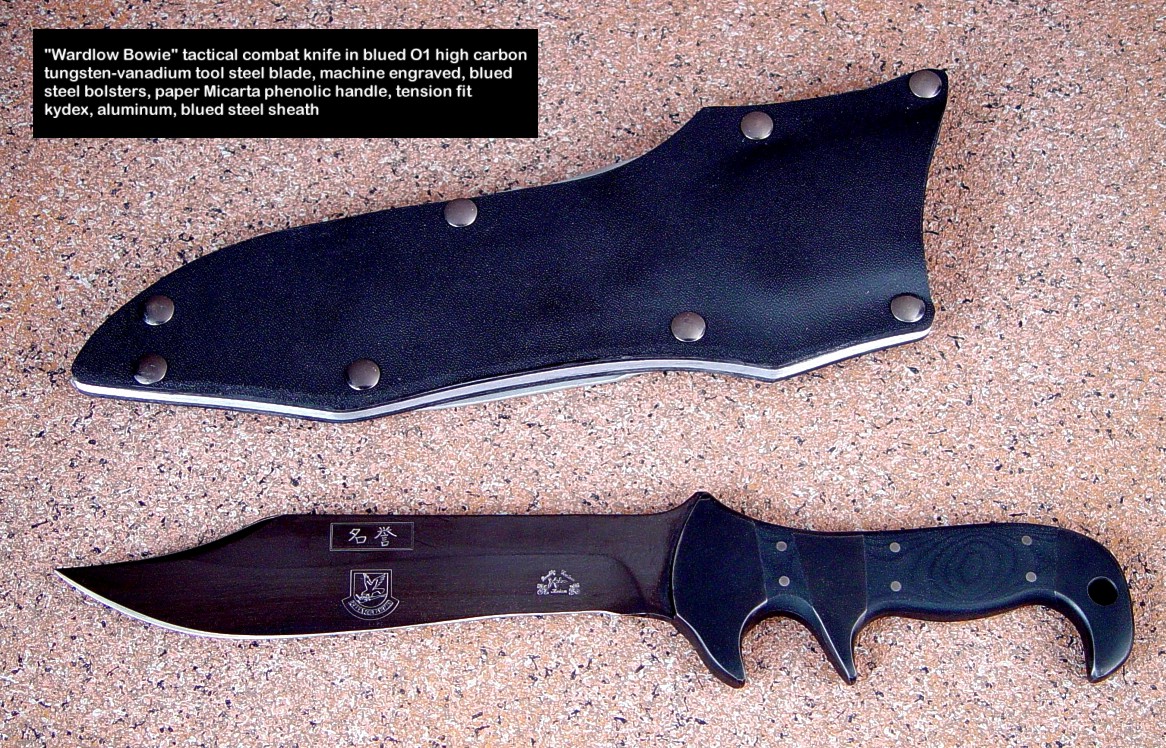
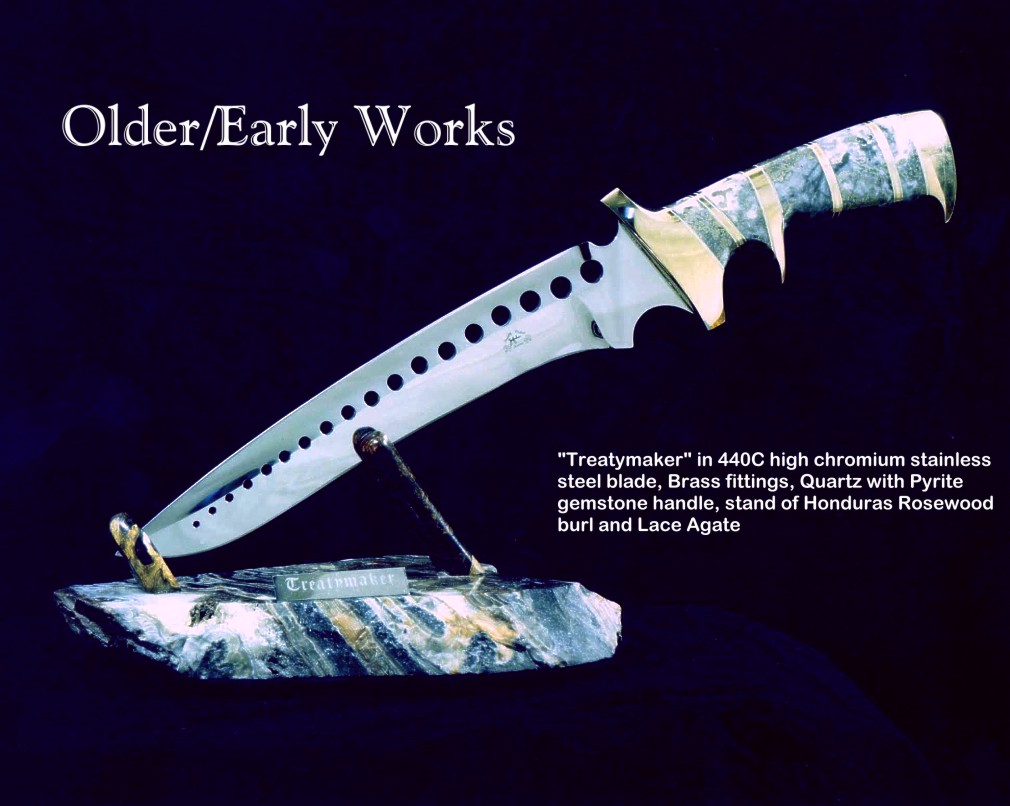
Problem: Retention of the knife in the sheath is only one factor of the Primary Edged Weapon's value, serviceability, and dependability. The knife must be retained, yet easily removed from the sheath. The sheath must also be able to be mounted and worn to the battle. The method to mount the sheath to the body, pack or gear must be commensurate with the knife quality and requirements of the user. It must not come off unless intended. It is clear then, that the mounting method should be just as tough as the retention method, perhaps more so, since the sheath is exposed to mechanical forces and movement in many directions and angles, whereas the knife retention forces are usually only outward, in the axis of the pull on the knife. Most sheaths commonly available only have two mounting methods, and they have their problems.
The most common is the fold-over belt loop, typical on nylon sheaths, leather sheaths, and even on some kydex sheaths. The issues are several. First, when the loop is folded over, it is almost always at the top of the handle location, so the knife hangs down low on the hip. The knife sheath can't reasonably be mounted to the tactical gear of a vest, as the knife hangs and flops around. This type of loop can not be accommodated on the PALS (Pouch Attachment Ladder System) webbing most frequently used on real tactical gear. With long or extremely large knife blades this can be improved by strap retention around the thigh, but this is rare, as most knives are not this large. Try mounting a fold-over top belt loop to your PALS webbing and you'll see the problem.
The other problem with fold-over loops is one of wear. Any time leather is folded over, it is weakened. So the very spot where the leather will encounter wear (the very top of the folded loop), is usually grooved so that it can easily be folded. If it is thick leather it is significantly weakened by cutting away of the thickness at this point, and if it is thin leather, the fibers are weakened by extreme bending. Folding is worse for kydex, as a 180 degree fold in kydex simply devastates the strength of the material, and it is becomes very brittle, thin, and grossly deformed at the fold. Another method commonly seen is milled or cut slots in the sides of the kydex sheath. This is where you're supposed to thread a belt or strap through. But the weakest area of the entire piece of kydex is right where the edge of the slot is located. These have been known to snap at that point. Wearing any of these arrangements has to be adapted with additional straps or webbing to PALS system or MOLLE webbing. Horizontal or angled wear is usually impossible. What a mess!
Solution: I offer a wide variety of mounting options, and all are based on the strength of the entire assembly. In leather sheaths, I mount a rear belt loop at full 9-10 oz. thickness, heavily stitched with polyester, the toughest binder on the market. I've never had one of these fail, and they pull the sheath closely against the body, high up so that the knife can often be worn even in a vehicle. For even more variations, I may make a sheath that has a cross-draw type loop, and will slightly rotate when sitting down. These styles of leather sheaths are typically for belt wear, usually at the hip.
For the kydex sheaths, the mounting methods are even sturdier, as you might expect. I make die-formed or solid strap 5052H32 corrosion-resistant, high strength aluminum straps and belt loops, secured to the sheaths with nickel plated, blued, or stainless steel Chicago screws and posts. Most of these are able to be located on either side of the sheath for reversible wear, and can be moved to various positions along the welts for a wide variety of wear options. I offer options like straps that clamp tightly to the belt, rigging, or web, and even angled loop plates, variable horizontal/vertical loop plates, and accessories for wear and mounting (see topics below). If you ever wear through these aluminum loops, straps, and plates, you've served way too long and need to retire! Okay, really, you won't live long enough to do that.
“Better to have, and not need, than to need, and not have.”
--Franz Kafka
Writer, 1883-1924
Problem: most knife sheaths are a one-shot affair, with no serviceability, options, or accessories. These sheaths are never made to be serviced and repair is impossible. You'll see the same sheaths, often made in China, over and over, and there is no customization, no fitting of the individual knife to the sheath, no fitting of the sheath to the actual needs of the service person who will rely upon the knife for their life, their squad's life, their team's life, or their charge's life. There will be no personalization, little embellishment, no options at all. Even stateside manufacturers, shops, and makers seem to offer little in the knife sheath trade and craft. What a shame.
Solution: custom sheaths, made specifically for the knife, by the maker of the knife, commensurate with the quality of the knife and the required duty level, exposure, environment, intention, and needs of the actual knife user and owner. The knife sheath should be able to be repaired if necessary by the original maker who should guarantee his workmanship for his lifetime. Of course, factories will never do this, but what you can and should expect from custom knife makers, small shops boutique shops, and dedicated sheath makers is reasonable, valuable answers to your needs. If customization in the materials, mounting methods, retention methods, carry orientations, exposure protection is needed, the entity who makes the knife should work with you to get the knife sheath you want. I offer a line of accessories, belt loop extenders, retention methods and carry straps on my Tactical Sheath Accessory page. For the ultimate in positively locking combat sheaths, simply the best sheath made, take a look at my Locking Sheaths page. For custom embellishment, look at the knives on this page, the Commemorative Knives page, the Pararescue Knives page, and the PJLT (Pararescue Light) page to see the engraving, etching, flashplate, and personalization options of both the knives and sheaths.
Simply put, I make and offer the best knives, sheaths, and accessories in the world for real tactical and combat use.
Short Answer: Rarely.
Long Answer: I make tactical, working, rescue, combat, and counterterrorism knives. Since they are real tactical knives, not just "tactical" in appearance, they are actually made to be worn and used in the most serious of uses. Because of their real world application, it has been necessary over the years to include everything my clients request for them. This starts with the toughest, most durable, and best made knife sheath in the world today (and ever): either my positively locking sheath or my hybrid tension-locking sheath. My experience has been that since the sheaths have to be worn, and since everyone is different and every mission or application is different, it's important to include all of the necessary straps, clamps, hardware, mounts, and equipment to wear each knife and sheath with every tactical knife.
It is rare that a tactical knife is only worn in one place; as the owner's gear is refined and regularly upgraded, the sheath must be able to mount to an evolving combat framework. Typically, a client who wears these knives will have multiple applications and missions, and because of the limitations of his other gear, he'll have to move the knife and sheath to different locations to accommodate. For instance, the United States Marine in desert warfare currently has only about one place he can mount a tactical knife, and that is along his leg, below the waist, and above the knee. Of course, this may change depending on his particular gear, environment, or mission. I want my clients to have all their bases covered, and every option available.
From time to time, I receive requests for tactical knives that are "bare bones," that is just the knife and sheath, and no accessories. I rarely do this because of the reasons above, but taking it a step further, let's just examine what would happen if I did offer simple knife and sheath combinations, without all of the other hardware.
I've had the experience of doing this very thing; this is how I used to make and sell my tactical knives. When I did, the first thing that would happen would be the client contacting me and saying, "Gee, I really like the knife and sheath, but do you have a way to mount it lower on the belt?"
This is how and why I developed and include the BLX, UBLX, and EXBLX Belt Loop Extenders.
Then a client would ask, "Is there any way I can mount this horizontally along my belt line?"
From this, I developed the Horizontal Belt Loop Plates.
Then a client would ask, "Is there a way I can fix the sheath to my PALS on MOLLE, or vest webbing?"
I developed the Horizontal and Vertical Clamping Straps.
Another client would ask, "Can you make something to mount the knife over my sternum? It's the only place I can wear the knife. And by the way, it has to be handle-down."
I created the Sternum Harness and the Sternum Harness Plus.
A client submitted, "I do a lot of work where I might be in the field after dark, and sometimes, even in the daytime, I need a small light for examination or emergencies, or just finding my way."
I created the LIMA, with the Maglite® Solitaire, then the Solitaire LED, and then the ThruNite® Ti3 LIMA.
Then clients asked, "The little light is great, but can you actually give us a main (or key) flashlight. We need one that can be our main lamp, with super-bright illumination for nighttime operations. Oh, and we need it to be able to be aimed in a fixed position, in any direction from the sheath. Then, we need to be able to remove it, replace it, and depend on the holder to never rust, corrode, or bend."
I created the HULA with Maglite® XL100, then XL200, then MagTac®, and then Fenix® E35 and Fenix® RC11, and Streamlight® Sidewinders. My counterterrorism clients claim that "Two lights are only one light, and one light is no light." This is a logical, serious, and practical observation, since lamps can fail, batteries can die, and components in flashlights, no matter how tough, can stop working. A simple failure of a light can leave the owner crippled in the darkness, so most CT kits have both the LIMA and the HULA.
Some of the accessories were needs that I noticed, like the simple need for a touch-up sharpener, so the pocket on the UBLX was added with a DMT Dia-Fold® sharpener. Another was the fire starter for outdoorsmen, less often requested. I had knives with lanyard holes, but no lanyards; two types were added. Lately, I've added real diamond sharpening pads with essential pad-bags to carry, store, and use them. When I noticed that some of the drawstring bags the knife kits were stored in were literally worn out, I looked for a durable duffle that could accommodate the entire kit. There were no duffles of any strength or durability, so I saw the necessity to create my own, with 1000 denier polyester coated, water resistant Cordura® ballistic nylon and heavy straps and zippers.
Consequently, the kits grew, and continue to grow to this day. My logic is this: I simply want my client to have everything associated with his knife. It's part of my service commitment to my career field.
Let's just look at what happens if I don't include all these accessories in the kit. I can reveal this because it's happened before. The client buys just the knife and sheath. He then notices that the sheath is a fixed form, and has a definite and universal mounting hole arrangement for straps and hardware. Since no one else in the world makes this, he then contacts me because he wants a different mounting or wearing arrangement. It's just a few straps to create, and maybe I can match the color of the anodizing with the rest of his gear, but maybe not, since I anodize in batches. But in order to make his accessories, I would have to stop what I'm doing (while five years in backorders) to make the parts. More logically, he should take his place in the queue, and wait five years for his straps to mount his knife. What? And then later, he wants a UBLX, but it's custom made for the knife (they all are) and I have to have the knife shipped back to me, so I can get the sizing and arrangement correct for the custom fit, and maybe he has to wait five years for that...
You can see why this is impractical.
Another point is that sometimes, a potential client may think that if Jay just offers the simple knife and sheath combination, he'll get a big discount and get the knife for less money. And then, he can add those accessories as time goes on, to spread out his investment.
If a client is strapped to pay for the kit, he probably should not be buying the knife. Most other makers won't say this, but the last thing I want to do is to impose any financial burden on my clients. I know what it is to live and work within a budget, and I also know what a tremendous amount of work it takes to make these knives; they are quite literally the finest, most complete tactical knife kits in the world. If you don't think so, I challenge you to find any that compare, anywhere. The fact that they are so difficult to make is why you don't see them anywhere else. This means that the incredible amount of labor means a higher price. As I've stated before, I'm not interested in making budget knives; I've only got one life and one career, and I want to make the very best knives (and kits) I can possibly create in that time.
They arrived today. I expect perfection and you delivered as always.
The kits were a surprise to me. I know this sounds stupid to you, but, I am so use to
a masterpiece and a sheath to be put on display. The embellishments, on the weapons, cause
one to look at them as art pieces and not weapons of war. The kits bring home the seriousness
of your works and the need for full kits. In the future I will get full kits.
I would guess the majority of patrons do not truly understand what you do. The trolls and detractors
miss the mark completely. Your creations mean the difference between life and death.
Yours Truly:
P.
Short Answer: No.
Long Answer: Here's an excerpt from an email in response to a guy who asked me to compare whether custom knives are better than issued knives. "After all," he asked, "doesn't America get issued the best knives?"
My response:
The sad truth is that US soldiers do not carry the best knives, in fact, knives are no longer issued other than the bayonet, and most units do not carry them.
Knives that met specs in the past were horribly overbuilt, more like thick shovels than cutting instruments or weapons. Nowadays, most units go out to a vendor and purchase knives in bulk if they do choose to issue them. These knives, like most military gear, are bought by lowest bidder.
This is an unfortunate reality in bulk government purchases. Factories do all they can do to cut the costs to them and secure the bid, making the most profit margin they can at the expense of the actual product. This includes importing parts made by foreign companies. Do you honestly think that anyone can bid lower than the Chinese?
The Ka-bar you refer to is a perfect example. In the early part of WWII, Ka-bars were made of D2, an extremely high carbon die steel, very tough, hard, and wear resistant. Current Ka-bars are made of 420 series stainless steels, the same steels used on cheap imported Asian kitchen knives bought in large discount stores. The use of 420 is needed because softer blades are blanked out in die presses, and the dies are often made of the steels that custom knifemakers use to build their blades. Look at the modern Ka-bar closely. It’s a hidden tang knife, a weak, small stud of metal extends through the handle, and the pommel nut secures a stack of leather washers on the handle. Leather is not even durable enough for most tactical knife sheaths, much less a combat knife handle. The crossguards are wafer-thin pieces of metal, uncomfortable, small, and dangerous to the hand. The blades are underground, thick and blocky, and poorly made.
The reason for continued interest in this type of knife? Popularity and cheapness. Everyone recognizes this typical style, and if you’re on a tight budget, it may be all you can afford.
Just because factories and large bureaucracies use a low bid mentality to buy the cheapest product doesn't mean you have to in purchasing anything you have and use in you life. How about purchasing your toothpaste, socks, or your car? Do you go for the absolute cheapest you can? How about your vehicle? Would you purchase and drive the Indian-made Tata Nano, currently the world's cheapest car at about $2500.00 brand new? Or maybe you'd feel better buying the China-made Chery QQ for nearly twice that much. What? You wouldn't? But you would be happy with the cheapest low bid knife you can find?
Professional knives are not cheap. Just as a well made firearm is not cheap, just as your gear, vehicles, and training is not cheap, just as your life should not be. You might get by with a low grade firearm, you might survive with cheap body armor, but why take that chance? What is the cost savings when you're in a pinch and your blade fails? What if the geometry is poor and it won't sharpen or hold a cutting edge in the field? What if it is cheap, weak, and breaks? What if it's hard to get to, is too small to penetrate seven layers of clothing, or too blunt to create a fatal incision? What if the handle is too small to deliver piercing energy? What if the sheath is cheap, and you lose the knife, or the knife injures you? What if the sheath is poorly made, gets in the way, or won't hold up and you leave your knife at your base because it's too much trouble? And then you're in the field and you need it...
Purchase the best Primary Edged Weapon, CSAR, or professional tactical knife that you can afford. Your very life may depend on it.
Short Answer: Only if good means cheap.
Long Answer: I read in an Internet posting once that factories excel over custom makers because they have "quality control inspectors" and "trained metallurgists." Evidently, the guy who wrote this has never had any contact with a real production factory. Quality control in factories is a woman sitting at the end of a line, looking for a bent or discolored blade coming out of the end of an automatic tumbling machine, which is used to put the finish on two hundred blades at once. Quality control inspectors look for workers who slow up the production line, cost the company money, are safety hazards that bump up their insurance rates. And they look for ways to produce more money while spending less on the product. No one is sitting at the end of the line with a ten-power magnifier scanning the grinds, looking for hairline cracks and uneven grind lines or a flaw in the finish. No one is adding a stress relieving pre-soak to the heat treating process, or a double temper to assure deep austenitizing of the steel matrix. No one is performing an analysis to make sure the blades that they purchased from Pakistan are not made from the leaf springs of a truck. There are however, plenty of bean counters and accountants sitting behind desks, thinking up ways to make more money for less product, inflate and exaggerate advertising claims, and pay the workers less than they deserve, because ultimately that is how profit is made.
Though a custom knife maker is also working for profit, he has a lower overhead and higher attention to quality. A good custom maker should constantly examine all the facets of the knife individually, comparing how these operations and results interact with each other, improving his skill and execution on every single knife. He is solely responsible for every part of the knife and its quality, function, and essential value, therefore, most custom makers make knives far superior to factory knives. Why do you think the factories use the words like bench and tech in their names and court fine, well-known custom makers to use the maker's name and designs for their factory made product?
And trained metallurgists? Please. Knife factories do not smelt their own ore, forge their own blades, and many do not even do their own heat treating. Some don't even make their own blades, and have their blades and components farmed out of Pakistan, India, or China. For those that do make their own blades, no knife factory is going to be bothered with someone analyzing tool steels when the specific methods of steel heat treatment are carefully and clearly prescribed by the steel manufacturer.
These hyped-up concepts of high quality factory work are pervasive in every industry, and they're promoted by industries that want you to think that they are more than they really are. I spent 15 years in industry, you can read about my background here. I know how factories, plants, and production facilities are run. Low budget, low quality, low bid, and lots of hype and advertising. Get the product out the door as fast as possible with as little investment as possible. Cut corners on safety, insurance, retirement, and quality left and right to save a buck. If you think you know how bad industry is, talk to someone who's spend 15 years there, and they'll probably tell you it's a lot worse than you imagined. Hell, they give bonuses for workers who figure out how to cut corners! If the unions let them, that is... And all those extras: advertising departments, management, safety and loss control, insurance, human resources, unions, and even the company goat roast at the lake is paid for by your purchase. You might be surprised to realize how little of the money you pay goes into the materials and labor used to create the factory knife in your hands.
"But, Jay," you ask, "Why then are handmade custom knives by well-known makers so expensive?"
The detailed and specific points on this very page and on my Factory Knives vs. Handmade Custom Knives page make this very clear, as do the Six Distinctions of Fine Knives. Additionally, prices are set by the market, supply, and demand. If the factory or other shop made a knife as good as the maker, their prices would be more and the maker would be out of business, but that won't happen because those detailed points listed above increase labor, demand highly skilled operations on the knife's construction, and require a conversation between the manufacturer and the knife client. The maker may be working in years of orders, and he has to not only consider how valuable his work is, but what it's worth a year or two (or more) in the future when the client's balance on a commissioned project comes due. When a custom maker of fine handmade knives chooses to make a combat knife, he has to weigh the value of the combat knife against a fine art piece which may offer him a higher income than the field knife. The individual maker creates only a limited number of knives in his lifetime, and hopefully, he makes them to much higher standards and quality than what is offered by factories, boutique shops, manufacturers, and importers.
Remember, factories are in this business to make the most money they can from the cheapest investment in the product. I'm in this business to make the best knife I can for your money. The differences are the dozens of details and comparisons listed on this very page.
Are there good factory knives? Only if good means cheaply made. Please, for God's sake, educate yourself, know and understand the differences, quit buying the company's inspirational slogan and think for yourself. Understand what your life's worth. How important is it to be well equipped and knowledgeable? If you don't purchase a knife from me, but only learn about knives from this website, that's fine. Please make an informed choice and go to someone who can make the knife you need and deserve.
In the factory knife, a factory worker's name will not appear on the blade, only a company moniker or trademark name. My very name goes on every knife, and my reputation goes along with it.
You can read more about factory knives dirty little secrets on my Factory Knives vs. Handmade Custom Knives page, and proper knife, blade, handle, and sheath design and construction on my FAQ page and Blades page.
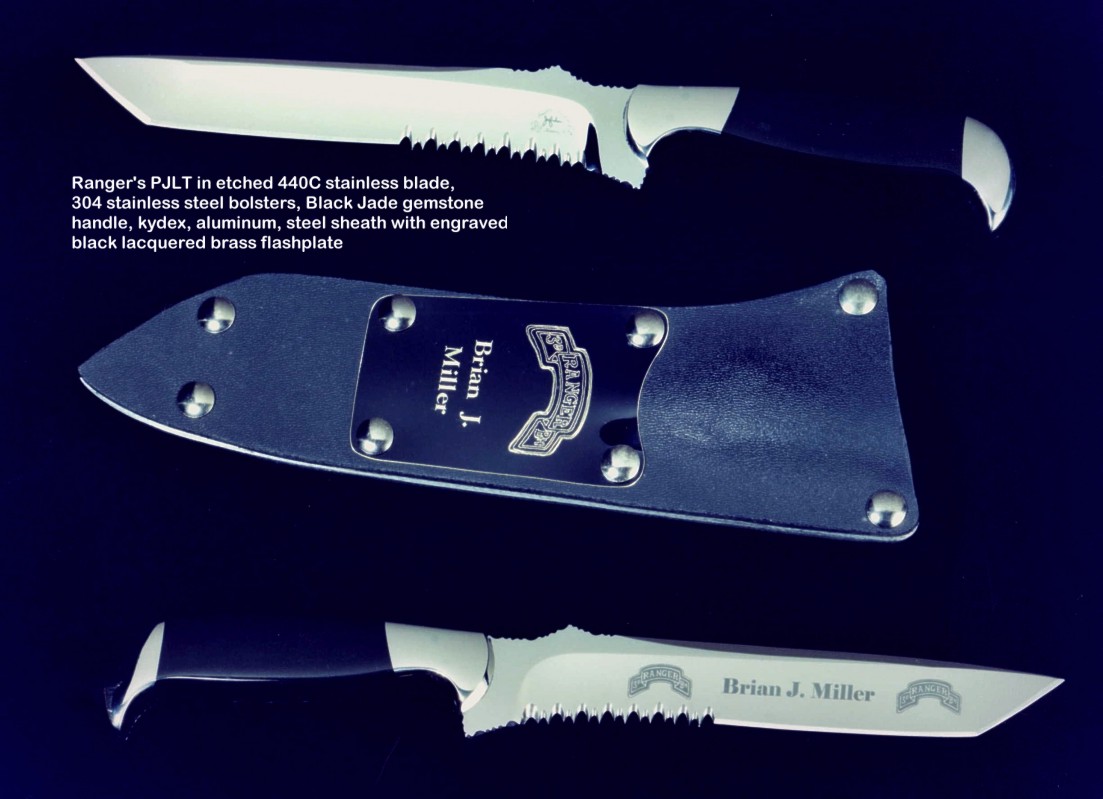
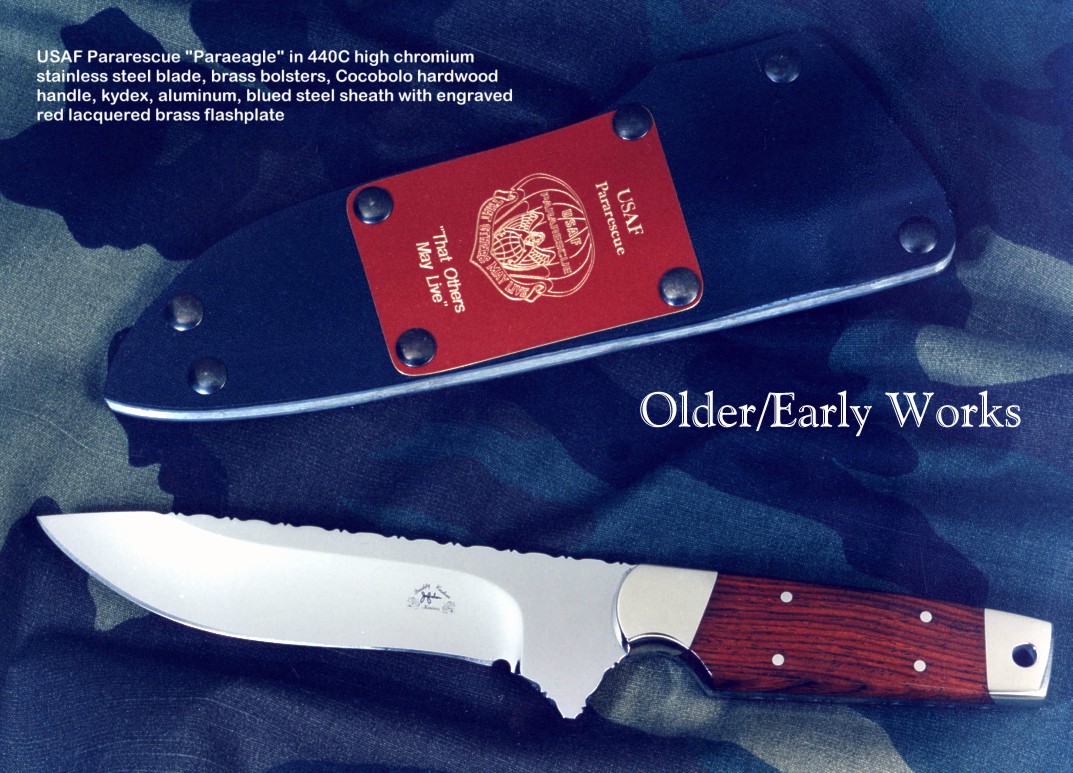
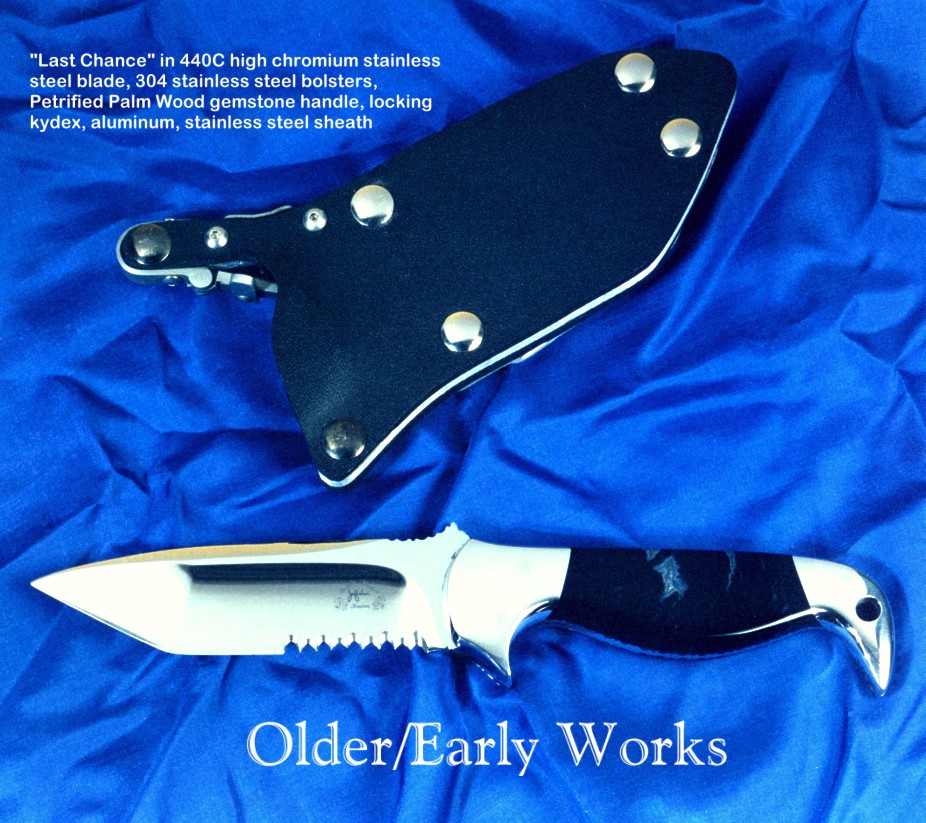

Short Answer: This is a small factory, no matter who's name they use.
Long Answer: A boutique shop describes a small knife shop or business, usually started by an individual maker who has decided to go into volume production using his name only. They started out as good makers, and went the way of mass production, but are determined to keep their name on every piece, as if each knife is hand made by this guy sitting behind a bench wearing an Optivisor®. The truth is that these are small factories. They may employ a small family group or up to several dozen employees. Most of the work eventually ends up being automated, and these days that usually means fabricated on a Computer Numerically Controlled (CNC) milling machine or worse, farmed out to overseas companies.
CNC mills are getting cheaper every day, and they make machining a knife a matter of inserting stock in a holder, pressing the start button of the programmed mill, and watching as the wonder of automated instructions by computer creates a knife from raw stock. You'll see a lot of integral knives made this way, as it's actually easier to have the CNC mill carve away the area of the blade, and leave the bolster standing upright, than to independently make a superior bolster and mount it rigidly to the tang. The handles may be turned perfectly round by the lathe function of the machine, and then knurled for traction. I can think of a no more soulless way to make a knife.
In these companies, the knife bearing the maker's name is actually a knife produced in a small factory, and is subject to the factory or manufacturer's mindset. These knives are frequently made to the same general standards of imported factory knives, but the maker's name on the knife is heavily hyped so that a greater price is usually asked. You can probably name several right off the top of your head. So why not go to one of these small factories that supposedly specialize in combat knives? After all, you may save some money-
Yes, you will pay less than I or other custom knife makers would charge for a real combat knife. If cheap is a benefit to you, that is what you will get, as these knives are mostly selling for under $1000, some for under $200. If you want a cheap knife that looks tactical then they may just be the ticket for you. But you've already read the differences that this cheap knife will cost you in the field in the dozens of topics above. Just know what you'll be getting: inferior grinds, poor blade and handle geometry, unfinished or coated surfaces, cheap materials poorly or weakly mounted, uncomfortable and impractical handles, and lousy, cheap, or non-existent sheaths, accessories, or options.
Short Answer: It's made for you.
Long Answer: Custom means made to order. So a knife that requires certain features, materials, geometry, sheath, and accessories and even a custom fit to your very hand can be achieved only through customization.
There is no customization in the factory, boutique shop, imported, or manufactured knife. You simply must settle for what they offer, and hope it works for you. Like fine finish, customization is never, ever offered or done at any knife source except custom knife makers. This doesn't stop some of these manufacturers from trying to cash in on the whole customization process and terminology though, because they understand the value and concepts of custom work. Take the boutique shop that uses a maker's name and claims to offer custom engraving on their standard line of folding knives (that they incorrectly call tactical knives). They have a group of patterns that reside in a computer program that drive a CNC mill to cut a design on the knife handle scales. You can choose which design is used, therefore it's custom... right? Of course not, and people who buy this hype are just foolish, and the argument may be launched that if they are taken in by this, they deserve to have their money taken. This is a line of fixed products, with a small group of varied machine operations performed on them. In purchasing this "option" they hope the knife owner will feel very special and might even think his knife is unique.
A true custom knife maker actually makes knives to order. He applies the features you request, and eliminates the ones you don't. He offers a wide variety of materials, finishes, patterns, designs, and styles, and offers the same kind of options in the accessories that are custom fitted to the knife. Only from a custom knife maker can you get the exact knife you request, suited to your requirements and limited only by your budget. Custom makers should (and most will) build the knife you want.
There is an added, seldom considered advantage to working with a custom knife maker. If the maker has been around a while, he has benefitted from the input of hundreds of clients who came before you. This means that the guys that ordered a specific tactical knife with certain features and styles may have already done the footwork for you, and that very knife pattern exists within the maker's pattern inventory. The very features needed: shape, contour, accessories, and even potential bugs have already been worked out, so you can be assured of a knife that is workable and designed for the field of use and range of budget you need. A great example is my top selling CSAR knife, the PJLT, which has had such positive exposure and genuine field applications, that I've seen some factories trying to copy it. But they won't get it right, they can't (because of all the reasons outlined in the dozens of topics above on this page), and it will never be customized to suit the individual client's needs.
Please keep in mind that the knives you see on this page are nearly all products of a custom knife conversation, and what you see has actual value in the professional field of the knife user. Please think a moment about the guys who own and carry what you see, and honor their input, service, and investment in this dangerous world as I do every day.
Short Answer: What knife would you be proud to hand down?
Long Answer: The value of a knife is not a simple thing to define. A knife has value first if it is made with high value concepts, materials, and craftsmanship. Of course, factory knives never have any of these.
Once the knife is made, the value is to the owner. Is the knife a tool, adjunct, or weapon that the knife owner values? Will he feel undressed if he doesn't have it mounted to his gear, webbing, or belt? What is the value of the knife in a serious tactical, rescue, or combat situation? Only the owner can answer that.
"A man isn't dressed without his knife."
--Mark Twain
What about the long term value? This can be defined in two ways. First, if the knife is made by a well-known maker and the maker's work retains high value over time, of course this will be translated into the knife that is tactical, even if used in combat, rescues, or professional response operations. One can not reasonably expect that a knife that is scarred, beaten or wears the cosmetic marks of conflict to have a monetary value as high as a collector's piece that has remained in a drawer, display, or collection.
But what about the other long term value, the worth of a knife that was specifically designed for and used by the owner who has seen combat, conflict, or engagement, maybe in distant lands? How valuable is the personalized, custom knife to the owner or his children, family, and loved ones after the conflict is over and the knife sits on the mantle in retirement? Only the owner can put a price on that. Chances are, the knife will retain that very personal and generational value long after my bones are dust, and that is how it should be.
Short Answer: Your knife, you pick.
Long Answer: Though you may see a lot of media blasted and satin finished blades here, you'll also see plenty of mirror finished ones. In dealing with the military, police, and combat, rescue, and protection specialists, there are generally two schools of thought.
Camp Flat: One group says: no bling-bling, no bright mirror finish to reflect the blade and telegraph its position. They are concerned that a glistening blade will reflect and indicate a position for a sniper. The mirror finished blade could be a tell-tale, eliminating the stealth factor of a flat or dark object. They're also concerned that a fine mirror finished blade will make them a mark for theft of the knife. They also relate that they don't want to be gaudy, ostentatious, or appear too proud and showy. They like the appearance of flat, unremarkable steel, and are not afraid to scratch, scar, and deface the blade. They also do not want to pay the added expense of finishing a blade to a high polish.
Camp Shine: The other camp is just as resolute. They feel that they want their enemies to see the blade, that a large, glistening piece of steel will assure that they are well armed with a professional blade, and are tough and well-trained enough to know how to use it. The appearance alone is one that might make the enemy change their mind about a CQB, or CQC hand-to-hand attack. A bright, shiny blade of fine high chromium steel with a razor edge could be the visual threat that may not only forestall a direct attack, but also be so imposing that the enemy may become unnerved at the prospect. This would give a distinct mental advantage to the one who wields the blade as the bright blade appears physically larger. The enemy might also be so concerned with the position and movement of the blade that their concentration is diverted from other moves and threats. I find similarities in the history of edged weapon battles, and some armies of earlier times started their frontal attack with unbelievably large, polished steel blades (like six foot long, two-handed swords), wielded by huge, mighty men just to crack the resolve of the enemy. The modern warrior might want the enemy to know he is well-equipped and proud, and that if he has to pull out his combat knife, things have already gone to hell and he doesn't care what the enemy thinks.
Corrosion Resistance: Another consideration is one of non-combat tactical knives also covered on this page. Knives used in rescues, searches, hazardous materials emergencies, emergency responses in oceanic or marine environments, and other non-combat functions may benefit from a mirror polished blade as it is easier to clean and much more corrosion resistant than a media blasted, satin finished, or flat blade. Please remember that not all knife blade steels can be mirror finished.
Technical Description and Details:
Here's a simple chart to compare the two:
| Blade Finish: | Media Blasted | Mirror Finished |
| Cost: | Lowest | Highest |
| Corrosion Resistance: | Low in any type steel | Highest available in stainless steels |
| Maintenance: | High (wax often, keep clean and dry) | Low (rinse and dry) |
| Cleaning: | Hard to clean, holds debris | Easy to clean |
| Appearance: | Flat, Absorptive | Bright, Reflective |
| Text and Graphics: | Machine engraved | Photochemically etched |
| Value: | Lowest | High investment and resale value |
In either case, it's a matter of preference, and I am a true custom knife maker, and I can make the knife you want, either way.
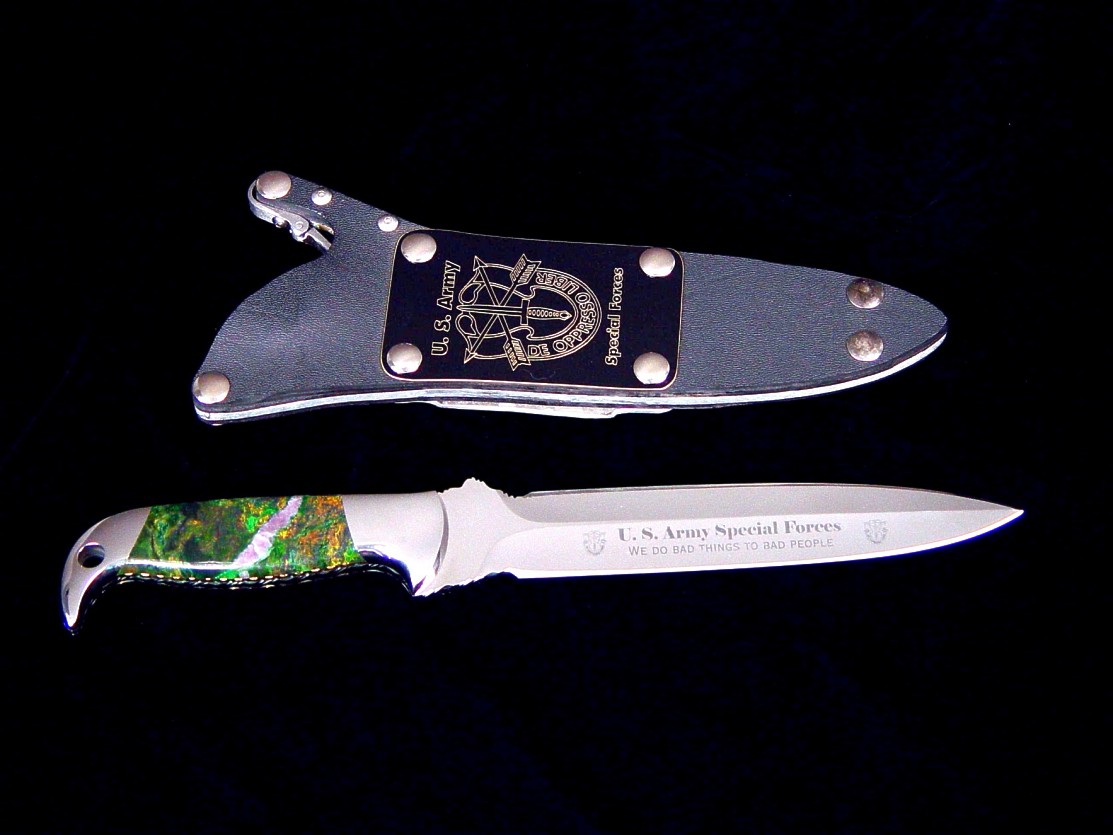
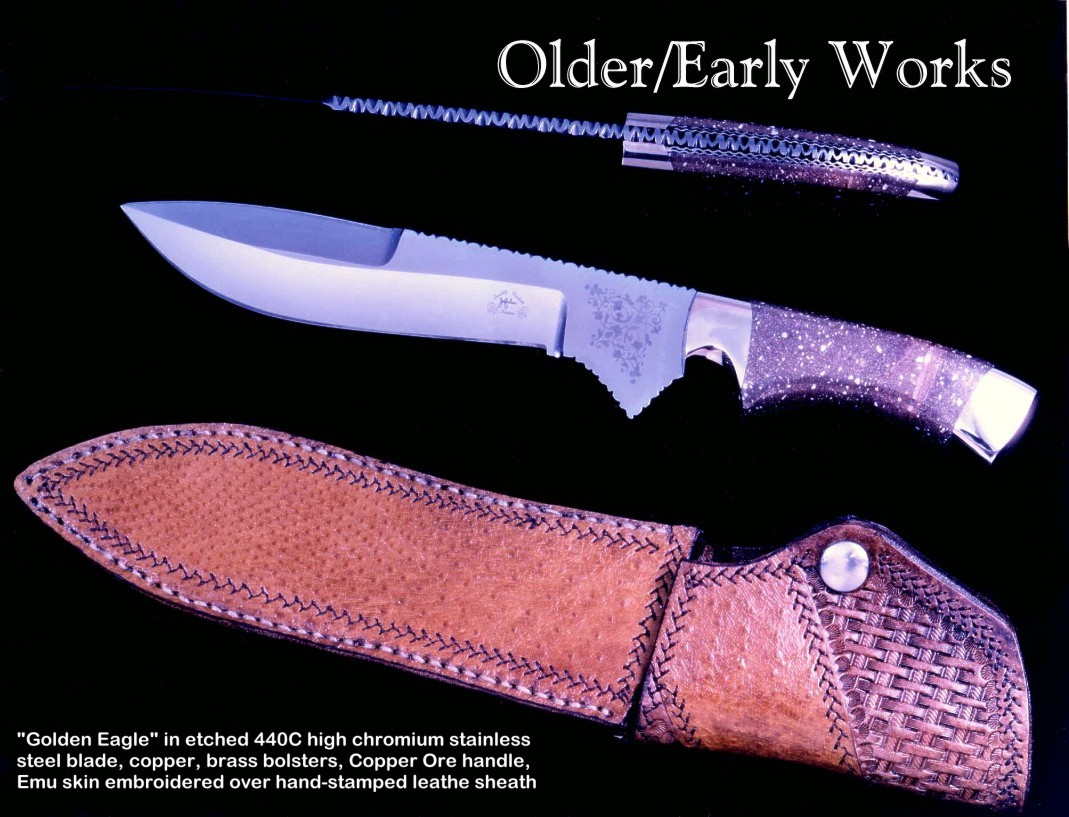
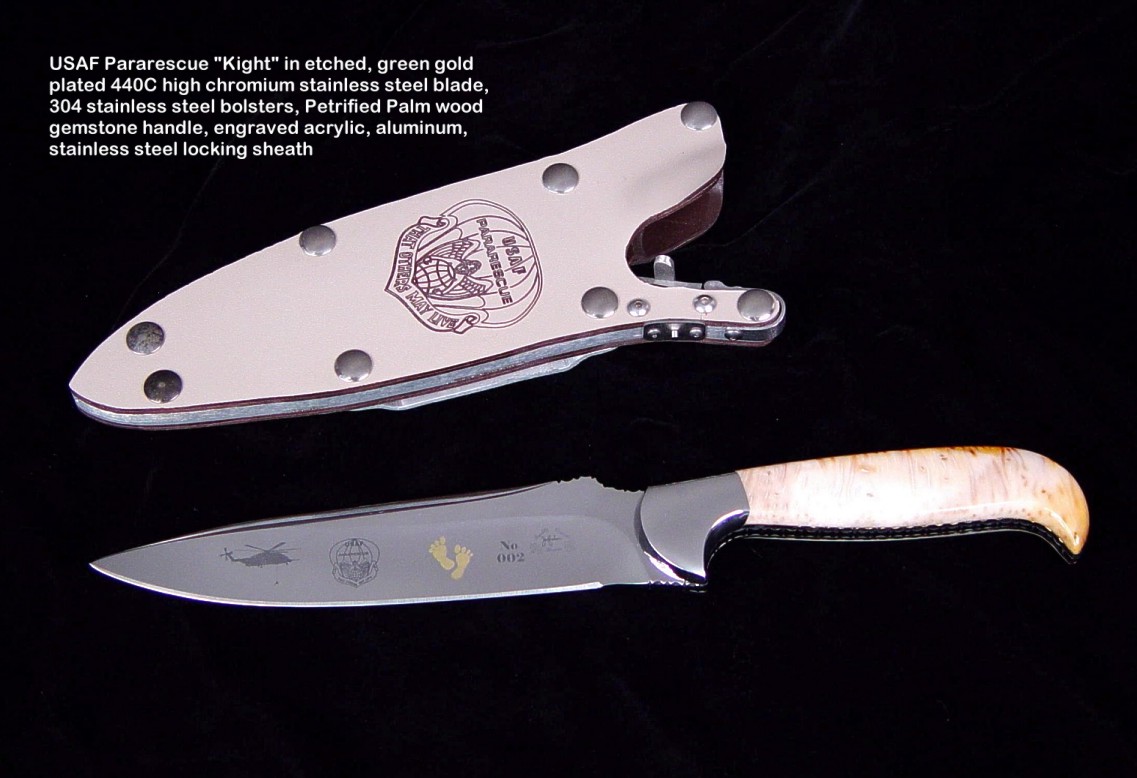
Short Answer: It's about shape, not bloody texture.
Long Answer: The choice of a smooth or roughly textured handle comes up frequently, probably more due to misconceptions and advertising hyperbole and less than actual needs and concerns. The subject also arises in the discussion of chef's knifes and hunting knives. There are many facets to this discussion:
In the days of old, battles were fought with swords. Daggers and knives were not usually used in these encounters, and no one can dispute the significant and looming advantage of the long white arm (sword) over the short and lighter dagger. Daggers and knives were sometimes weapons of stealth and murder, but more often tools of utility. Though some of these were large enough for parrying the opponents blows, and sometimes daggers could be slipped into the opponent during the fray, they were obviously not the Primary Edged Weapon. That honor belonged to the sword.
The sword was hard to hold, even if it was the finest lightweight rapier with the most slender blade constructed. This was due to several reasons.
What did this have to do with gripping surfaces? In order to make certain that the sword was not dropped during battle, every feature that the smiths and artisans could muster in line with the value of the sword was brought to bear:
Most people are under the misconception that blood is slippery. Sure, when it's wet and very fresh, this is probably true. But blood coagulates very quickly, and blood, due to its built-in clotting properties, becomes very sticky, very fast. Most people think of blood when they are remembering the tissues encountered during dressing game, or cutting up a chicken or fish on the kitchen board. There are other fluids encountered during these activities, mainly slippery fats and proteins. In fish, there are oils, fats, and mucus (glyco-proteins) that are normal. All of these may be slippery or slimy, and so it's natural to assume that all tissue is this way. Without getting into serology, I'll just state that it is common for men (and women) who purchase tactical combat and rescue knives to be concerned that a smooth surface can become downright slippery when covered in blood, causing them to drop their knife.
If you are covered in blood, the least of your worries is if your knife is going to slip out of your hand. If it's your enemy's blood, then the attack is usually over. If it's your own blood, your adrenaline will be so jacked that the weapon in your hand will probably be fused to you and your purpose. In the hundreds of combat knives I've made, I've never had one complaint like, "Gee, Jay, the handle was a bit slippery the last time my hands were covered in blood..."
On a related subject, the blood groove It's actually called a fuller or cannelure, and it has no purpose related to blood. That's an American wife's tale. You can find out what it's for on my Blades page and my Knife Anatomy page.
I can see how one might compare holding on to a knife handle like holding on to a smooth steel pipe, but knife handles (particularly tactical knife handles), when well designed, feature enough curvature of shape to lock into the hand. Friction alone is not the determining factor of the knife handle. If it were, the handle would be covered with rough sandpaper, insuring your grip. Maybe just glue your hand to the handle with super glue; that would work.
There seems to be a common slant that is perpetuated about rough textures on knife handles. Here's how it goes: the factory knife is always poorly finished, so surfaces are left rough. Some smart advertiser got the idea that if they touted roughness in the unfinished handle as a benefit, the knife owner would never notice that his knife handle is unfinished. So the idea was born. Truth is, a rough texture is easier to make, cheaper to finish, and is of advantage to mainly factory-type knives where not much investment is spent in finishing, and I, too, charge less when a knife is finished this way.
Please note this important point: more grip certainty is derived from the shape of the handle than the roughness of the finish. If you take a close look many of the tactical knives on this and my other pages, you'll see deep curves around the front quillion, sometimes actually creating a guard, usually a substantial thumb rise, and a radical curve forward of the rear bolster, quillion, or finger ring, which will positively lock the hand into the handle. Also, a substantial swell in the belly of the handle helps, and some of the knives feature a full and terminal finger ring, which for some, may even be too much security. This careful and often difficult method of creating an accommodating and variable shape in the knife handle actually has its roots in history. More than the surface texture of the sword handle, swords always had sculpted, curvaceous, and dramatically shaped handles. This was not to simply gussy up the appearance, this was to shape the handle so that it was easier to hold onto the weapon. History shows us then that the handle shape is more important than the texture.
The human hand is amazing, it can adapt to a variety of shapes, but not all of them are comfortable to maintain, rigid yet movable, strong, yet secure with a light grip. Some shapes are more suited to a tactical grip, locking the hand to the knife so the user can apply great force, some grips need to be light and delicate, such as a skinning knife or caping knife where the knife is used more like a surgeon's scalpel. It is a very touchy-feely thing. There is a careful balance of friction, comfort, and use that must be met in the knife handle to hand union. The handle needs to feel good going into and out of the hand as well. A properly shaped handle also helps the hand orient the cutting edge in the dark or without looking at the knife.
What about the typical paracord-wrapped handle? It sure looks tactical, right?
Any handle for any tool in existence that has a laced textile for a grip can come loose, wear through, and fall off when you do not need that to happen. And it will come loose, sooner or later. I can't imagine why someone would carry a knife laced with a piece of cord for a handle, when the cord can also hang up on just about any protrusion it contacts, tangle up in a hopeless knot, wear through, or possibly bind the knife user to an object, piece of equipment, or gear when he needs freedom of movement. Chute cord is polyester or nylon, and is not tough, not strong, and not wear resistant, and it burns easily, continuing to burn, while dripping hot burning plastic on everything it contacts. If you've never been burned by dripping nylon or polyester, please do play with some and a lighter, it's an experience you won't soon forget as the sticky flaming stuff contacts your skin, and won't come off while it continues to flame and melt.
Some guys may claim that the cord allows you to grip the knife in mud or blood. Listen, if you have a problem gripping your knife, either the handle isn't designed well, or you're hand is not strong enough. I've never, ever had a complaint in the hundreds of combat knives I've made over the years that the knife was too slippery when wet. If you can't hold on to the knife when it's wet, it won't matter what the surface is textured with.
What if you need some chute cord to tie something up? Well then, get some chute cord to carry in your vest, pocket, or pack, don't rely on your knife to secure a load. The sad truth is that chute cord is used to cover knife handles because it is cheap, fast, and easy, and a way to make a knife look more tactical only because this cord is culturally and visually associated with the military. It's a poor excuse for manufacture and knife workmanship and screams out: "Cheap!"
Whether wet, dry, in salt water, mud, blood, or chemical slime, the shape of the handle and strength of your hand has more to do with the knife grip security than texture. If you cover the handle with motor oil, it won't matter what the texture is, it's going to get slippery! Oh, yeah- what are you doing with your knife in motor oil or slime, anyway, and how often does this occur? The most important question I will ask is this: When was the last time you dropped a knife because of a slippery handle? I don't know about you, but I've never done this, ever, and I handle a lot of knives. A lot.
Short Answer: For increased security.
Long Answer: You've probably noticed a good deal of finger rings on my professional, combat, tactical knives, and PEWs. When a finger is laced through the ring, it increases the security between the knife and hand many times. This can be off-putting to some, who may have heard of the dangers dangers of metal rings of all kinds; how a man playing basketball left his ring finger hanging on the basket after being ripped from his hand when his wedding ring caught the metal frame, how a parachutist left his ring finger hanging in the plane after the jump. I'm sure that you probably have your own versions. I've personally never met anyone who lost a finger to a ring, but I can imagine that it's a concern.
There is a huge difference between a wedding band that tightly grips a finger and does not easily come off and a finger ring on a knife. My knife finger rings are usually one inch in diameter on the inside, which allows an easy insertion and removal, but is still very secure. The finger rings I use are designed for the index finger, so you can tell by looking at the knife if it is typically held in a traditional forward or a reverse grip. If a knife is held in a forward grip, the finger ring is at the blade-handle junction, if it is held in a reverse grip, the ring is at the butt of the handle. Grip styles and hand sizing page.
Stock size, ring placement: You don't often see well-made finger rings on knives. I believe it is because of the greater expense in the width and thickness of the steel required and the additional cost of machining and finishing the interior and exterior of the ring. The ring cannot simply be a drilled hole through a section of tang. Its placement is critical, and is usually not along the center of the axis of the handle. So, wider stock must be used to accommodate the ring design and construction and accommodation for force transfer between the ring and the tang. The ring must have thin enough walls to allow a finger and parts of the hand to wrap around it, yet be thick enough to be strong. This can be a problem on a ring at the handle butt, because the tang must also be tapered for strength-weight control. So a thick piece of steel stock, at least .250" or greater should be used.
Contouring and finishing: An additional concern and expense is finishing. The ring must not merely be chamfered or beveled; it should be rounded, smoothed and often polished on the inside and outside, so that the finger is not injured or abraded by sharp or rough corners going into and out of the ring. It takes a lot of time and effort to get this right, and that is why you don't often see well-made finger rings on factory, manufactured, or even handmade knives.
Choice: The use of a finger ring is a personal preference. If the knife blade is caught in a piece of machinery while a finger is laced through, it could lead to a serious accident. But what is your knife doing near a piece of machinery anyway? Many clients are convinced that the additional security is worth it, and do not want the knife to leave the hand. Others do not prefer this design. Either way, it is the knife client's responsibility and choice, and I make the knife according to their specific needs and requests.
Short Answer: NO. NO, NO, NO!
Long Answer: Serious combat knives are strong. That is why you don't see any knives called tactical folders on this web site. Folding knives rely on a less than one fourth of an inch (6 mm) piece of steel to hold them together. It's called the pivot, and it's about a third the diameter of your little fingernail. That pivot is supposed to be strong and unyielding when you need it most, when you need it to save your life. That little piece of steel is supposed to transfer great energy from the handle to the blade and cutting edge. That little piece of steel is supposed to prevent twisting, resist torque, and remain rigid when thrusting, jabbing, slashing, prying, and stabbing its way through seven layers of clothing, ballistic nylon, or even body armor. And it's supposed to stay together, stay locked, and not fold up and sever the fingers of your own hand during these wild and desperate moments-
As if that weren't bad enough, the folding knife lock is usually one forth the size of the pivot- how secure is that?
Combat is not cutting open a box or slicing a seat belt.
It is literally life and death.
Look at the real combat, tactical, professional knives, and PEWs on this page. They are thickest, most reinforced, and heaviest at the front bolster, the area where the blade and handle become one. That same location is the weakest point of a folding knife, and that is where the little pivot is. Also, the spring and locking mechanism are there, and the whole affair is usually ground very thin to try to compensate for an overly large, weighty, and disproportionate handle, which further weakens the blade-handle junction. Often, the handle area is milled to try to balance this weight, undermining the handle structure even more.
Another critical operation that a combat and tactical knife is supposed to do is support the blade for those same aggressive movements, movements that require the blade to have mass, substance, and a center of percussion that dominates the handle. Usually, this means that the blade must be heavier, larger, thicker, and meatier than the handle. But on so-called tactical folding knives, the handle is and must always be larger than the blade in order for the blade to fold into it: simple mechanics. So a folding knife is out of balance... always.
The folding knife is always limited in size. Do you ever wonder why you don't see really large folding knives? Sure, there are the rare projects that guys make for collection or curiosity, but the limiting factor in the size of a folding knife is the handle size. Since the blade has to fit inside the handle, and handles longer than 4 to 5 inches are uncomfortably large, weighty, and clumsy, the folding knife blade size is limited to about 4 inches maximum.
Knowing all this, doesn't it seem ridiculous to think that a knife that has a weak and thin handle, a mechanically disadvantaged folding and locking mechanism, and is limited in size is suitable for combat? Doesn't it seem embarrassing to think that guys are swayed by the hype of a striped blade, a camo look, and a flat finish on a knife with a three inch blade? A folding knife is not, has not been, nor will ever be a Primary Edged Weapon in the professional field of combat, rescue, service duty, or tactical operations.
Another often seen knife is the tactical automatic, tactical gravity knife, or tactical switchblade. When a knife has a folding, sliding, or pivoting mechanism that requires little effort to operate, or operates by the release of a spring's energy, that means that there must be very little resistance in the pivot or slide area so that there is no mechanical friction. That means loose tolerances, or the small spring or gravity that is used to operate these knives would not work. The knife action must be sloppy, so that means that the fit during lockup is also sloppy and on the automatic knives, it's even sloppier than a typical liner lock or lock back that must be opened with the fingers. It simply cannot be tight and true and at the same time have unrestricted movement. Add that to the list of limitations already described and these knives are obviously more utilitarian in design and use than tactical. Why have they got such attention in the tactical field? Hollywood, that's why. It all started with West Side Story, The Cross and the Switchblade, and other period movies. I'll detail that history for you younger guys in my book, but know this: If you expect your enemy to be wowed by the click of a three inch knife blade, you need to get out more and understand just how dangerous the world really is.
A folding knife may be able to drive away a mugger in a dark alley, but then again, it may not. One of the most frightening blades recognized is the hollow ground straight razor: shiny, thin, and quick. But you wouldn't expect to carry grandpa's shaving kit into battle. I'm not saying that folding knives do not have applications in the combat arena, in rescues, in tactical operations, or in professional use. I just want to make it clear that none of my professional military, police, tactical teams, SWAT, and emergency response team clients trust a folding knife for their Primary Edged Weapon. They carry folders and multi-tools, sure. For light cutting, personal grooming use, off duty chores, screw driving, and to flip and click while they're waiting for those extremely critical moments. And when those moments come (and they will), they've got a real edged weapon, a substantial blade and point, strong and sharp and true, in it's sheath, ready for life and death action. It won't misfire, fold up, fail, bend, or snap. It won't miss, and it will inflict deep and great damage if called upon.
Time to visualize: Things have gone to hell and critical and immediate use of your Primary Edged Weapon or tool is required. Your enemy is not waiting, your charge is not waiting, your critical knife need is immediate. Do you:
It's your life: you decide... 1 or 2?
Utility folding knives, working folding knives, and collector's folding knives... okay.
Tactical combat, rescue, professional Primary Edged Weapon folding knives? No.
If you expect your enemy to be wowed (or stopped) by the click of a three inch knife blade, you need to get out more and understand just how dangerous the world really is.
The facts above are simple and clear, and detail the distinctive difference between a knife that folds up and is pushed in a pocket, clipped on the belt or gear, and one that is dedicated to saving your life. Just for illustration, here is an email response I gave to an inquiry about using a folding knife for counterterrorism or life defense in a combat situation. It's not something the companies who make this kind of knife want you to consider, they want to sell the flash and gimmick of knives flipping and clicking and people cowering away at the sight of a little pointed blade suddenly appearing. It's important to consider that the enemy can be smiling in your face one instant, and in the next wildly slashing, stabbing, and cutting you as fast and as furiously as they possibly can, while on top of you as you try to get away. This is a horrifying scenario, and it's happening daily as I'm writing this.
In movies, television, and video, there is always time: time for the hero to assume a stance, time to grab his weapon, time to move the weapon into position, time before the enemy attacks. If there is more than one enemy, the others dutifully wait their turn so the hero can dispatch them one at a time, at a convenient pace.
This is total Hollywood crap, and bears NO resemblance to the reality of combat.
If you are one of those people who expect your enemy to be wowed (or stopped) by the click of a three inch knife blade, you need to get out more and understand just how dangerous the world really is.
The inquiry was first about a company that sells automatic (spring operated and spring opening) knives, and their knives. In my response, I detail why this is a bad idea. Remember, this is not while playing with a folding knife in a peaceful, clean, calm leisurely fashion, which is always how these knives are demonstrated, displayed, and sold. This is not about a choreographed dance of display created for the silver screen. This is about a real life dirty, clumsy, and sudden reckless situation, where someone is on top of you with a knife or other weapon, wildly attacking, putting their life's force into an assault meant to kill you and permanently remove your soul from your body. Think very seriously about this; it's not a game.
To answer your question (about automatic folding knives in combat), there are some serious considerations here.
First, about the company. The company is a gunsmithing company started by a family and they contract out blades from P******. P****** is run by (name omitted), and it’s only been around since 1999. They claim that the knives are made in America, but this is not specifically true. They are assembled in California, made from parts contracted out from foreign companies. They pride themselves on having no hands on the knives, and the parts that will become the knives are made by CNC machines and EDM machines, and laser cutters, and by computer automation. They make some parts in CA, slap them together in CA, and then claim they are made in America, which is, in my book, disingenuous, if not an outright lie. With foreign companies, you don’t really know what you are getting in steel, treatment, or durability. P****** takes designs submitted by makers, pays the makers for using their name, and their notoriety, but the knives are somewhat questionable. Why do I say this? In the ads, they give the steel type (none are powder metal advanced technology tool steels), but they don’t even tell you the hardness. Rather important, I think. The blades are coated with a hard, thin coating that has no purpose other than to make them black, and avoid finishing the blade. The edges of course, benefit from no coating, where it would actually contribute to the knife performance. Another issue is the handles. They are made of 6061 aluminum, not a particularly hard, corrosion resistant, or high strength aluminum alloy. Most are squarish and uncomfortable, because they are made on a CNC mill. But then there is the price point, and now you know why. But for the money, it’s a fair value, I suppose. This is not the issue, what follows IS:
First, the folding knife relies upon a tiny piece of metal to secure the handle to the blade, and it’s generally about ¼ of an inch in diameter and often smaller. It's called the pivot. Then, there is the lock which is much, much smaller, perhaps 1/8" or less. In automatic knives, the huge looming problem is that they must be sloppy so that the spring can push them out of the handle. So there is a lot of play in the mechanism, because if it was tight, it would resist the rotation of pivoting. So this weakens the construction. Another factor is the lock. Most of these locking autos have a tiny little piece of metal that does the locking, and that is supposed to hold it all rigid. These autos do not have a liner lock, which is a much stronger lock mechanism, and would not work on an auto. Another consideration is the release. This may be a button or small bar, and when you press it, the blade is pushed out with a spring. Often, in the design, the same button is used to unlock the knife so it can be folded. Here is the problem. If that button or lever is pushed while you are gripping the knife, it will fold… on your fingers. There simply is no way to prevent this! Touch the wrong part of the knife during combat, and it folds like a paper cup, and always on your fingers, but maybe into your gut.
From a combat standpoint, I only know what I would like, and to compare the folding knife with the fixed blade. Let’s say someone is attacking you, intent on killing you, with their hands, knife, or implement. If you can’t get away:
From this, you can see that there are some serious issues. But companies don’t care about this, they think you will think it’s hip, slick, and cool to see a blade click open and you are in "West Side Story," or "The Cross and the Switchblade," or "Chinatown," and you are street-cool and a mean dude. When mall ninjas use their auto knives, they wear them out by clicking and clicking and clicking, and they use them to cut open boxes, and a loose thread, or a piece of tape.
Man to man, if I had to use a knife and someone is on me, I want to reach to my core (by folding my arms in a defensive position across my chest) and have my hand on a fixed blade immediately when I do this. This means that the optimum position for the knife sheath mount is at my left shoulder. I don’t want to unlock anything, position anything, just grab, and a stout double edged piece of strong, hard, durable, super keen-edged steel is locked in my fist. The bigger the better is nice. I don’t want to have to assume a practiced stance, I just want to move the blade toward my enemy as fast as I can, punch away as hard as I can, and inflict lethal damage.
Sounds like the Guardian and Vindicator, right?
In combat, real weapons are expected, and they are fierce, substantial, and capable.
A small hideaway knife is none of these things.
Short Answer: They're too small.
Long Answer: Size does matter. I'm sure you've seen them: small, rigid, blunt knives that claim to be hideaway, concealable, small, lightweight, and ..."effective?" Just how effective can a knife be with a 1 inch long blade? One of the main complaints I've heard over and over from guys who've purchased them is that these dinky blades are a cool idea, but they are way too small to be useful. If you're a hijacker trying to take down a plane loaded with a bunch of civilians, a box cutter is evidently good enough, but this is not combat, and you wouldn't exactly call a box cutter a tactical knife. But the people who make these do. They purposefully design the knives to be concealed, to be used and carried nefariously, and unless you have a concealed carry permit, these knives in civilian hands are just asking for trouble. Beyond the legalities, unless you are extremely skilled and practiced in the art of gracefully moving in and slashing just the right artery, you could easily open yourself up for your own death.
In combat, real weapons are expected, and they are fierce, substantial, and capable. A small hideaway knife is none of these things. First, you must consider the source of this kind of knife, and (as in most of the other topics), it is not a choice of a workable, effective weapon, but a choice in manufacturing that limits the scope of these products. I call them products because they are designed and sold limited by the bean counters, and not for any practical reason. For instance, if you simply needed a small, sharp knife for utility purposes, you would carry a box cutter, with replaceable blades, one that folds neatly and carries lightly. The same could be said for a folding knife or pocket knife. Giving them names like slasher, terminator, talon, velociraptor, and other hype are just ways to pump up the fact that these are little scraps of metal with 1-2" blades. Did I call them scraps? Yes, I did, because like most makers, I, too, have cutoffs and salvage pieces of blade stock that are too small to do anything else with, so, as cunning makers, we make small knives from them. Factories, too, have realized that if you cut across a bar, you can get ten times the amount of blades from the same stock, and maybe can afford some of the more expensive steels like CPMS30V, D2, and CPM154CM for these knives. Take a look at the titanium blade and damascus blade models and you'll realize that these are expensive cutoffs made into something salable. These are decisions of accounting and sales, also skipping by some jurisdiction's limits on size of blades. That's who I want dictating to me what kind of Primary Edged Weapon I should carry: the sales department, the advertising department, and the guys at loss control who wonder what to do with all those cutoff scraps. You wouldn't depend upon their opinions and ideas on what to carry in combat in the war, so why should you think then that these little box cutters would keep you safe in the back alleys of Sin City?
When you purposefully make a knife designed to be concealed on your person, this says a lot about the maker and the owner, in the eyes of the law. All states are a bit different, but most have substantial restrictions that you, as a citizen, are required to know before you tag one of these baubles under your collar, cuff, or sleeve. In our state, carrying any knife concealed that is capable of injury is illegal. Wow. This is a pretty restrictive and crystal clear law. However, if you have a knife on your belt in a sheath with a 10" long blade, this is perfectly legal in most areas of our state. Why is that? Because jurisdictions frown upon this type of concealed carry, as being solely for the purpose of criminal activity.
While I do make small knives, I never characterize them as weapons; they are designed as tools only. One of my more popular models is the Random Access, a small utility knife that I've made for decades. It doesn't even have a point, but is tough enough for a full time professional roofing contractor to carry and use every day. So the lesson here is small knives are utility knives, not weapons. Classifying them as such leaves both the knife maker (or manufacturer) and the owner open for huge liability, both legal and personally physical.
My advice?
Short Answer: How will you use it?
Long Answer: If you're considering a knife from me, thanks! Since I make over 500 patterns of knife, weapon, and tool, and since new patterns are added to almost every batch, there are a lot of knife styles here to choose from. I understand that the task of choosing one knife for a client's particular application may be the biggest challenge. How to do this varies with individuals. Some guys see one particular pattern that instantly appeals to them. Some see many patterns, all having qualities and features that are useful, necessary, or distinctive. So, with so many options, is there a meaningful, direct way to narrow the field? Here's how to choose the knife for your own critical application:
Take your time, think about the knife you want and need, and email me for a quote.
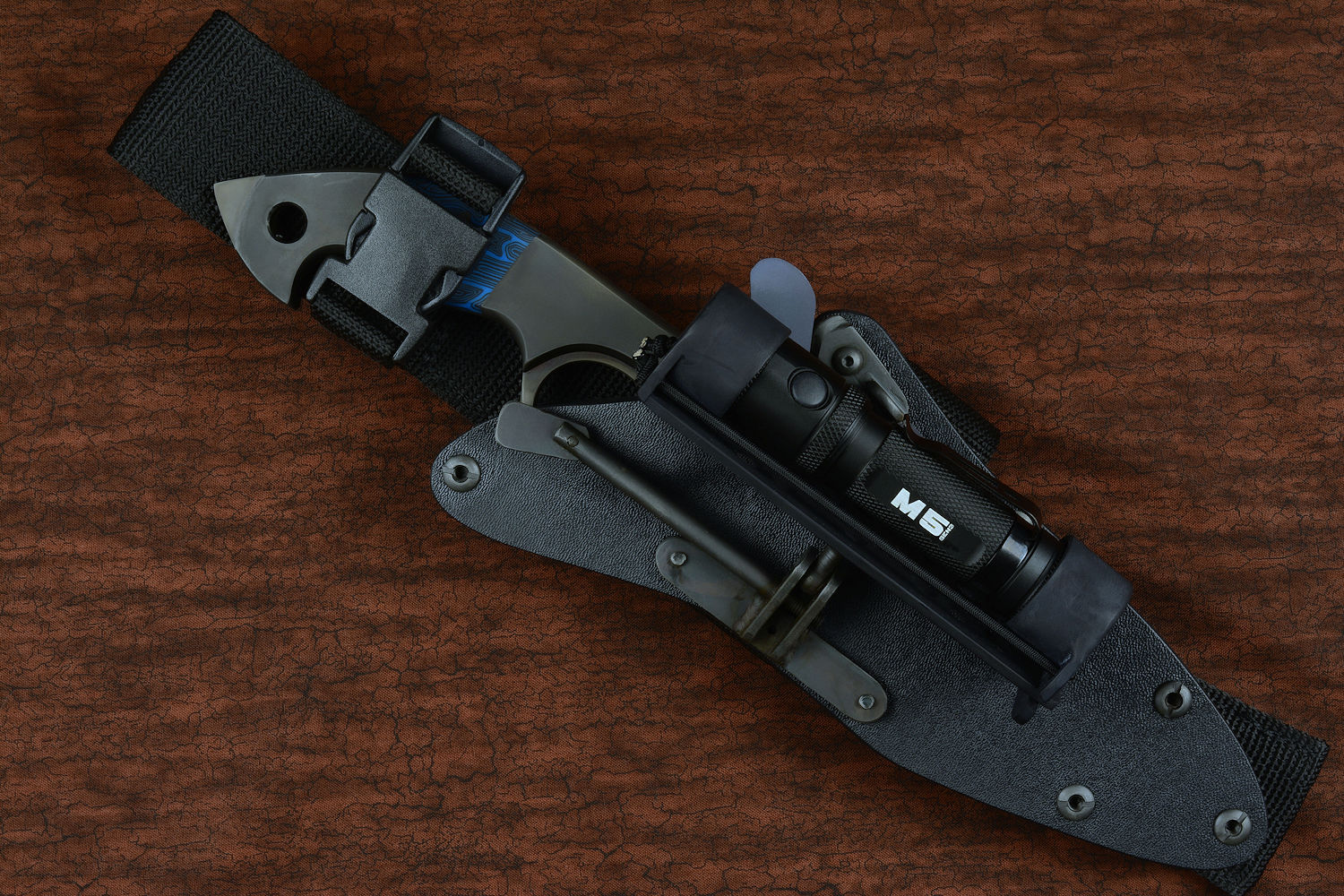
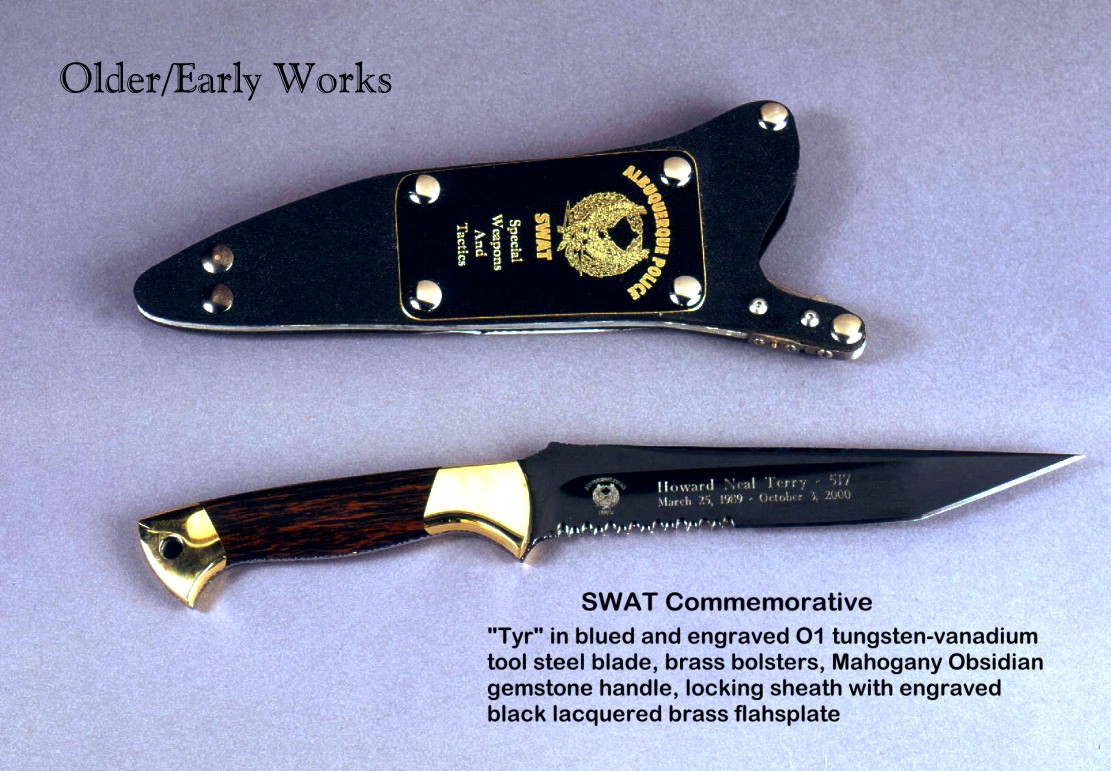
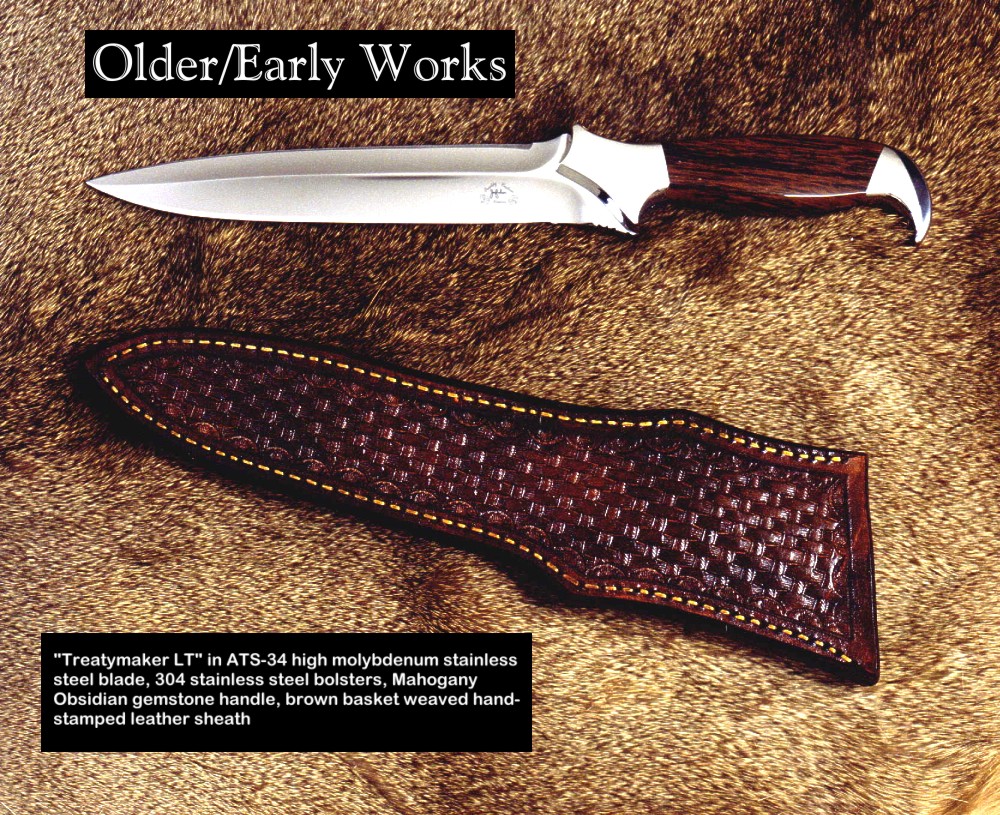
Short Answer: My clients.
Long Answer: I'm very proud to have knives with the men and women who serve professionally all over this big beautiful world. If you're reading this, it's pretty clear who I make for. If you happen to be deployed, chances are pretty good that, sooner or later, you'll see one of my knives or hear about them from the guy who owns one and wears it. I only wish I could keep up with the demand. Professionals I've made knives for include:
Short Answer: Depends.
Long Answer: Depends. Demand is high and I've tried over the years to come up with a way to crank out knives sooner, but since the tuning and detail that goes into them has taken decades for me to learn and apply, it simply is not possible to assign a machine, person, or outside contractor these critical steps. The best I can do is keep cranking and stay healthy. I do try to offer tactical combat and counterterrorism knives on the website for sale to the public periodically, so it helps to check in to see what's new.
If you are interested in the tactical knives you see here, there are several options:
...for being here. If you have read this whole page, I thank you for your time, and hope that you have benefitted from it. Like I said at the top of the page, you now know more now than any average person about real tactical and combat knives, and it is my hope that you will use this information to your own benefit and share what you know.
If you are in the market for a fine tactical combat knife, please don't settle for a less than optimum knife. Even if you don't buy from me, please insist on the knife blade, handle, fitting, and sheath features and options you require for your needs from whoever you buy knives from. Every person deserves the knife they want and need, whether you are currently deployed, in service, or preparing for the future. Insist on high quality and reasonable answers to your questions, and get the knife you need.
Please check back periodically, as I'll add topics, links, information, and more knives to this page.
And if you are a service professional, I thank you for your service to our country, people, and community!